France
 Austria
 Italy
 Switzerland
 English
 Deutsch
 Nederlands
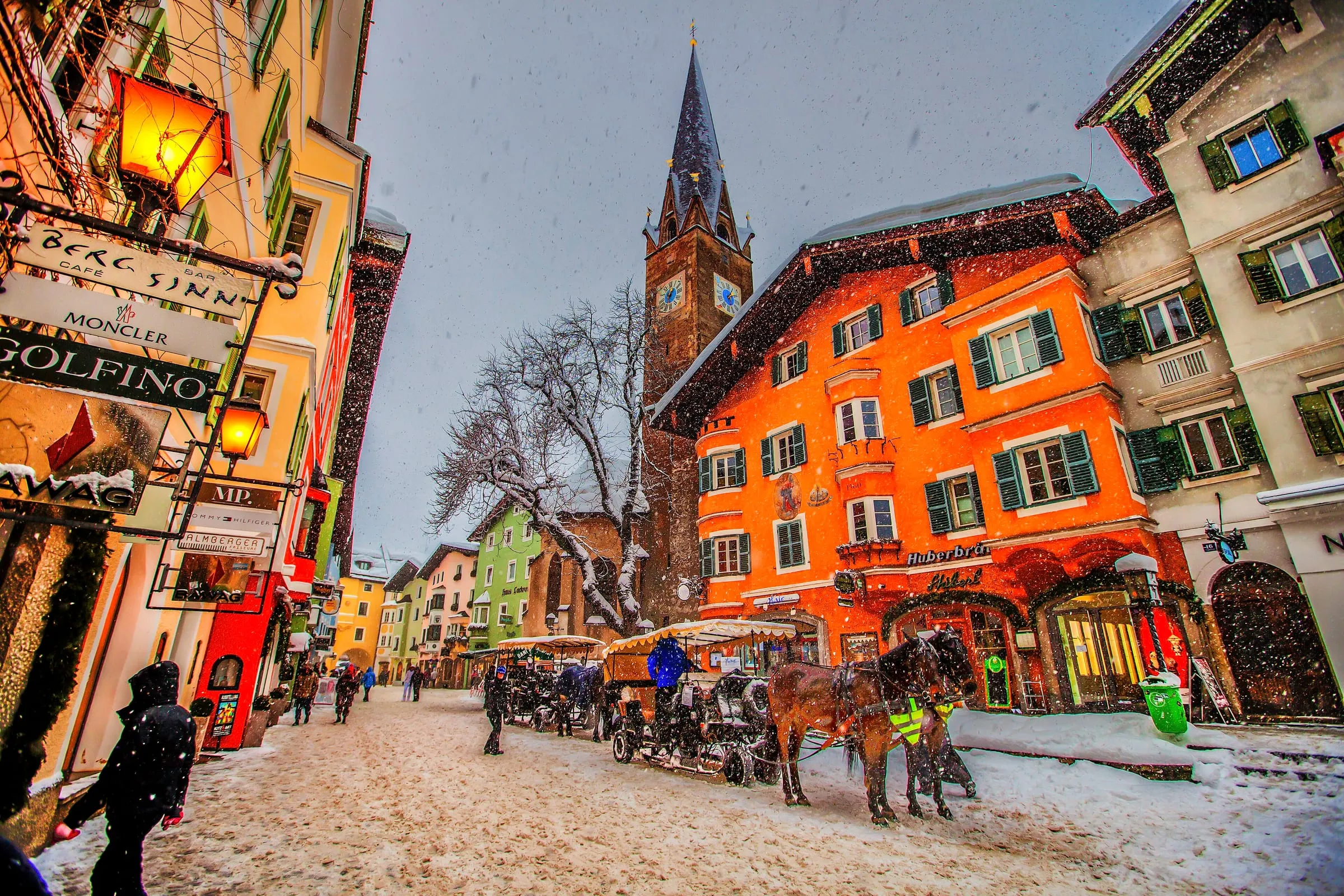
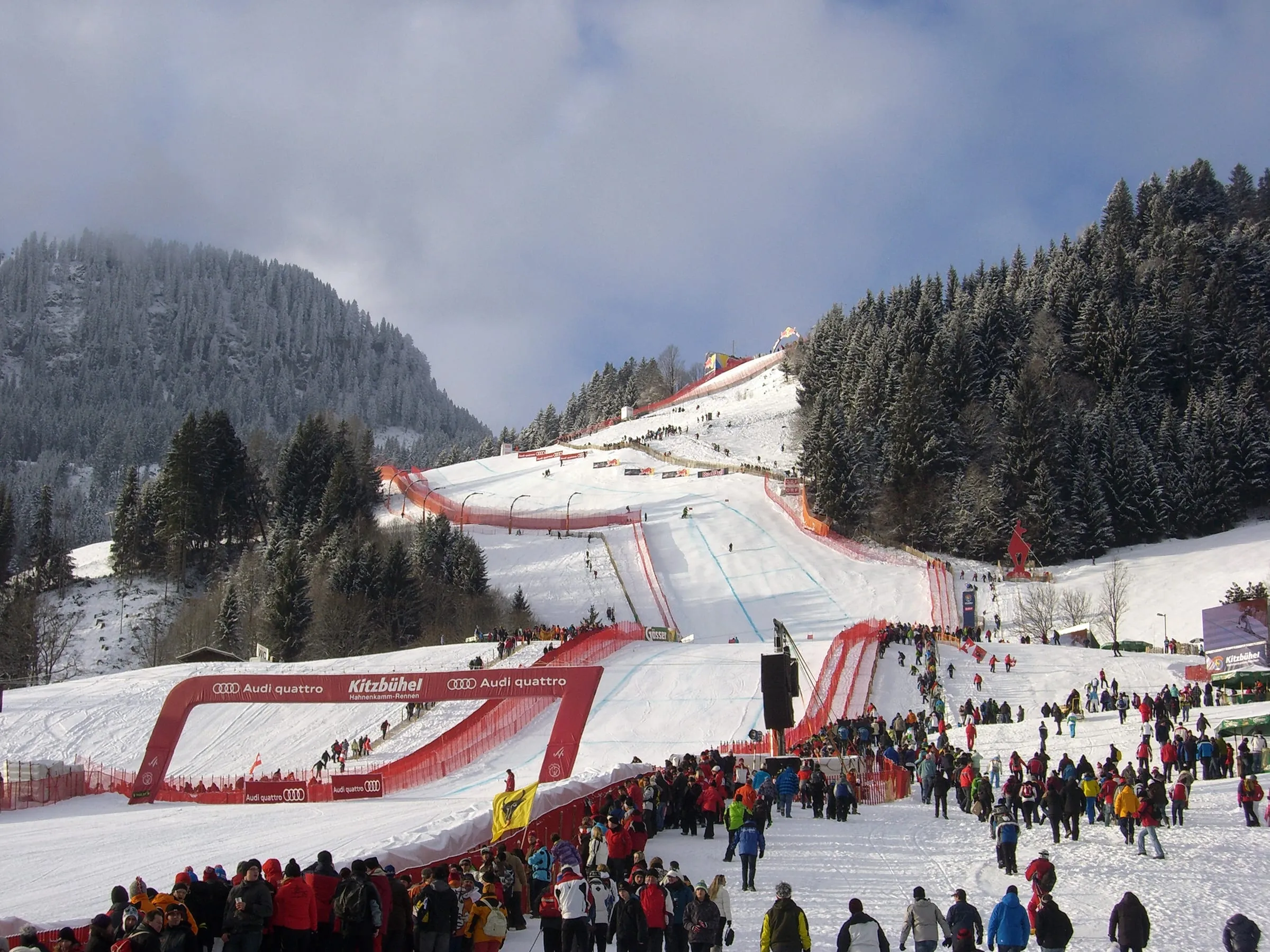
Kitzbühel is a walled medieval town in Tyrol, Austria, and the base for KitzSki, a 233 km ski area (the lift company’s figure) that runs from 800 to 2,000 m across the Hahnenkamm, Pengelstein, Jochberg and Pass Thurn, plus the separate Kitzbüheler Horn. It suits intermediates, mixed groups and anyone who wants a real town as much as the skiing, and it’s defined by the Streif, the World Cup downhill that finishes almost in the streets.
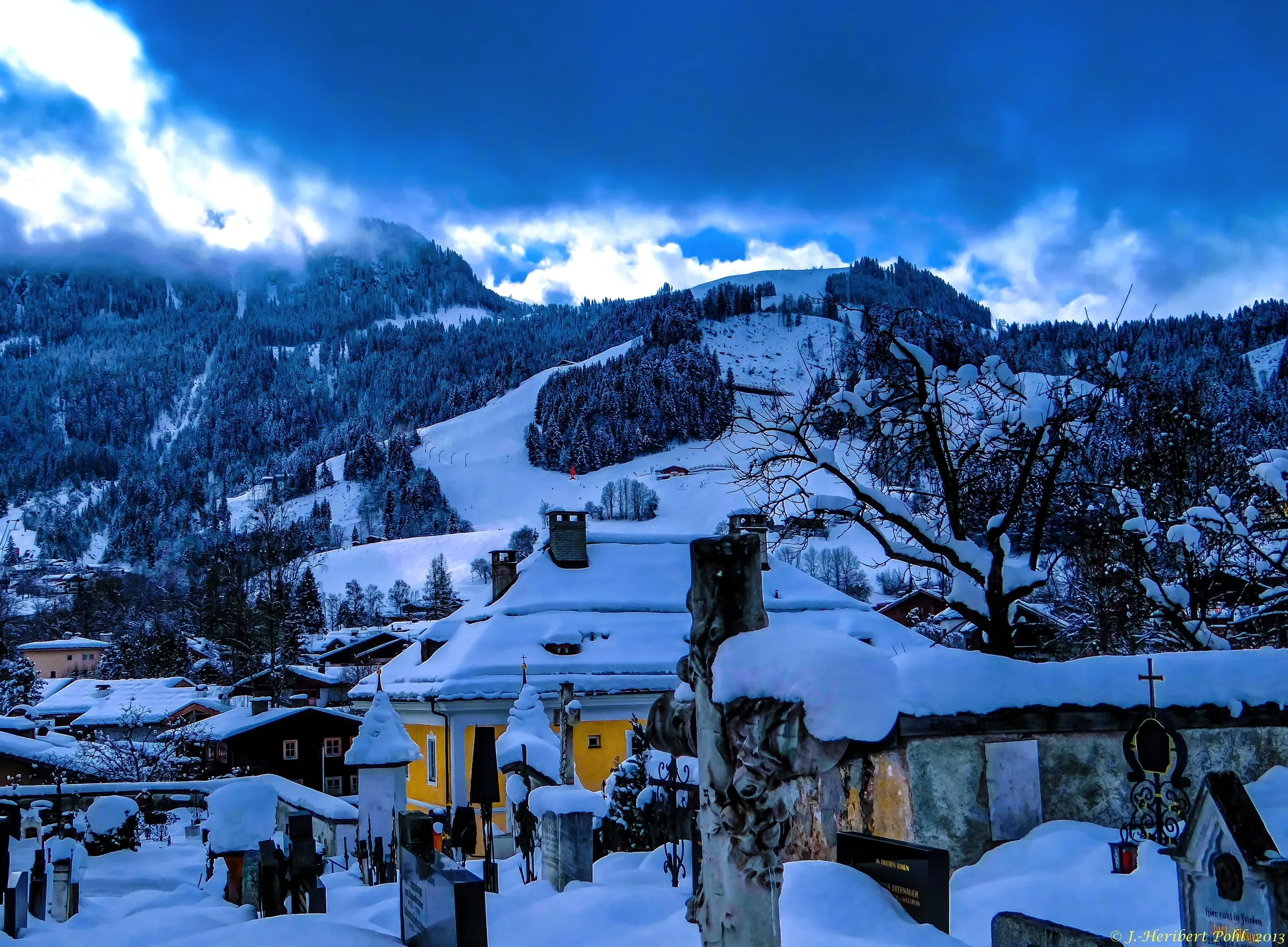
Kitzbühel ski area: a long ridge of grassy mountains, linked by the 3S
KitzSki is a chain rather than a bowl. From town, the Hahnenkammbahn (A1) climbs 878 m in one go to the Streif start. From there the slopes spread west towards Kirchberg and the Pengelstein, then the D9 3S-Bahn, a 3.6 km tricable gondola, carries you across to the Jochberg side and on towards Resterhöhe at Pass Thurn. The Kitzbüheler Horn sits on the other side of town and isn’t linked by lift or piste, so treat it as a second, quieter ski area you reach by bus.
The tourist office counts 46 blue runs (97 km), 32 red (67 km) and 18 black (21 km); the rest of the 233 km is ski routes and practice slopes. There are 14 marked ski routes, avalanche-controlled but ungroomed. Ten practice lifts in the valley are free to use with no pass at all.
The honest number is the top height: 2,000 m, at the Zweitausender chair above Pass Thurn and the Kitzbüheler Horn summit. Almost nothing here is above 2,000 m. That’s why the mountains are gentle and grassy, why they groom so well, and why snow matters more here than in Ischgl or Sölden.
Skiing in Kitzbühel for beginners, intermediates and experts
Beginners
Start in the valley. The free practice lifts sit at the bottom of the Hahnenkamm by the Streif finish (A2 Mocking, A3 Rasmusleiten, A4 Ministreif), in Reith, Jochberg (F2 Hausleiten), Pass Thurn (G2), Kirchberg and Aschau. Once you can stop and turn, the tourist office’s own suggestion is the A7 Märchenwald carpet at the top of the Hahnenkammbahn, then the Walde run (21) to the A8 Walde chair. Around the Ehrenbachhöhe, Sonnenrast (18) was widened and evened out for 2026/27 and is now a proper first blue.
Intermediates
This is who Kitzbühel is really for. The runs are long and wide rather than steep: Fleck (25) drops 987 m over 8.5 km to the Fleckalm, Pengelstein II (30) is 4.8 km of blue, and the Streif family run (21), 7.8 km, follows the race course past the Mausefalle and the Hausbergkante. Over the 3S, Jägerwurz (66), Wurzhöhe-Süd (67) and the Hartkaser runs (73, 74) at Resterhöhe are some of the best cruising in the area. For a big day, the KitzSkiWelt Tour links KitzSki with the SkiWelt next door: up to 88 km and 17,232 m of climbing.
Experts
The lift company picks out Zweitausender (75), Griesalm (23) and Bärenbadkogel I (62) for strong skiers. Add Direttissima (38), the Jufen-Steilhang (16b) and the Ganslernhang slalom slope. The Streif race course itself (21) is listed as a ski route when it’s open to the public. Bichlalm, next to the Horn, is the area for ski touring and freeride, with one piste, two ski routes and the H11 chair. It’s fun, but if steep off-piste is the point, St Anton is the better trip.
A first day in Kitzbühel
A day for confident intermediates, using lifts and runs from the official lift and slope lists:
- A1 Hahnenkammbahn from town. Look over the Streif start house next to the top station.
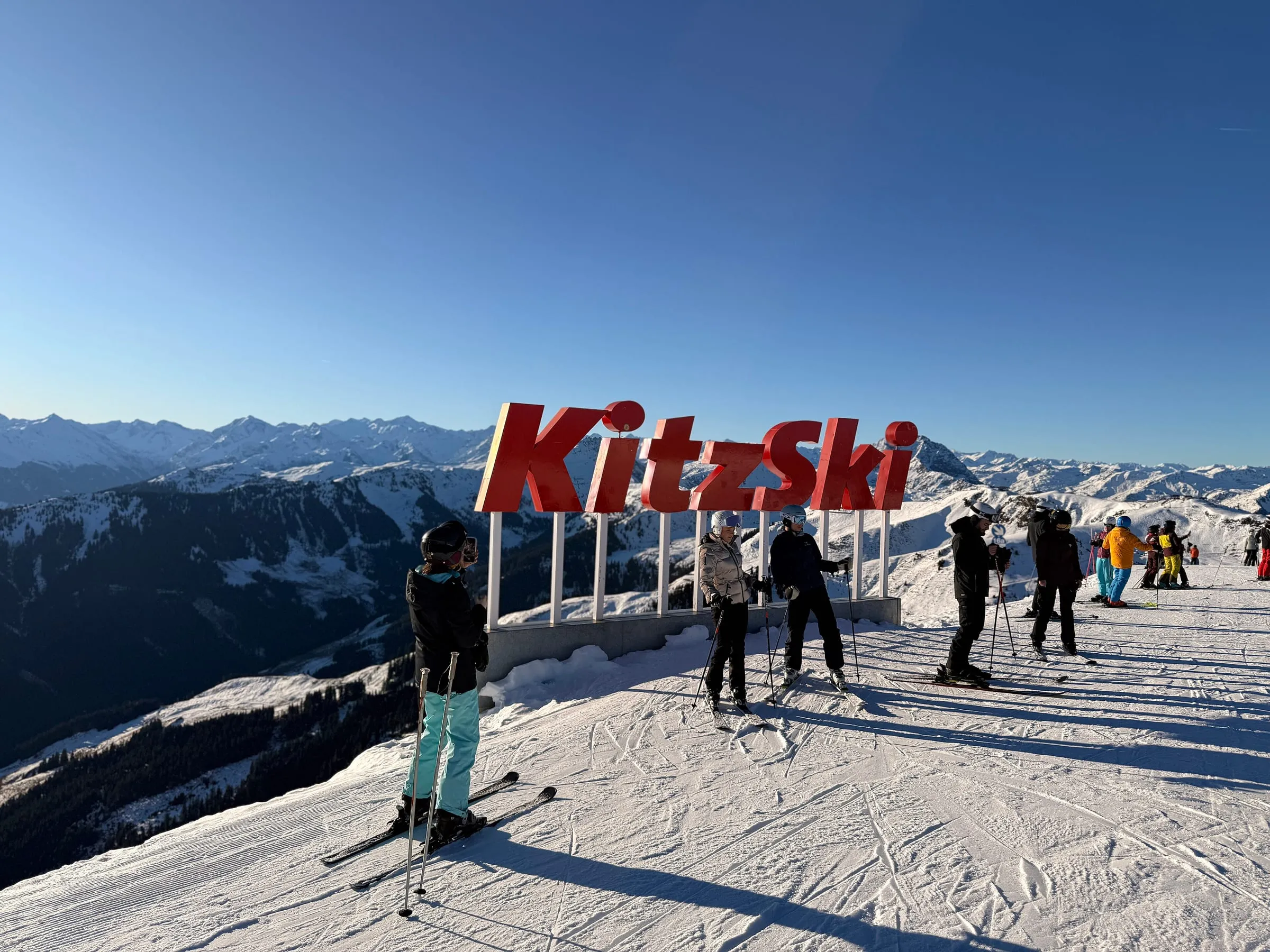
- Warm up on 37 Melkalm to the C1 Steinbergkogel chair (the KitzSki logo photo spot is at the top).
- Ski 16a and 16 Streiteck (try the free SkiMovie course on 16), ride B4 Sonnenrast, and repeat on 18 Sonnenrast if you like it.
- Follow the signs to the Pengelstein and lap 30 Pengelstein II on the D2 chair.
- Cross on the D9 3S-Bahn to the Jochberg side and ski 66 Jägerwurz.
- Work towards Resterhöhe and ride G7 Zweitausender to 2,000 m, then the 73 Hartkaser blue. Lunch at the Panorama Alm at Pass Thurn.
- Head back across the 3S in good time. The Resterhöhe end is the farthest point from town, and missing the link means a bus.
- Finish on 25 Fleck to the Fleckalm valley station, or the 21 Streif family run if you’re staying in Kitzbühel itself.
Snow in Kitzbühel: how reliable is it?
Reliable enough in mid-winter, never a sure thing at either end of the season. The valley floor is around 760 m and the town is often green when the pistes above are white.
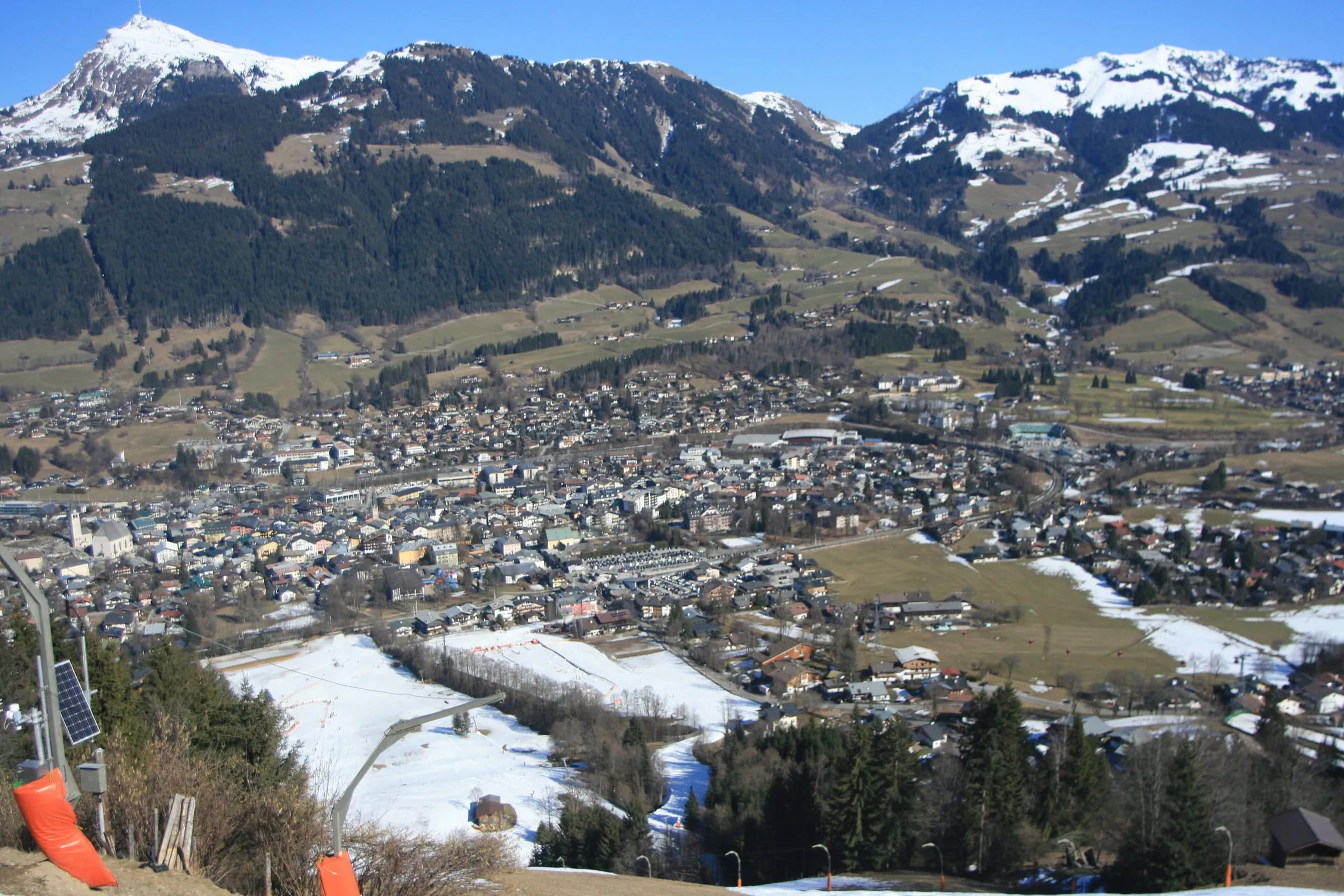
The case for it: more than 1,260 snow guns, slopes that are grass rather than rock (the lift company says 30 to 40 cm is enough for a solid groomed base), and the Resterkogel at Pass Thurn, where the season starts on snow stored over the summer. For 2026/27 KitzSki has added the Sonnenrast reservoir below the Fleckalmbahn top station, its eleventh. The lift company says it raises peak snowmaking in the core area by more than 40%, so it can build a base faster when a cold spell arrives.
2026/27 dates: the Resterkogel opened on 6 November using snow saved from last winter, weekends only for the public at first. The Hahnenkamm had its first weekend on 21 to 22 November, and from Saturday 28 November the main Hahnenkamm, Fleckalm and Horn lifts are due to run. The season is planned to close on 4 April 2027, so Easter (28 March) is inside it.
The snow guarantee: buy a 1 to 14-day pass online by 19 December 2026 for dates in the Premium season (20 December to 13 March) and KitzSki refunds the days you can’t ski for lack of snow.
Is Kitzbühel good for a last-minute ski trip?
Yes, more than most, because it’s a big town with a wide spread of hotels and a railway station at the lift. You can decide on Wednesday and be on the Hahnenkamm on Saturday.
Watch three things. Hahnenkamm race week (18 to 24 January 2027) fills the town and prices jump, so avoid it unless you’re going for the race. Christmas, New Year and the February half-terms sell out early. And if the forecast is warm, check which lifts are actually open on the live lift status before you book, or pick a higher resort: Sölden has glaciers, and Ischgl skis much higher.
Kitzbühel lift passes
One KitzSki pass covers everything, including the Horn, the free ski buses (in ski clothing) and the “Streifzug” train between St Johann in Tirol, Kitzbühel-Hahnenkamm and Westendorf. Ticket-office prices for 2026/27, from the lift company’s price list:
| Adult pass | Super Saver | Saver | Premium |
|---|---|---|---|
| 1 day | €69 | €76 | €83 |
| 3 days | €202.50 | €223.50 | €244 |
| 6 days | €351 | €387 | €423 |
| 5 in 7 days | €327 | €360.50 | €394 |
Premium runs from 20 December 2026 to 13 March 2027. Saver is 6 to 19 December and 14 to 29 March, and Super Saver is the rest. Online, a day pass is always at least €1 cheaper, and early online booking saves up to 20%. Children born 2011 to 2020 pay about half, youths born 2008 to 2010 pay about three-quarters, and children born 2021 or later ski free. Ikon Pass holders get seven days (Ikon Base, five).
Après-ski and things to do in Kitzbühel
Kitzbühel’s après is a town night out more than a slope-side party. Near the Hahnenkammbahn valley station there’s the Legenden Café and the Pavillon. On the mountain, Sonnenrast near the Fleckalmbahn and Schilala at the Seidlalm get going in the afternoon. Out at the ends of the area, Gamsstadl sits by the Fleckalmbahn valley station, Affenstadl by Pass Thurn and Hofalm by the Wagstättbahn in Jochberg. Then it’s dinner in the old town.
Off the skis: the Gaisberg in Kirchberg has a 3.5 km natural toboggan run, floodlit Tuesday to Saturday. The Aquarena pools are half price with a valid lift pass. There are high cross-country trails on the Horn and the Resterkogel. The 2026/27 calendar includes the Bergadvent on the Hahnenkamm (4 and 18 December), the Hahnenkamm races (18 to 24 January) and Vertical Up, uphill on the Streif, on 27 February.
Who Kitzbühel suits, and who it doesn’t
It suits intermediates who want variety over a week, groups with mixed abilities and mixed interests (the town does a lot of the work), families who’ll use the free practice lifts, and anyone coming by train. If you’re weighing it against Mayrhofen, Kitzbühel has the better town and the more varied skiing on one pass; Mayrhofen has a rowdier après scene and the Hintertux Glacier up the valley for a bad-snow day.
It doesn’t suit experts who want steep terrain every day (St Anton is the answer), anyone booking a fixed week in early December or April who can’t risk thin snow, or skiers who want to step out of the door on to the piste at altitude. Kitzbühel is a town resort: most beds are a walk or a bus from the lifts.
How to get to Kitzbühel
By plane and transfer
| Airport | Distance | Drive (tourist office) |
|---|---|---|
| Salzburg (SZG) | 81 km | about 1 hour 30 minutes |
| Innsbruck (INN) | 96 km | about 1 hour 10 minutes |
| Munich (MUC) | 127 km | about 1 hour 45 minutes |
Four Seasons Travel runs transfers from all three, from a shared “Budget” coach (several stops, and up to 150 minutes’ wait at the airport) to private cars. Allow extra time for snow and for Saturday traffic in the Inn valley.
By train
Kitzbühel has three stations, and the one to use is Kitzbühel Hahnenkamm, right next to the Hahnenkammbahn. From Innsbruck it’s about 1 hour 10 minutes with one change at Wörgl, and Munich and Salzburg also run via Wörgl. From Munich Airport, take the S1 or S8 into Munich first. For day trips from Bavaria, the KitzSkiXpress coach runs daily from Munich, Holzkirchen and Rosenheim with a day pass included.
By car
You need a vignette for Austrian motorways. From 1 December 2026 it’s digital only. Bought online, the 1-day and 10-day versions are valid at once, but the 2-month and annual versions start on the 18th day after purchase. Winter tyres are compulsory in wintry conditions from 1 November to 15 April, with at least 4 mm of tread. Carry chains. KitzSki’s car parks are at the Hahnenkamm, Fleckalm, Wagstätt, Ganslern, Resterhöhe and Pass Thurn. The new Fleckalmbahn garage opened for 2026/27, with about 1,100 spaces including the outdoor car park and 20 EV chargers.