France
 Austria
 Italy
 Switzerland
 English
 Deutsch
 Nederlands
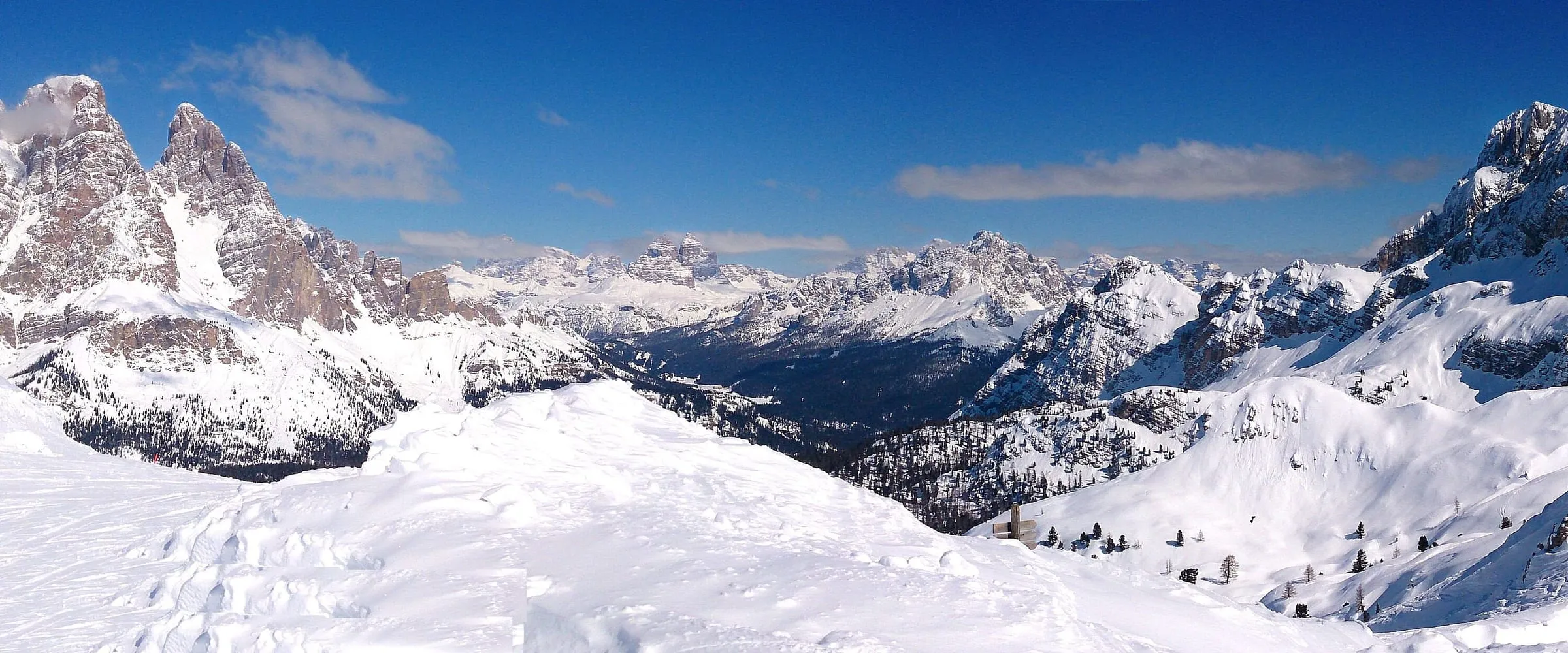
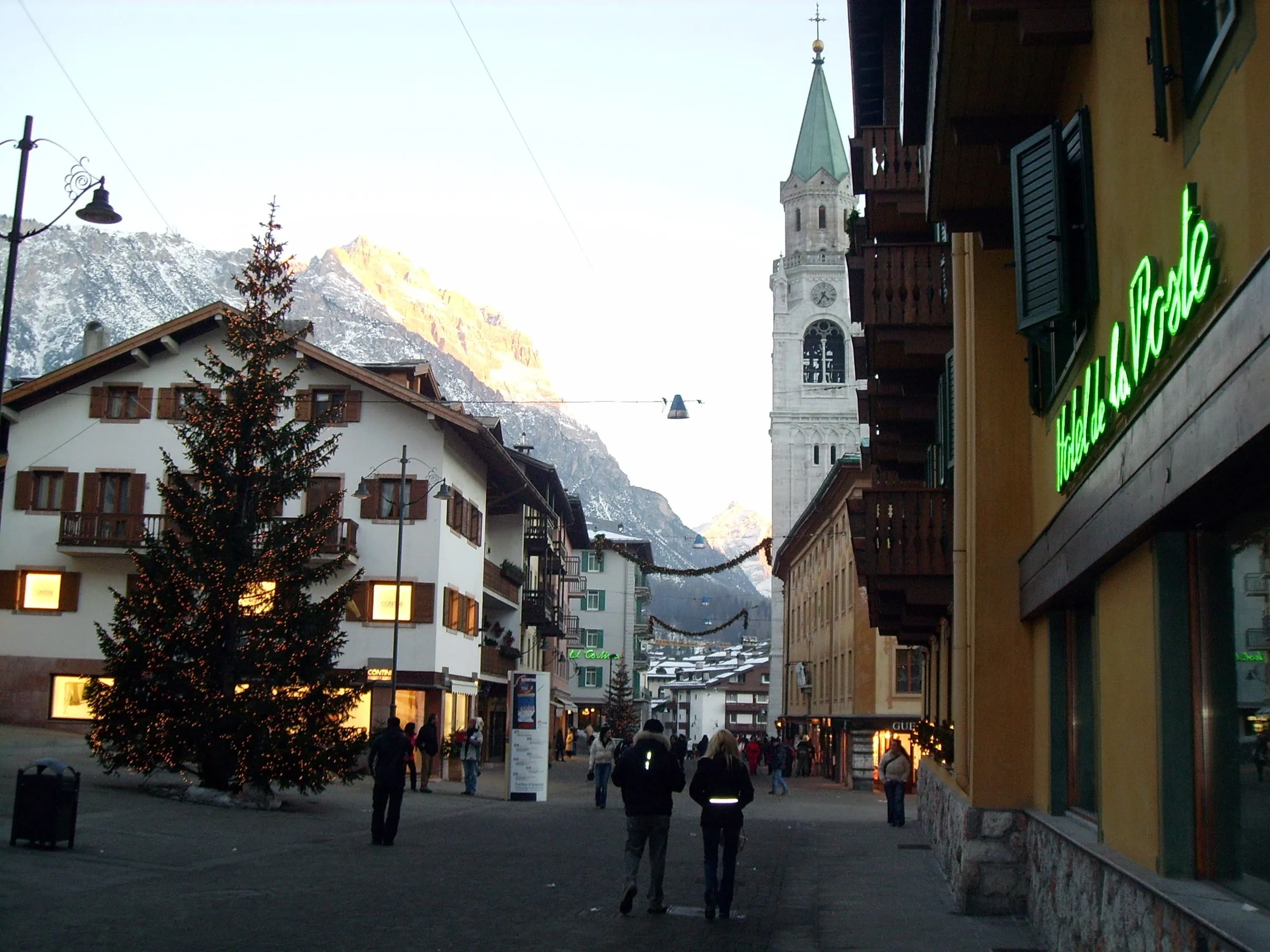
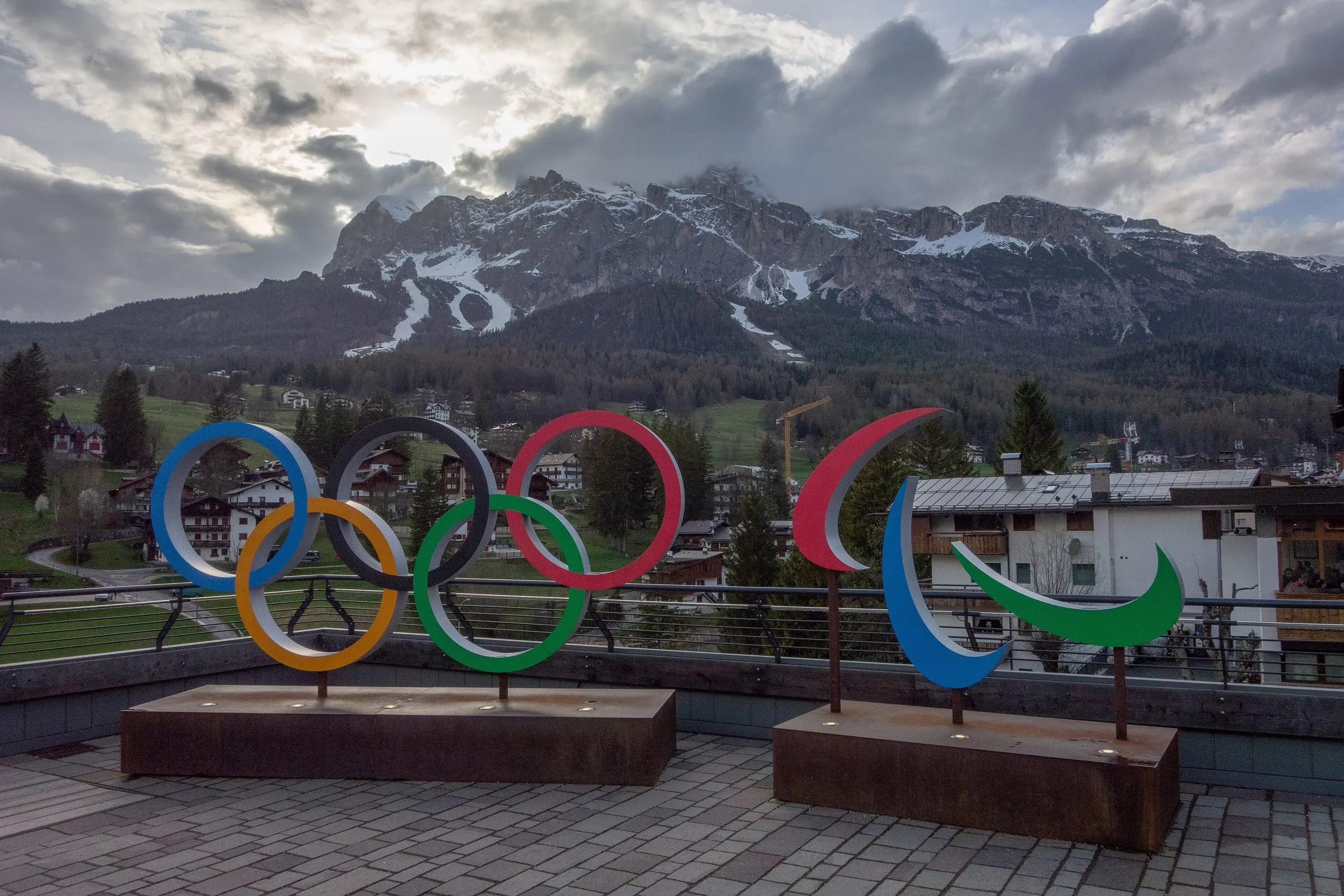
Cortina d’Ampezzo is a town of 1,224 m in the Veneto Dolomites of north-east Italy, with 120 km of pistes and 35 lifts on its own valley pass (Cortina, San Vito di Cadore and Auronzo-Misurina) and access to 1,200 km across the Dolomiti Superski region. Its lifts climb to 3,244 m on the Tofana di Mezzo. What defines it is the setting: a lively, stylish town, co-host of the Milano Cortina 2026 Winter Olympics, ringed by pale limestone walls, with ski areas spread around the valley rather than in one linked circuit.
Cortina d’Ampezzo ski area: three sectors around a Dolomite bowl
Think of Cortina as three ski areas around a town, not one resort with a lift at the end of every street.
Tofana is the big one, west of town. The Freccia nel Cielo cable car climbs in stages from Via dello Stadio to Col Druscié, Ra Valles (2,470 m) and the summit station at 3,244 m, a 2,000 m rise that takes about 30 minutes. Lower down, Socrepes, Pocol and Pié Tofana hold most of the cruising, with chairlifts up to Duca d’Aosta (2,098 m) and Forcella Pomedes (2,303 m).
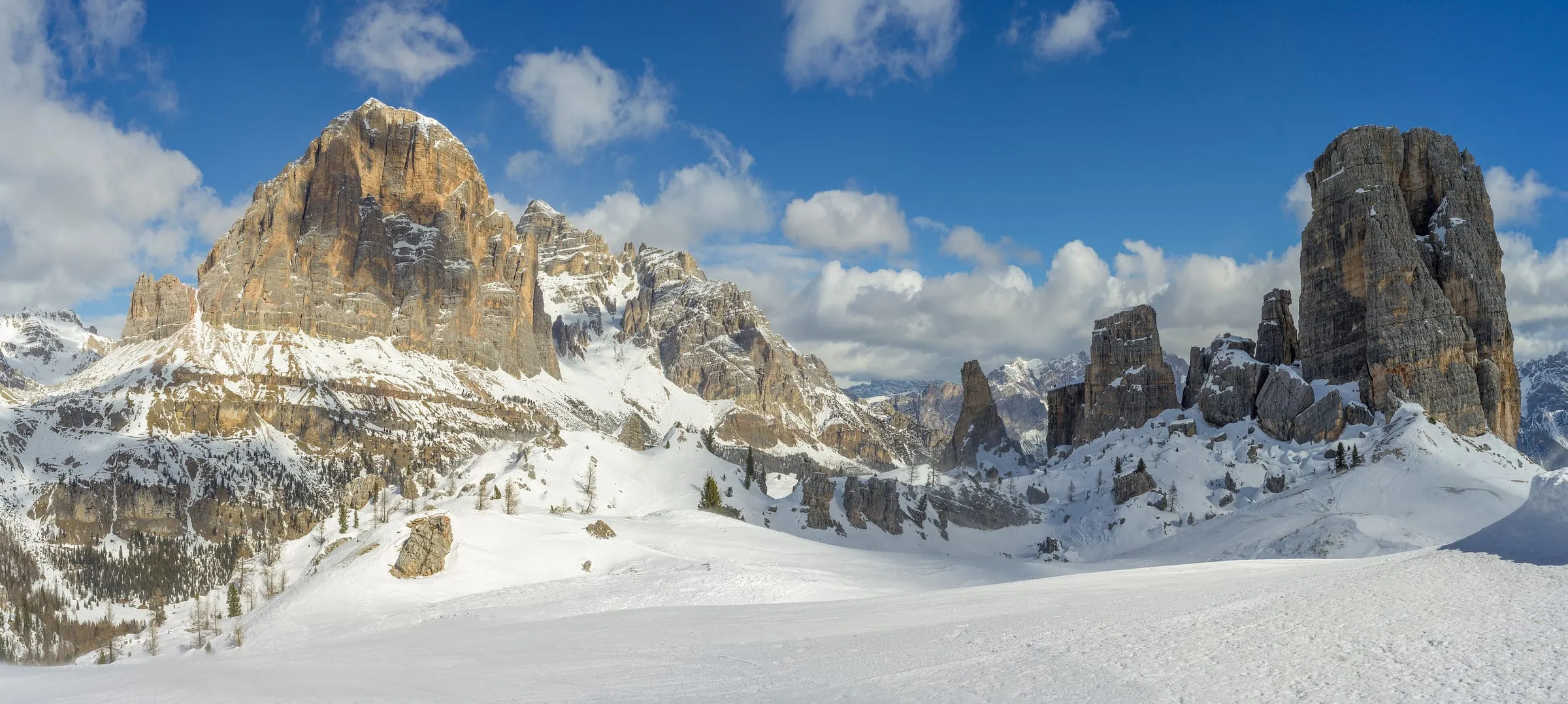
Cinque Torri, Falzarego and Lagazuoi sit further west along the road to the Falzarego Pass. Since the 2021/22 season the Cortina Skyline gondola has run from Son dei Prade, just above Pocol, via Cianzopé to Bai de Dones (1,889 m), linking the Tofana side with Cinque Torri. From the Falzarego Pass (2,105 m) the Lagazuoi cable car rises to 2,732 m, and the Col Gallina and Averau lifts fill in the gaps.
Faloria and Cristallo face them across the valley to the east. The Faloria cable car leaves from the town centre via Mandres (1,480 m) to Faloria (2,123 m), with the Tondi di Faloria lift above, while Rio Gere and Son Forca (2,215 m) make up the Cristallo side. No lift links this sector with the Tofana; you take the ski bus or ride the cable car from town.
The valley pass also covers Lagazuoi down to Armentarola in Alta Badia, plus the small areas at San Vito di Cadore and Misurina. That spread is Cortina’s weakness and its charm: more bus rides than in a linked French resort, but very different skiing in every direction.
Skiing in Cortina d’Ampezzo for beginners, intermediates and experts
Beginners
Socrepes, just above town, is where you learn. It’s the main base of Scuola Sci Cortina, whose beginner groups meet at the Baby Ski School area beside the Baby Socrepes lift, and the slopes around it are wide and gentle. Pocol, on the road up to the Skyline, is another low, easy area. Stay off the Faloria cable car and the upper Tofana until you can link turns with confidence.
Intermediates
This is Cortina’s sweet spot. The Tofana runs between Pomedes, Duca d’Aosta and Pié Tofana give long, varied cruising, and the Skyline turns Cinque Torri into a natural second half to the day, with open slopes below the towers themselves. Faloria and Cristallo are quieter and worth a day of their own. The best intermediate day of all is the Great War ski tour: Dolomiti Superski’s 2026/27 route map runs it clockwise from Lagazuoi through Alta Badia, Arabba, the Marmolada area and Alleghe, and back via Passo Giau and Cinque Torri, with paid bus and horse-drawn tow sections along the way.
Experts
The Tofana is the draw. The Freccia nel Cielo’s operators describe the Col Druscié run as steep, technical and approved for international training; it hosted the 1956 Olympic slalom and the 2021 World Championships. The Olympia delle Tofane hosts women’s World Cup races and staged the women’s alpine events of the 2026 Olympics. Higher up, Ra Valles is natural-snow terrain, with the Forcella Rossa its best-known line. Hire a guide for anything off-piste: this is serious high mountain terrain.
A first day in Cortina d’Ampezzo
Check that the Tofana and Skyline lifts are running before you set out, then try this loop:
- Ski bus to Socrepes (lines S31 and S33 ran to Socrepes last season), or ride the Lacedel–Socrepes lift from the edge of town.
- Take the Olimpia chairlift and ski across to Pié Tofana.
- Ride Pié Tofana–Duca d’Aosta, then Duca d’Aosta–Forcella Pomedes, and take your time on the long runs back down to Pié Tofana. Repeat the pair while your legs are fresh.
- Follow the signs to Son dei Prade and board the Cortina Skyline to Cianzopé and Bai de Dones.
- Ride the 5 Torri chair and the Averau chair to the top of the sector, and lunch at one of the mountain huts by the towers.
- Ski back to Bai de Dones, take the Skyline back to Son dei Prade, and finish on the Tofana slopes down to Socrepes for the bus home.
On a second day, take the Faloria cable car from town for the Faloria and Cristallo side. On a third, catch the bus to the Falzarego Pass for Lagazuoi and the Armentarola run.
Snow in Cortina d’Ampezzo: how reliable is it?
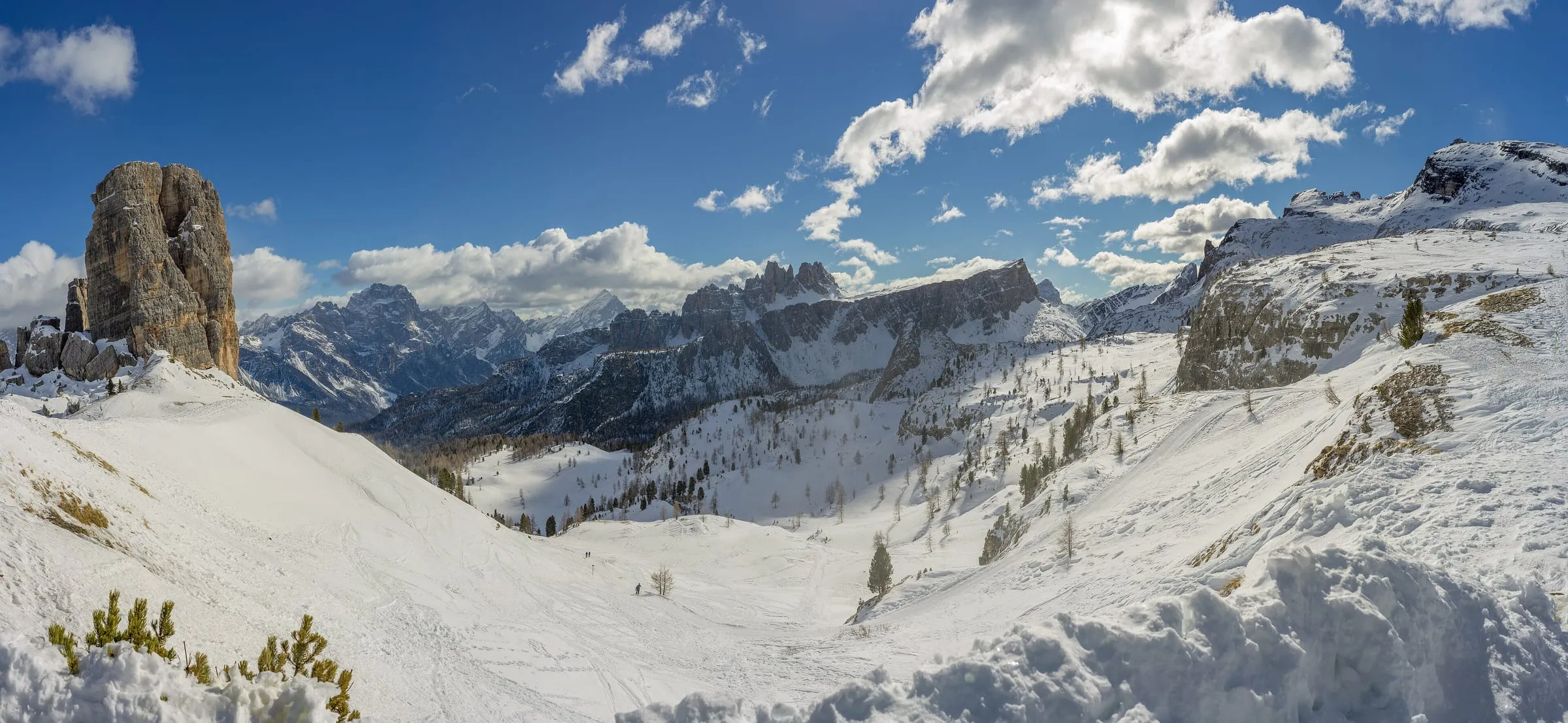
Fair to good, with one caveat: the town sits at 1,224 m, so the lowest runs back to the valley are the first to suffer in a mild spell. Most of the skiing is higher. Cinque Torri, Falzarego and Lagazuoi lie between about 1,900 m and 2,730 m; Faloria and Son Forca top out above 2,100 m; and the upper Tofana sections reach Ra Valles at 2,470 m and the summit at 3,244 m. There’s no glacier, so early and late snow depends on snowmaking and on the high ground.
Dolomiti Superski says it is renewing snowmaking on Cortina’s pistes for 2026/27. The official season runs from 28 November 2026 to 2 May 2027, according to Dolomiti Superski, and the Cortina lift consortium says lifts open from 28 November (Col Gallina from 27 November). Areas open on their own dates: the Freccia nel Cielo says early December, snow permitting, and the Lagazuoi cable car runs from 23 December to 4 April.
Cortina is in the south-eastern Alps, so check a forecast for the Dolomites themselves rather than judging by reports from Austria or the French Alps.
Is Cortina d’Ampezzo good for a last-minute ski trip?
Yes, if you avoid the obvious peaks. The busiest weeks match Dolomiti Superski’s high-season dates for 2026/27: 20 December to 9 January, and 31 January to 20 March, with Carnival and the Italian school holidays at the heart of it. The quietest, cheapest windows on the pass are 10 to 30 January and from 21 March.
Central hotels fill first at Christmas, New Year and Carnival; outside those weeks you’ll usually find more choice, especially in Pocol and the villages down the valley. If the forecast looks poor, the high ground is your insurance: Lagazuoi, Cinque Torri and the upper Tofana hold snow longest. A Dolomiti Superski pass also puts Alta Badia and Val Gardena within reach on a day out. If the whole southern Alps look dry, a resort with a glacier or bigger altitude, such as Cervinia or Livigno, may be the safer last-minute bet.
Cortina d’Ampezzo lift passes
You have two choices for 2026/27:
| Pass | What it covers | Adult price 2026/27 |
|---|---|---|
| Cortina valley pass | Cortina (with Skyline and Lagazuoi down to Armentarola), San Vito di Cadore, Auronzo-Misurina: 120 km | Day and multi-day passes sold at the lift ticket offices; season pass €785 in presale (to 24 Dec 2026), €845 after |
| Dolomiti Superski | 12 valleys, 1,200 km, including Alta Badia, Val Gardena and Arabba | €89 for 1 day, €453 for 6 days (high season); €80 and €407 (regular season) |
Dolomiti Superski prices are the operator’s list prices for 2026/27; buying online at least two days ahead saves 5%. Children born 2019 to 2023 ski free on Dolomiti Superski with each full-price adult pass bought at the same time, one child per adult. For a week, the Superski is worth the small premium if you plan even one day on the Great War tour or in Alta Badia. Helmets are compulsory on the slopes for everyone in Italy, and so is third-party liability insurance. Our families page covers child and family passes.
Après-ski and things to do in Cortina d’Ampezzo
Cortina’s evenings centre on the town rather than on slope-side bars. People walk the pedestrian Corso Italia at dusk, stop for a spritz and drift on to dinner; it’s an aperitivo town more than a dance-on-the-tables one. Hotel bars do a lot of the work, from the Bar del Posta at the Hotel de la Poste to the Zelda Cocktail Club at the Ambra.
Off the slopes, the Olympic ice stadium is in the middle of town, and the tourist office lists skating lessons and curling. Up at Lagazuoi, the Lagazuoi Expo Dolomiti stages exhibitions, and the terrace of the Rifugio Lagazuoi at 2,752 m is a fine place for a drink with a view.
Who Cortina d’Ampezzo suits, and who it doesn’t
Cortina suits people who care about where they are as much as how many kilometres they ski: couples, mixed groups with some non-skiers, and confident skiers who want the Tofana’s famous runs and the Great War tour. If you want lift-linked mileage from the door, the Sella Ronda villages of Val Gardena are the better Dolomites base. If you’re weighing glamour resorts, Cortina is more of a real town than Courchevel, though its base sits lower than St Moritz. It’s a poor fit for tight budgets and for anyone who hates buses.
How to get to Cortina d’Ampezzo
By plane and transfer
Venice Marco Polo is the usual airport, 162 km by road according to the tourist office; Treviso is 130 km, Innsbruck 170 km and Verona 260 km. In winter 2026/27, Cortina Express and Dolomiti Bus run five buses a day from Venice airport, taking 2 hours 10 minutes to 2 hours 30 minutes and stopping at Piazzale Revis in Cortina.
By train
There’s no railway in Cortina. The nearest stations are Calalzo di Cadore, 35 km away and linked by Dolomiti Bus, and Dobbiaco (Toblach), 31 km away on the Val Pusteria line and linked by SAD buses.
By car
From the south, leave the A27 at Belluno, 72 km from Cortina; from the north, leave the A22 Brenner motorway at Bressanone (Brixen), 87 km away. Italian motorways are tolled. Italy’s winter tyre rules run from 15 November to 15 April on roads where the operator orders them, which includes the mountain roads here, so carry winter tyres or chains. Car parks at Acquabona (with a free shuttle), Rio Gere, Bai de Dones and the Lagazuoi cable car serve the slopes, and the ski bus is free with a valid ski pass.
A new Apollonio–Socrepes gondola from town was built for the Olympics and appears on the lift map, but its opening for skiers in 2026/27 had not been confirmed when we checked. Until it opens, plan on the ski bus to Socrepes.