France
 Austria
 Italy
 Switzerland
 English
 Deutsch
 Nederlands
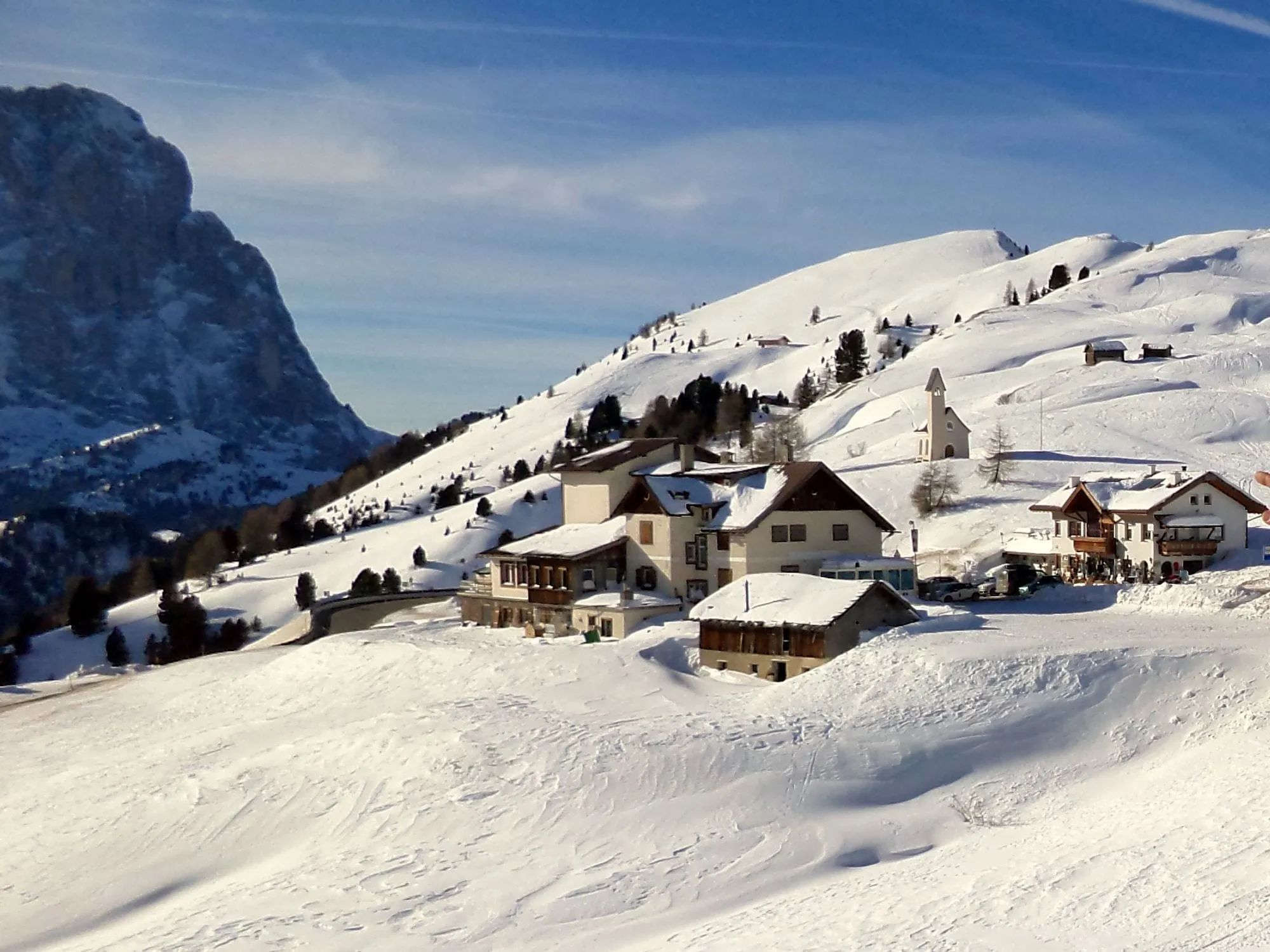
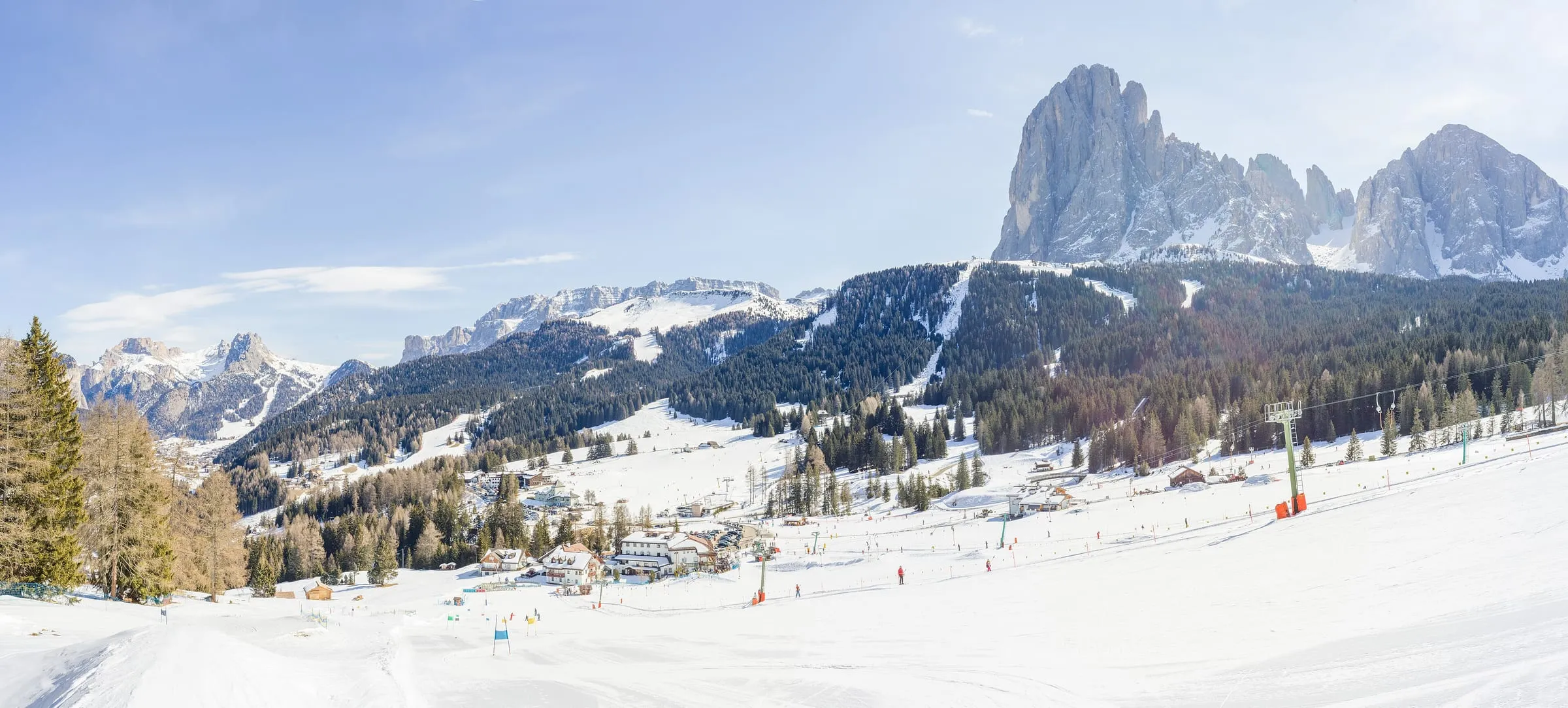
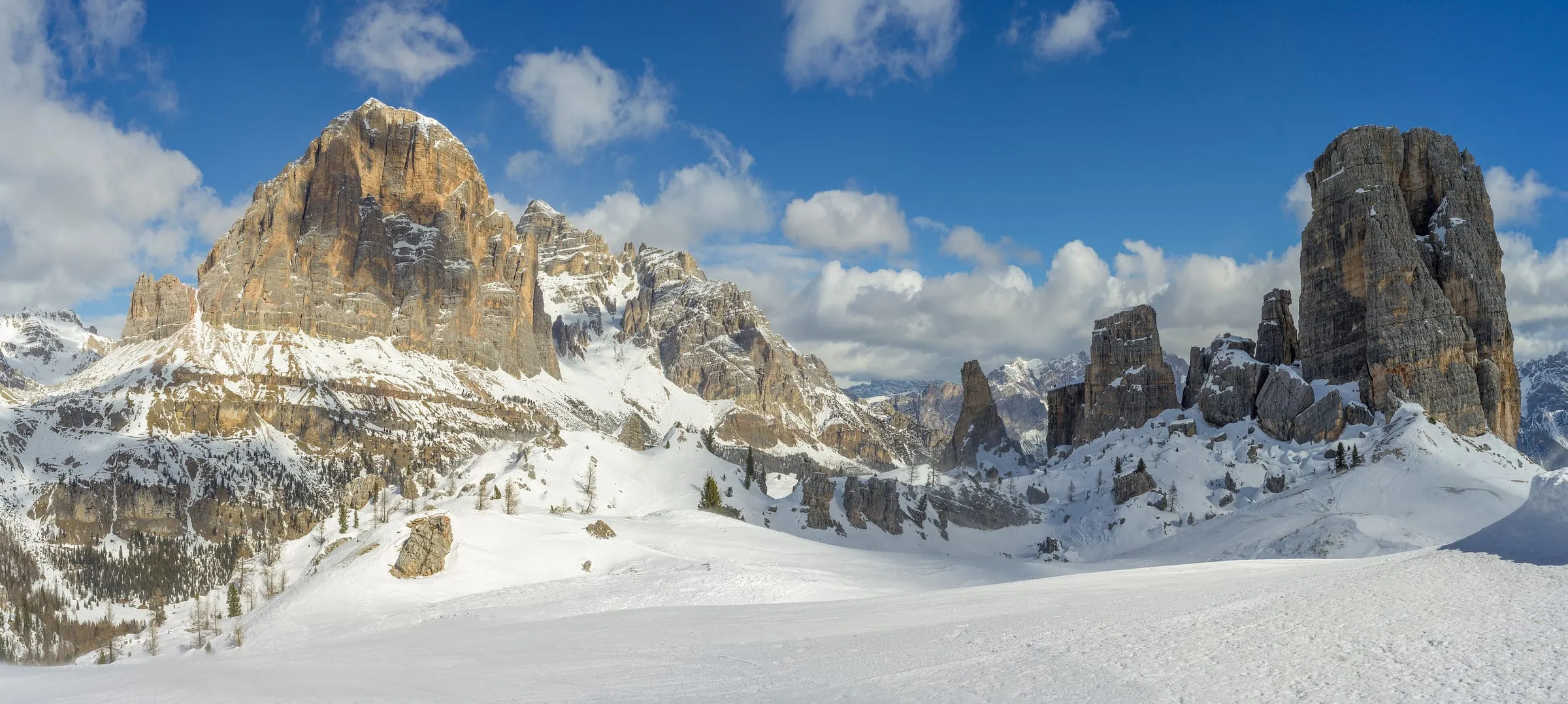
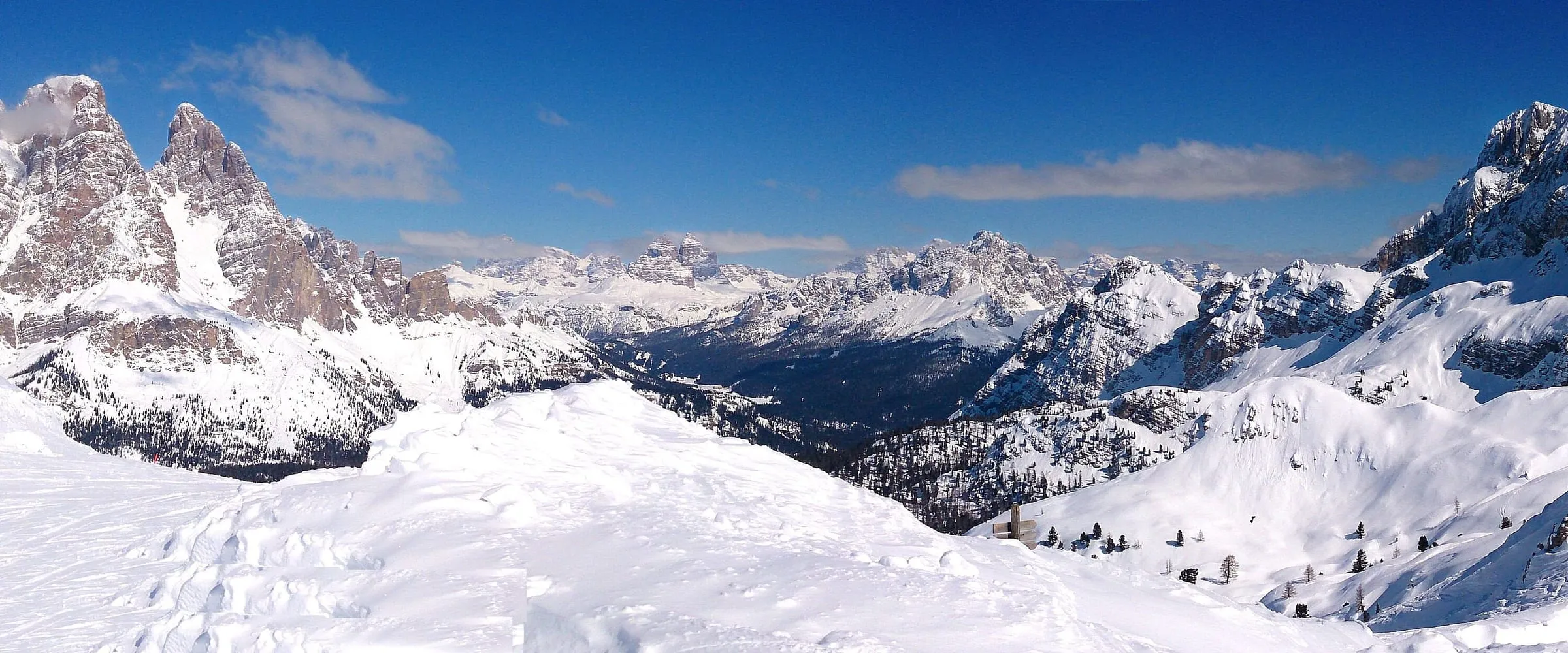
Val Gardena is a valley in the Dolomites of South Tyrol, northern Italy, with three ski villages: Ortisei (1,236 m), Santa Cristina (1,428 m) and Selva (1,563 m). Its local pass covers 79 lifts and about 175 km of runs including the Alpe di Siusi, the tourist office says, with skiing up to 2,518 m on Seceda, and it is part of Dolomiti Superski, about 1,200 km on one pass. It suits intermediates, families and anyone who wants the Sellaronda circuit, huge scenery and long lunches more than steep terrain.
Val Gardena ski area: the Sellaronda on your doorstep
The skiing splits into four sectors, and knowing them is most of the battle.
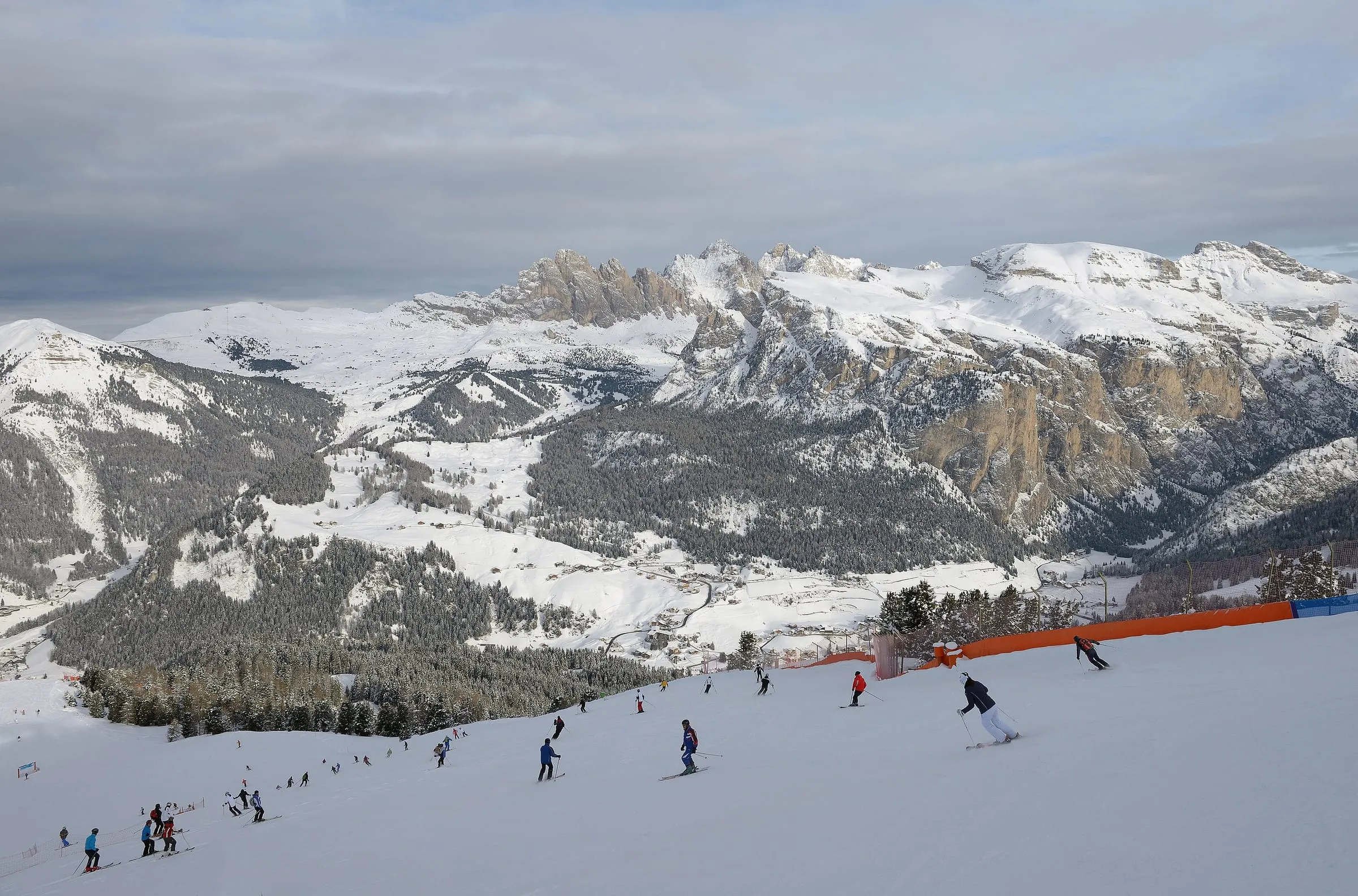
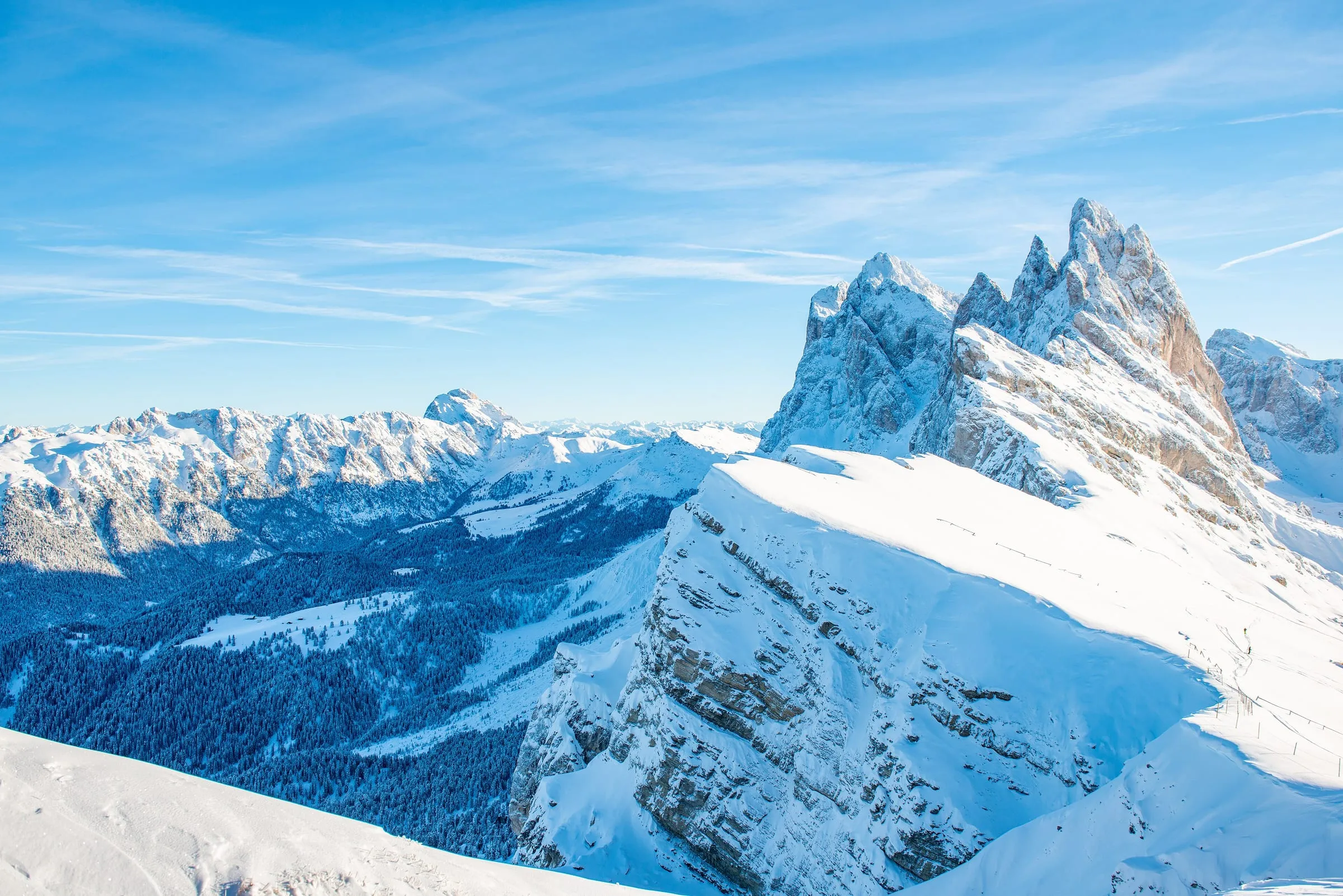
- Seceda and Col Raiser, above Ortisei and Santa Cristina, under the jagged Odle peaks. This is the high point at 2,518 m and the start of La Longia.
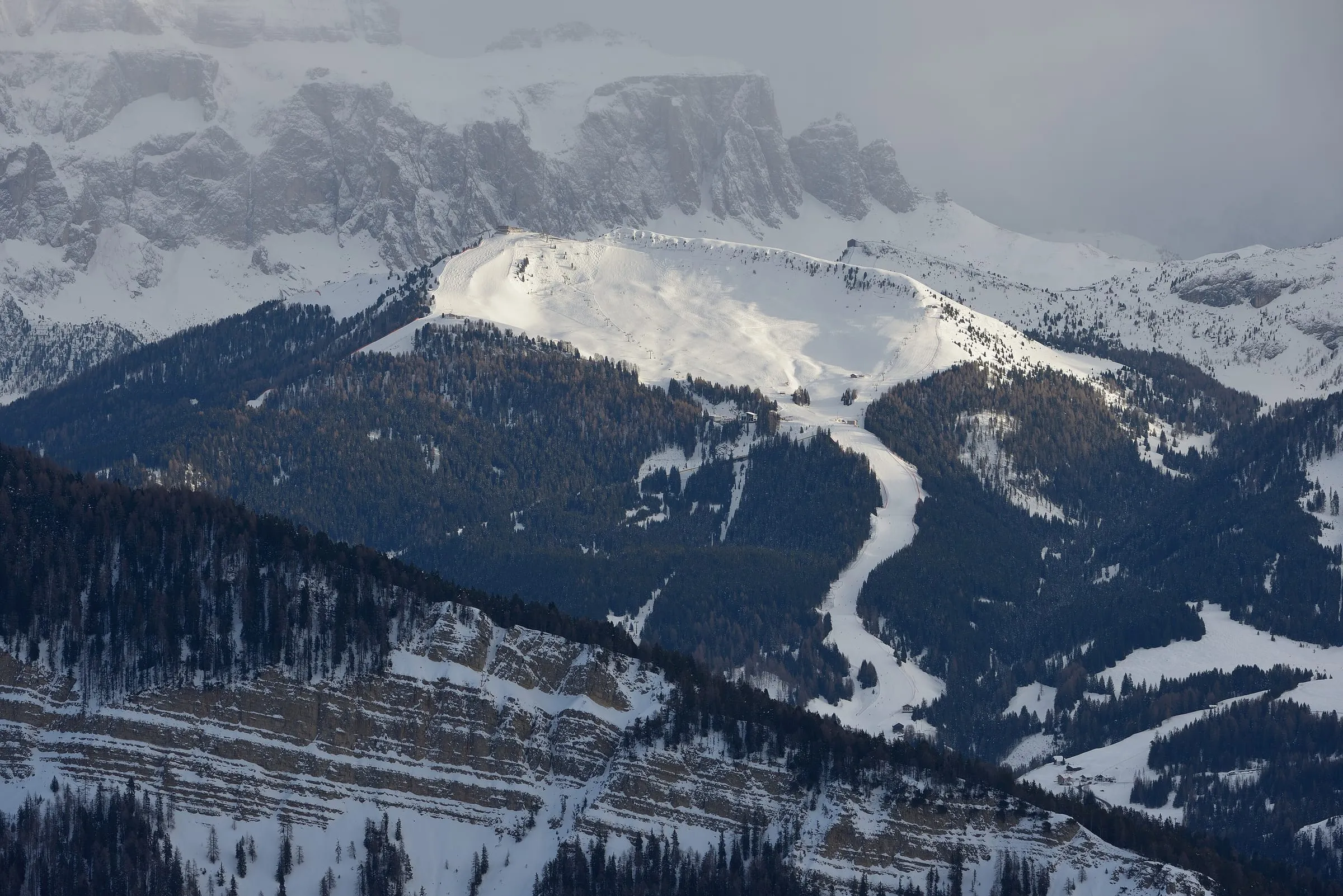
- Ciampinoi (2,254 m), above Selva and Santa Cristina, home of the Saslong World Cup downhill.
- Dantercepies and Plan de Gralba / Piz Sella (Piz Sella 2,284 m), above Selva, which link to Passo Gardena, Passo Sella and the Sellaronda.
- Alpe di Siusi (Seiser Alm), a vast high plateau reached by cable car from Ortisei to Mont Sëuc (2,005 m): wide, gentle and sunny.
Monte Pana (1,667 m), a plateau above Santa Cristina, is the beginners’ corner, linked to Ciampinoi by the Mont de Sëura chairlift.
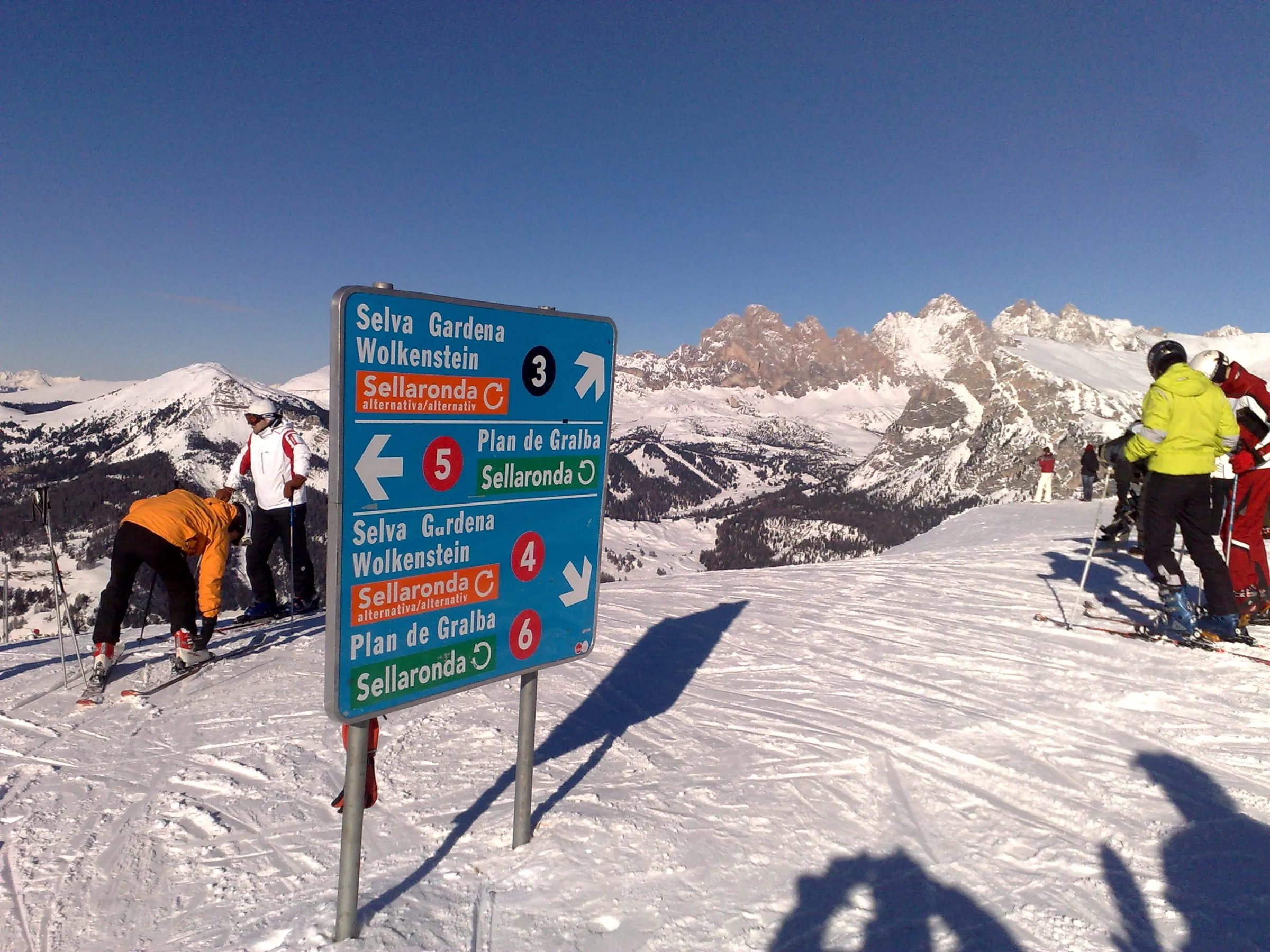
The Sellaronda is the reason many people come. It is a 44 km loop round the Sella massif over four passes (Sella, Pordoi, Campolongo and Gardena), with 23 km on skis and the rest by lift. Orange signs mark the clockwise way, green the anticlockwise. The tourist office calls Selva the ideal starting point and rates it suitable for average skiers; start by 10 am. On a Dolomiti Superski pass you’re also on skis into Alta Badia and Val di Fassa.
Skiing in Val Gardena for beginners, intermediates and experts
Beginners
Val Gardena is better for beginners than its reputation for big circuits suggests, because the gentle areas are separate from the busy Sellaronda traffic. Monte Pana has kids’ parks and practice lifts on a sunny plateau. The Alpe di Siusi is long, easy cruising with no real steeps, once you’ve mastered a snowplough turn. Selva’s ski school has its Kinderland in the village, and Ortisei has the Palmer and Furdenan practice slopes on the edge of town. Our Val Gardena with kids guide has the detail.
Intermediates
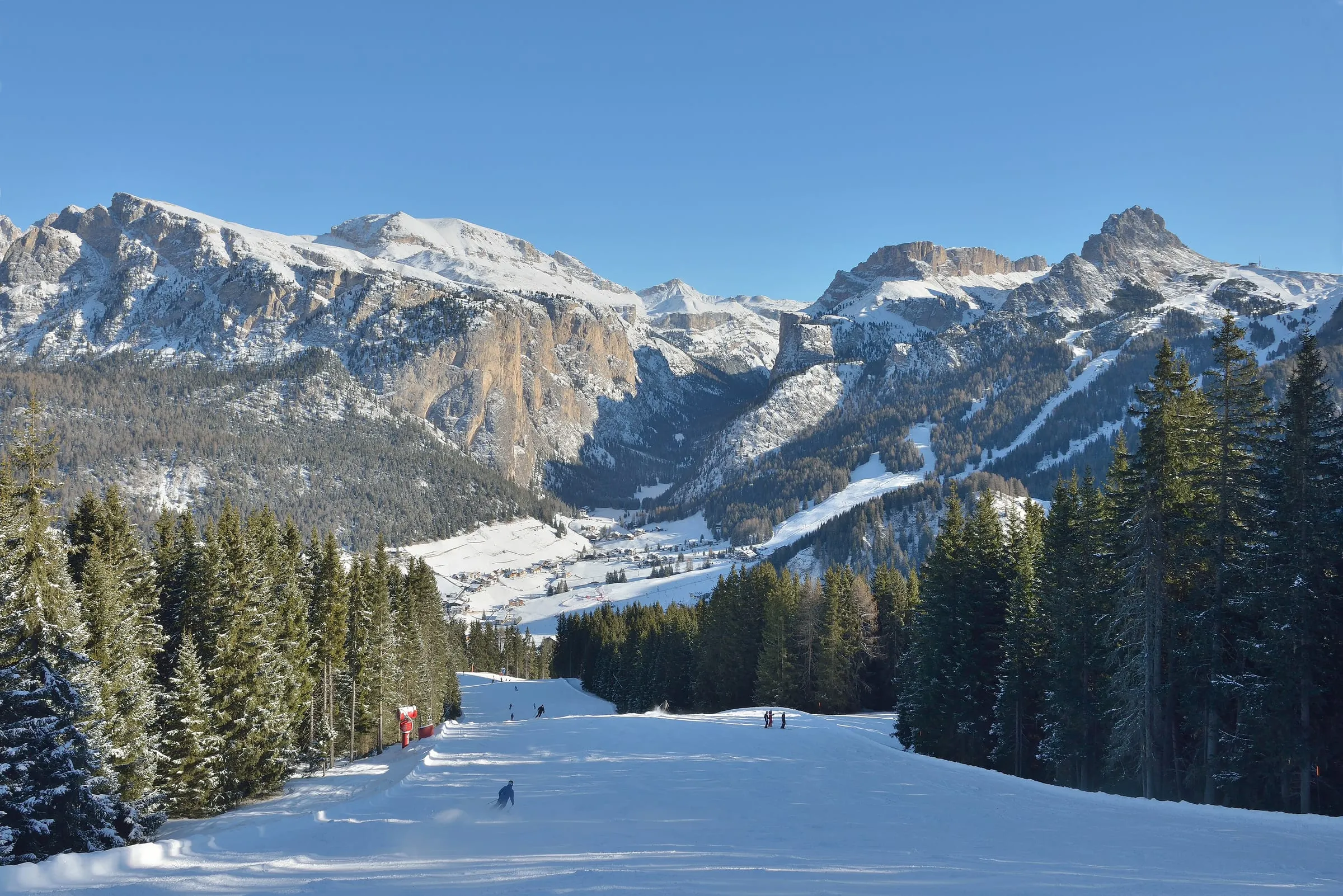
This is intermediate country. Dolomiti.it’s breakdown of the Val Gardena runs gives about 53 km of red against 29 km of blue and under 14 km of black, and that matches the feel: long, well-groomed reds. La Longia from Seceda, the Ciampinoi runs back to Selva, the Dantercepies side towards Passo Gardena and the full Sellaronda are the big days. A confident red skier gets the most out of a week here.
Experts
The Saslong is the showpiece: the men’s World Cup downhill from Ciampinoi to Santa Cristina, steep, fast and closed for race week in December. The tourist office pitches the Südtirol Gardenissima as the longest, hardest giant slalom in the Dolomites. Beyond that, honest experts will find the groomed steeps run out in a couple of days. The best extra adventure is linked off-piste with a mountain guide, or skiing the circuits hard. If steep terrain is the priority, compare St Anton or Chamonix.
A first day in Val Gardena
Start high, ski the long run down, then cruise the Alpe in the afternoon. The plan works from any village, since ski buses link all three.
- Ortisei to Seceda. Take the Ortisei–Furnes cable car, then Furnes–Seceda, to the top of the ski area at about 2,500 m.
- Warm up under the Odle. Do a few laps on the Fermeda quad chair, with the Odle spires straight ahead. The Catores double chair serves the slopes nearby.
- La Longia to Ortisei. Late morning, ski La Longia, the lift company’s red of about 10.5 km down to Ortisei, with 1,273 m of vertical (the tourist office’s figure). Stop at a hut on the way rather than racing it.
- Across to the Alpe di Siusi. In Ortisei, the covered walkway with escalators and moving walkways links the Seceda lift and the Ortisei–Alpe di Siusi cable car. Ride up to Mont Sëuc for gentle, sunny afternoon runs, then take the cable car back down.
On day two, if you’re based in Selva, ride the Ciampinoi lift, ski the Saslong (outside race week) to Santa Cristina, and set off on the Sellaronda the day after.
Snow in Val Gardena: how reliable is it?
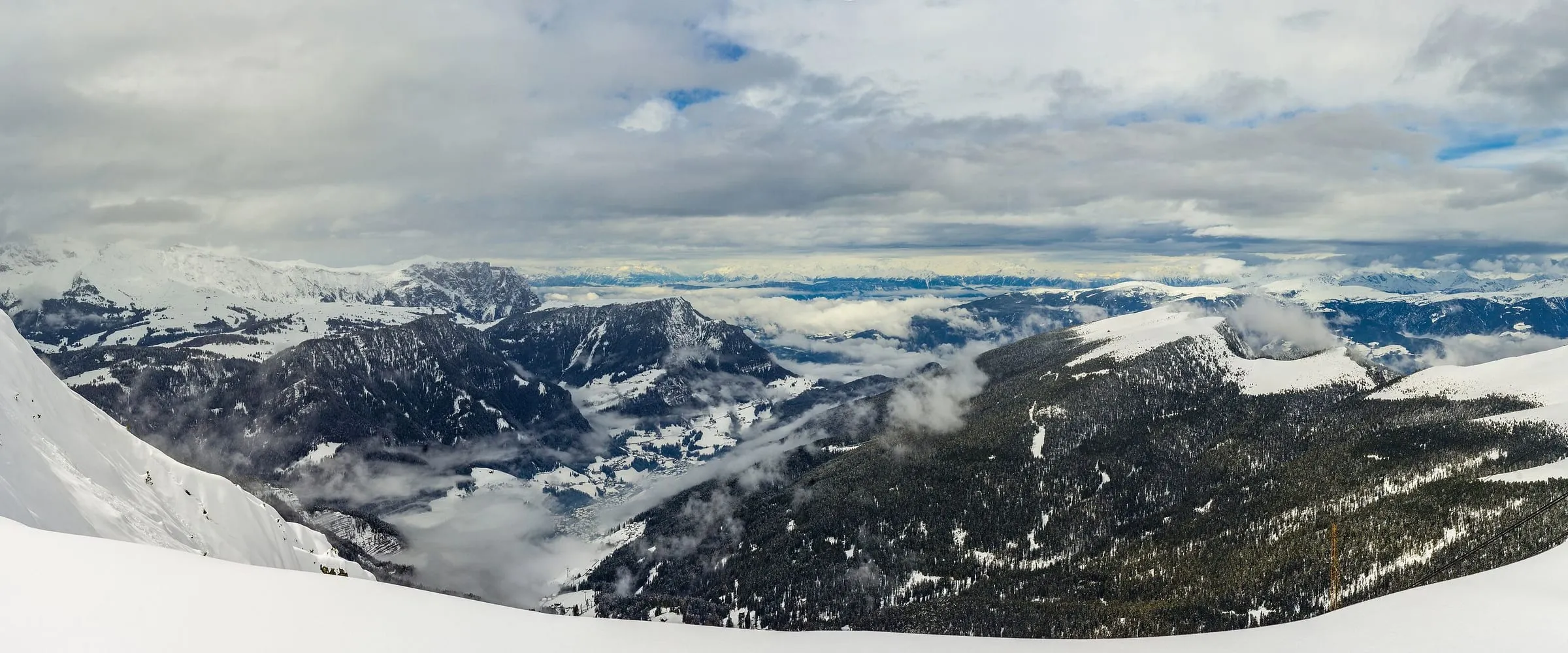
Val Gardena is mid-altitude with no glacier. Its villages sit between 1,236 m and 1,563 m. The high points are about 2,100 to 2,500 m: Seceda 2,518 m, Piz Sella 2,284 m, Ciampinoi 2,254 m, Mont de Sëura 2,117 m and Col Raiser 2,103 m. So most of the skiing sits between 1,500 m and 2,300 m. The Dolomites are often drier than the northern Alps, and in a lean winter the slopes depend on machines.
That’s where Val Gardena is strong. The tourist office markets a “100% snow guarantee” from its snowmaking, and Dolomiti Superski’s 2026/27 press release names new water reservoirs for snowmaking at Selva. In practice the pistes are usually in good order when the sky has been stingy. Powder is the bonus, not the plan.
2026/27 season: the tourist office gives 4 December 2026 to 4 April 2027 for the Val Gardena lifts and the Sellaronda, subject to conditions. On 26 November the tourist office reported 40 cm of snow in the valley and 80 cm on the mountain.
Is Val Gardena good for a last-minute ski trip?
Yes, with the right weeks. The valley has a huge stock of family-run hotels, garnis and apartments in three villages, so there’s usually something left, though the ski-in places go early.
Dolomiti Superski’s own price calendar marks high season as 20 December to 9 January and 31 January to 20 March. The cheaper, quieter windows are early December, 10 to 30 January and late March. The World Cup weekend (18 to 19 December 2026) brings crowds and closes the Saslong, so avoid it unless you want to watch.
If the forecast looks poor, Val Gardena still has a case: snowmaking keeps the main runs open, and Ortisei, the Mardolomit pool and the toboggan runs give you a holiday off the snow. If you need genuinely high snow, Cervinia or Val Thorens go much higher.
Val Gardena lift passes
You have two choices. The Val Gardena / Seiser Alm pass covers the valley and the Alpe di Siusi, 79 lifts and about 175 km. The Dolomiti Superski pass adds 12 areas and about 1,200 km, and you need it for the full Sellaronda. If you want even one Sellaronda day, buy Dolomiti Superski for the week.
| Dolomiti Superski, 2026/27 | Price |
|---|---|
| Adult 1 day, high season | €89 |
| Adult 6 days, high season | €453 |
| Season pass, presale | €990 |
Prices are from the Dolomiti Superski 2026/27 press release. The tourist office doesn’t publish local-pass prices on its pages, so use the online calculator. Buying online at least two days ahead saves 5%. Young children ski free with each full-price adult pass bought at the same time; juniors get about 30% off and seniors about 10%. Ski-pass offices are at the Alpe di Siusi cable car in Ortisei, in the centre of Santa Cristina and at the Ciampinoi lift in Selva.
Après-ski and things to do in Val Gardena
Après here is a hut terrace in the sun, then a drink back in the village. It’s not table-dancing. Ortisei is the place for an evening stroll: a pedestrian centre, shops and the Mardolomit pool and sauna. The tourist office counts more than 60 mountain huts across the area, and a Nightliner bus runs between Selva and Ortisei for evenings out.
Tobogganing is a big deal. The Rasciesa run above Ortisei is about 3 km from the funicular top station, with night tobogganing and dinner. The Alpe di Siusi has runs of up to 2.9 km. Helmets are compulsory on toboggan runs too.
Who Val Gardena suits, and who it doesn’t
Choose Val Gardena if you want long red runs, the Sellaronda from the door, scenery that stops you mid-turn, and food that’s better than in most French or Austrian resorts. It’s also good for groups that mix confident and nervous skiers, since the Alpe di Siusi keeps the slow ones happy.
If you’re torn between Val Gardena and Cortina, Cortina d’Ampezzo is more of a smart town with separate ski areas. Val Gardena has the better-linked skiing. Against Livigno, Livigno is higher and cheaper, but nowhere near as beautiful.
Look elsewhere if you want steep off-piste, a car-free village, or a big party scene: try St Anton or Ischgl.
How to get to Val Gardena
By plane and transfer
Bolzano is the closest airport, about 40 km away, with SkyAlps flights. Biancaneve, a Selva hotel, puts it at about 50 minutes. Innsbruck is about 120 km (around 1 hour 15), and Verona about 190 km (around 2 hours). Venice and Bergamo are about 270 km, and Munich about 300 km. AltoAdigeBus runs direct transfers to the valley from Munich, Innsbruck, Verona, Bergamo, Milan Malpensa, Venice and Treviso, and Südtirol Transfer offers shared transfers. The tourist office warns that roadworks on the Lueg bridge on the Brenner motorway slow journeys from Innsbruck and Munich, so an Italian airport can be the smoother choice.
By train
Take the train to Bolzano, Bressanone or Chiusa on the Brenner line, with trains from Verona, Milan and Innsbruck. From there, bus 350 runs from Bolzano via Ponte Gardena, bus 351 from Chiusa and Bressanone, and bus 360 from Bressanone. Guests at partner accommodation get the free Val Gardena Guest Pass, which covers the valley’s public buses, though not the Nightliner or the Monte Pana–Saltria bus.
By car
From the north on the A22 Brenner motorway, leave at Chiusa/Klausen and follow the SS242d. Ortisei is 20 km (about 20 minutes), Santa Cristina 28 km and Selva 32 km. From the south, exit at Bolzano Nord towards Ponte Gardena. The A22 is tolled, and the Austrian approach needs a motorway toll, which you can buy online. Italy’s rule on winter tyres or chains runs from 15 November to 15 April wherever the road authority orders it, so carry chains or fit winter tyres. Check the provincial traffic office (+39 0471 200198) before driving over the passes.