France
 Austria
 Italy
 Switzerland
 English
 Deutsch
 Nederlands
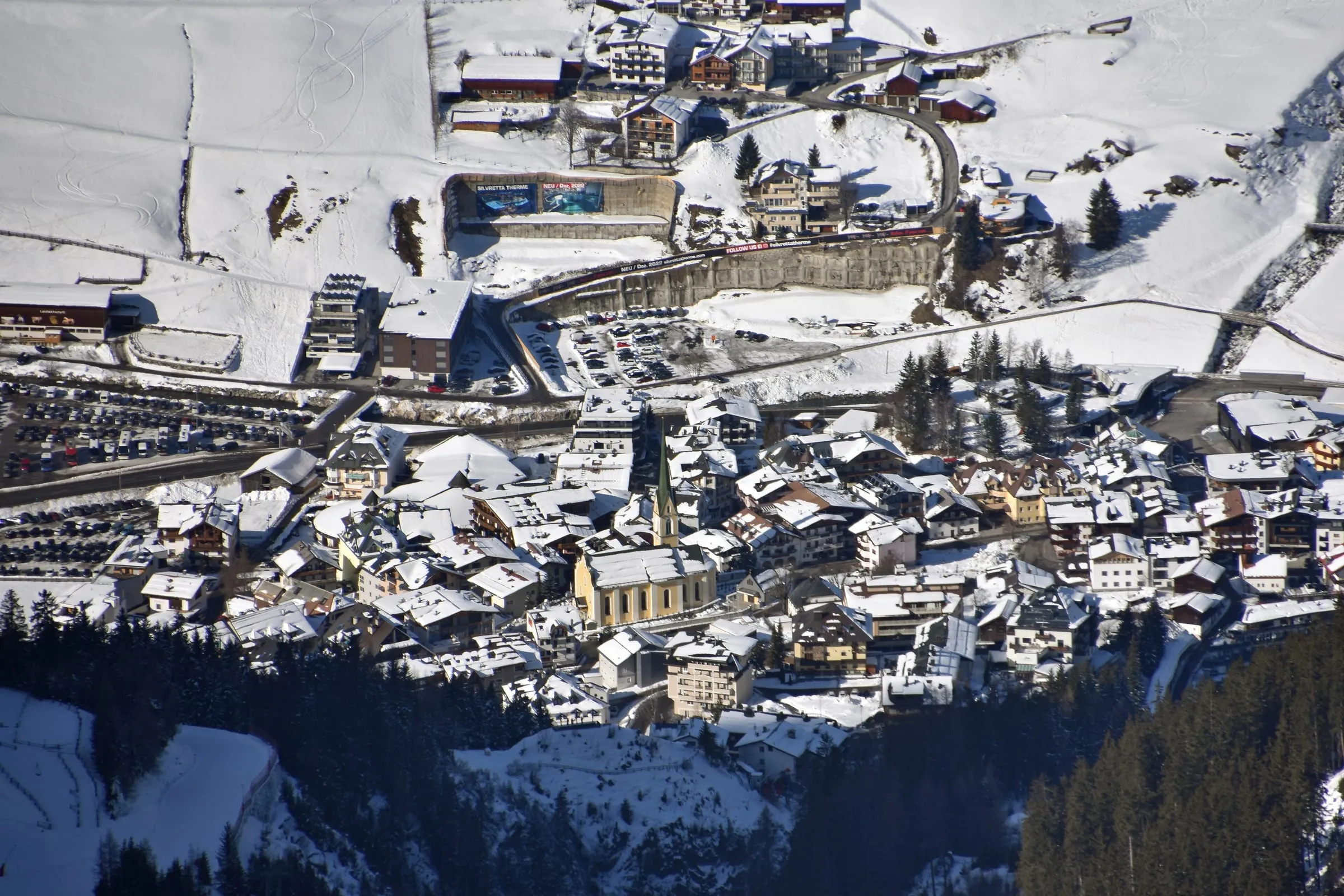
Ischgl is a village in Tyrol’s Paznaun valley in western Austria, and the main base for the Silvretta Arena Ischgl/Samnaun: 239 km of pistes and 46 lifts that run from 1,377 m in the village to 2,872 m and cross the border into duty-free Samnaun in Switzerland. It is high, modern and built for mileage, and it suits confident intermediates and groups who want long ski days followed by some of the loudest après-ski in the Alps.
Ischgl ski area: a high plateau that crosses into Switzerland
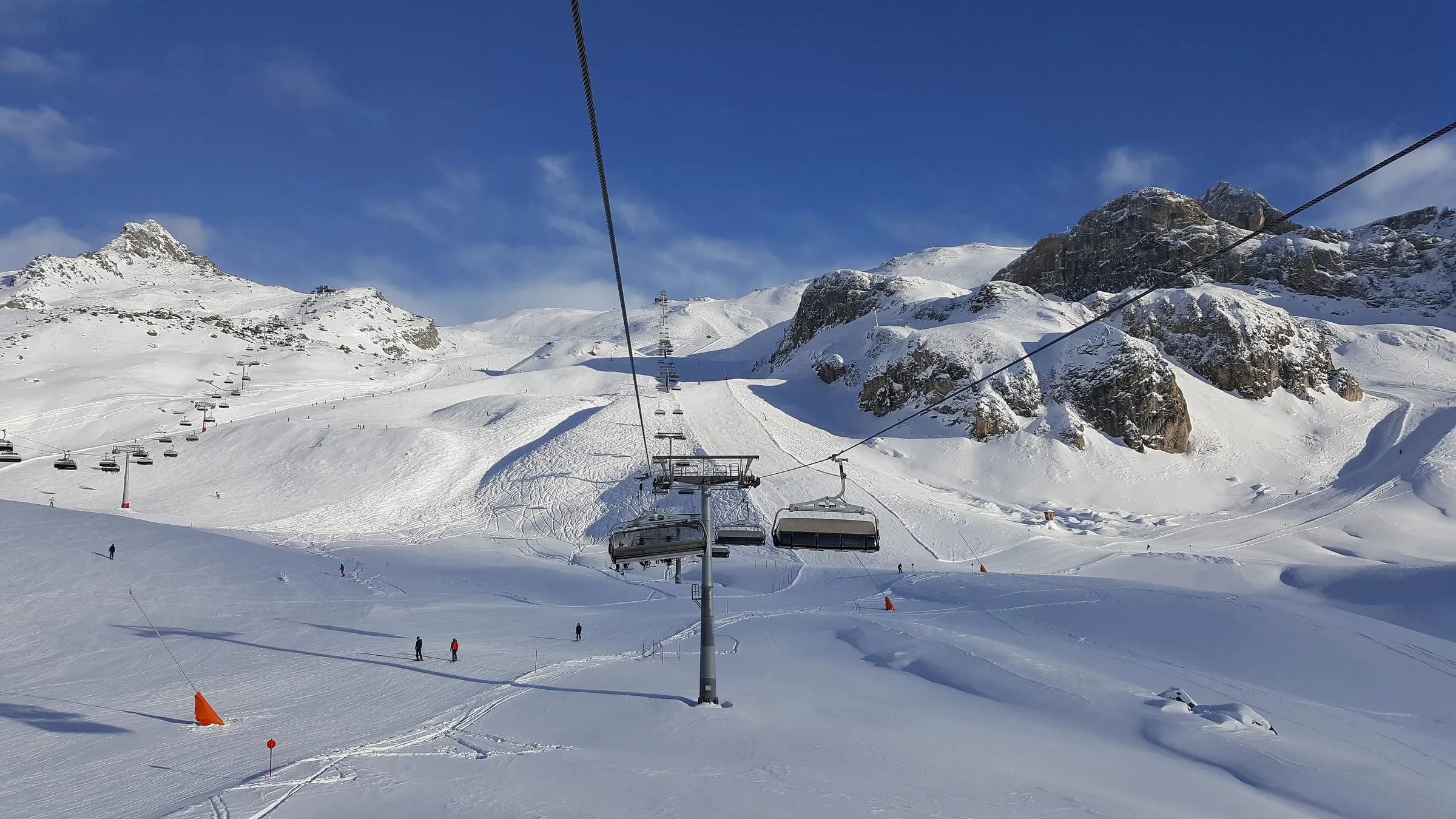
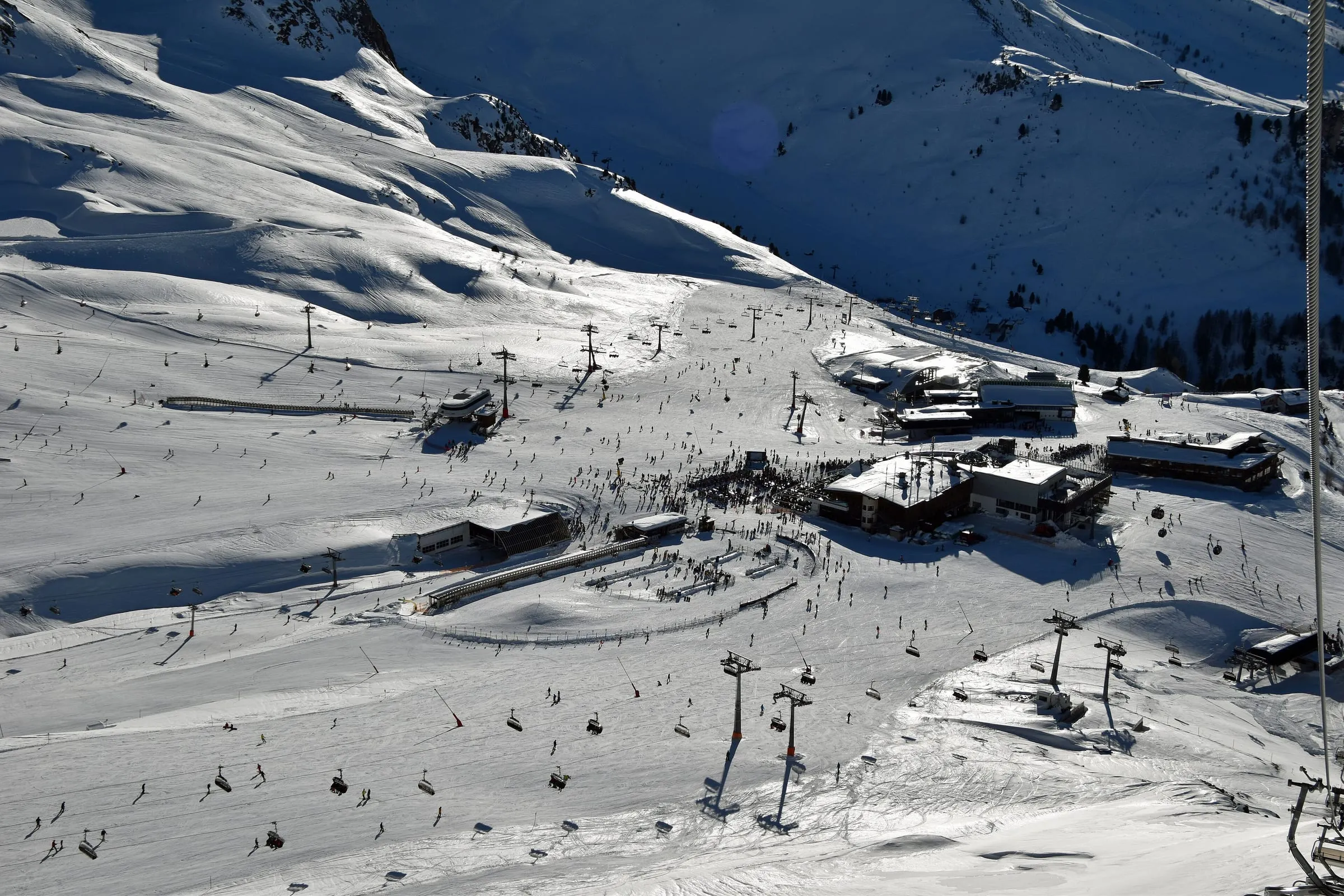
The thing to understand about Ischgl is that the village is not where the skiing is. Three big lifts, the Silvrettabahn at the western end of the village and the Fimbabahn and Pardatschgratbahn at the eastern end, lift you about 1,000 m to the Idalp, a broad bowl at roughly 2,300 m. Almost everything happens from there.
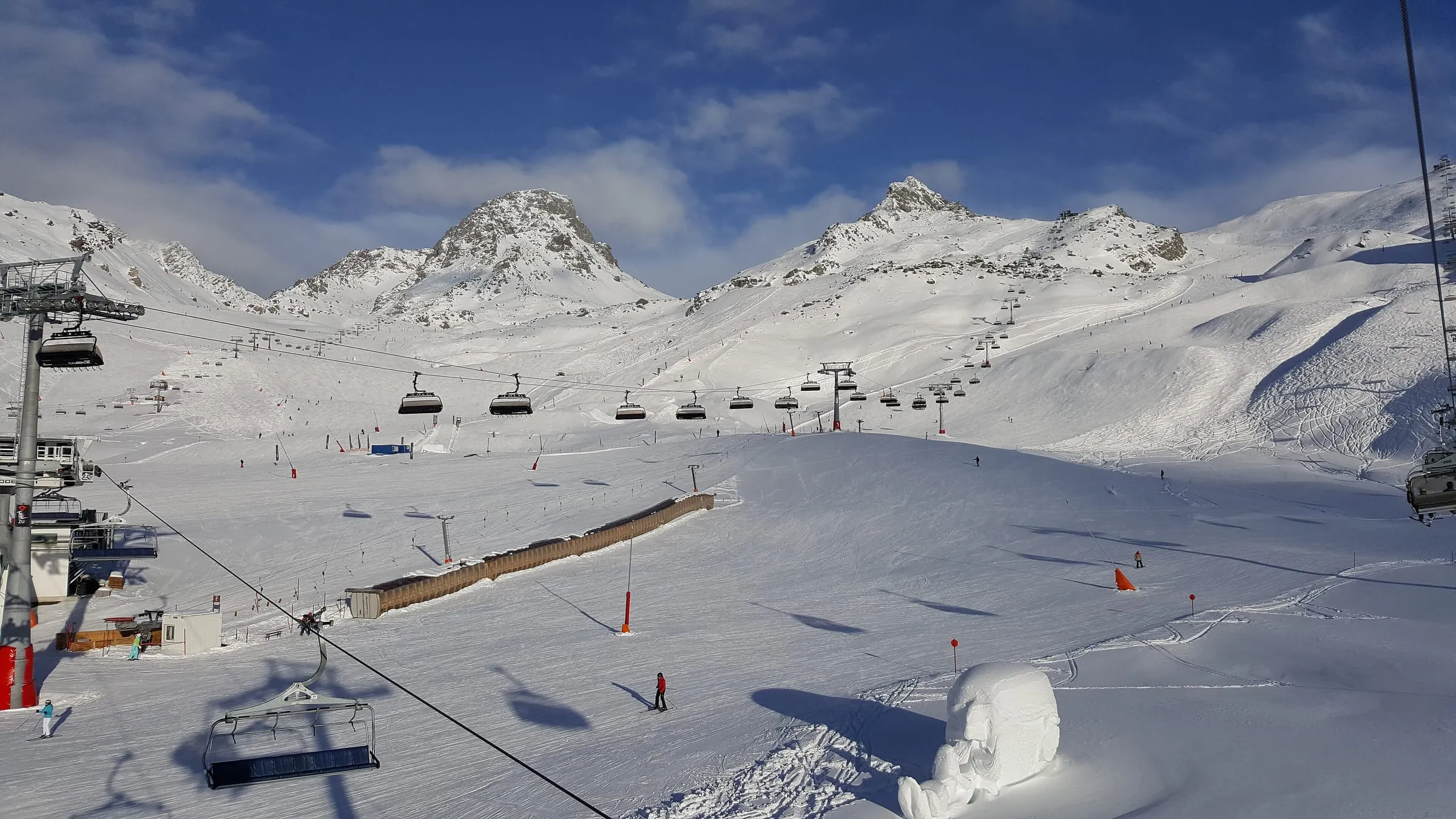
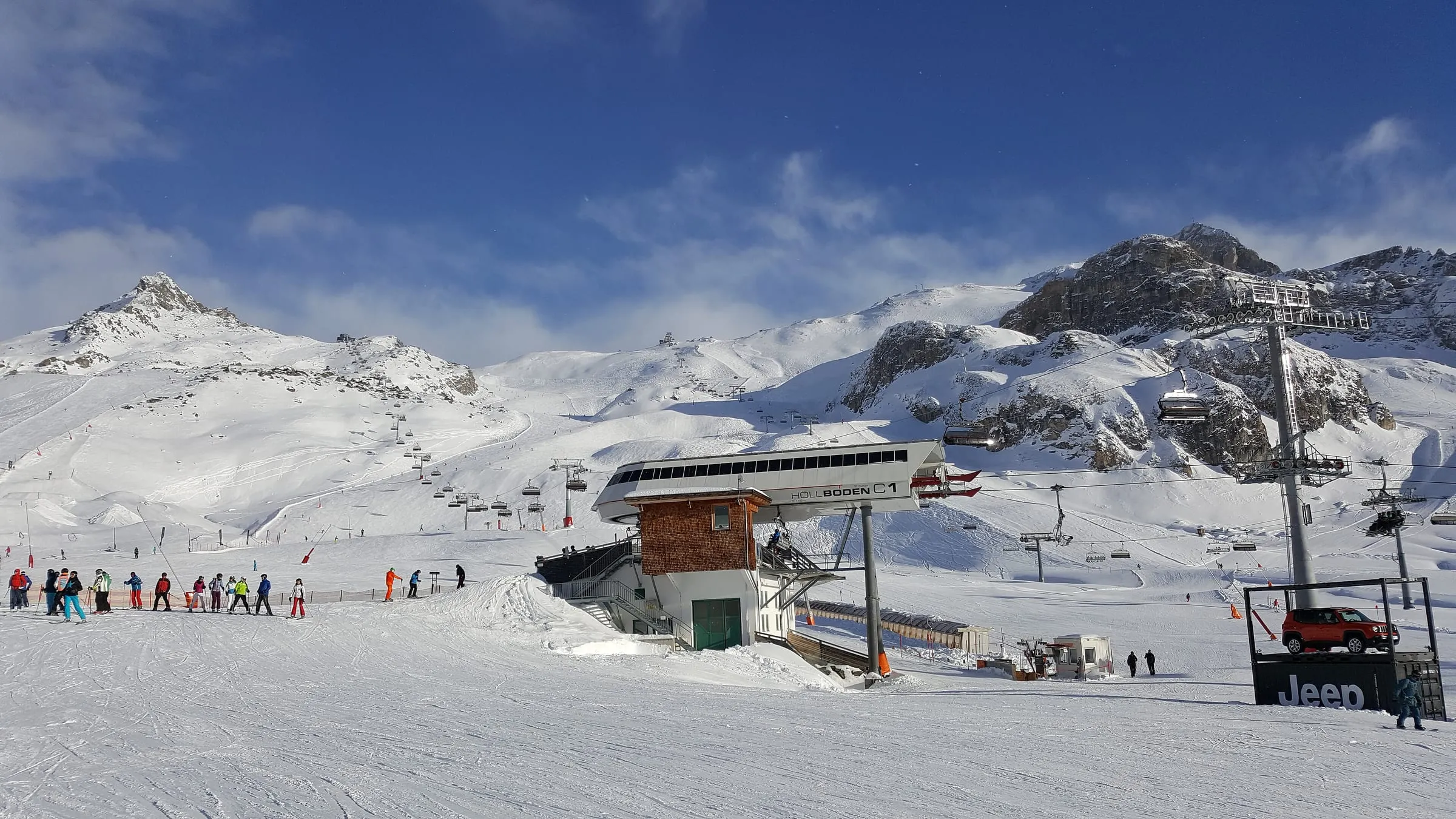
From the Idalp the area spreads out in three directions. North and west are the Velill, Idjoch and Flimjoch lifts. South-east is the Höllboden basin, the Palinkopf (2,853 m at the top of its chair) and the long runs down towards the Gampenalp and the Fimbatal. Over the ridge to the south-west is the Swiss side: Alp Trida, the Greitspitz and the runs down to Samnaun.
Look at the lift list and the altitude story is obvious. Apart from the runs home to Ischgl and Samnaun, nearly every lift in the arena starts above 1,900 m, and many top out above 2,700 m. That is why the season here runs from late November to early May.
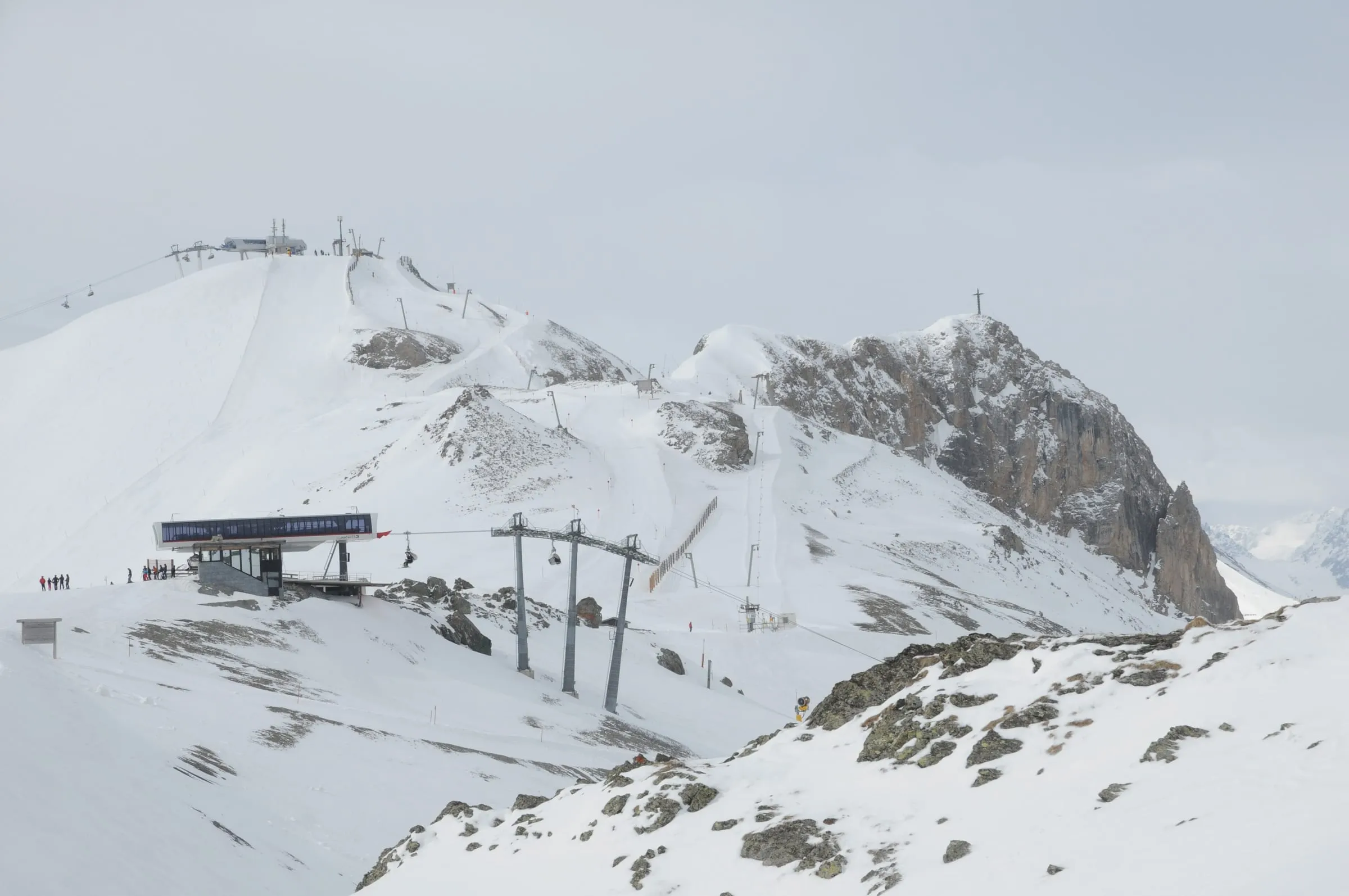
For 2026/27 the headline change is the new Höllkarbahn, a detachable eight-seat chair with weather bubbles and heated seats that rises from 2,141 m to 2,468 m in about five minutes. The tourist office says it replaces the old Höllkar chair and is part of a programme of more than €50 million with the Höllboden and Sassgalun chairs. On the Samnaun side, the 1995 double-decker Twinliner is being overhauled with new cabins.
Skiing in Ischgl for beginners, intermediates and experts
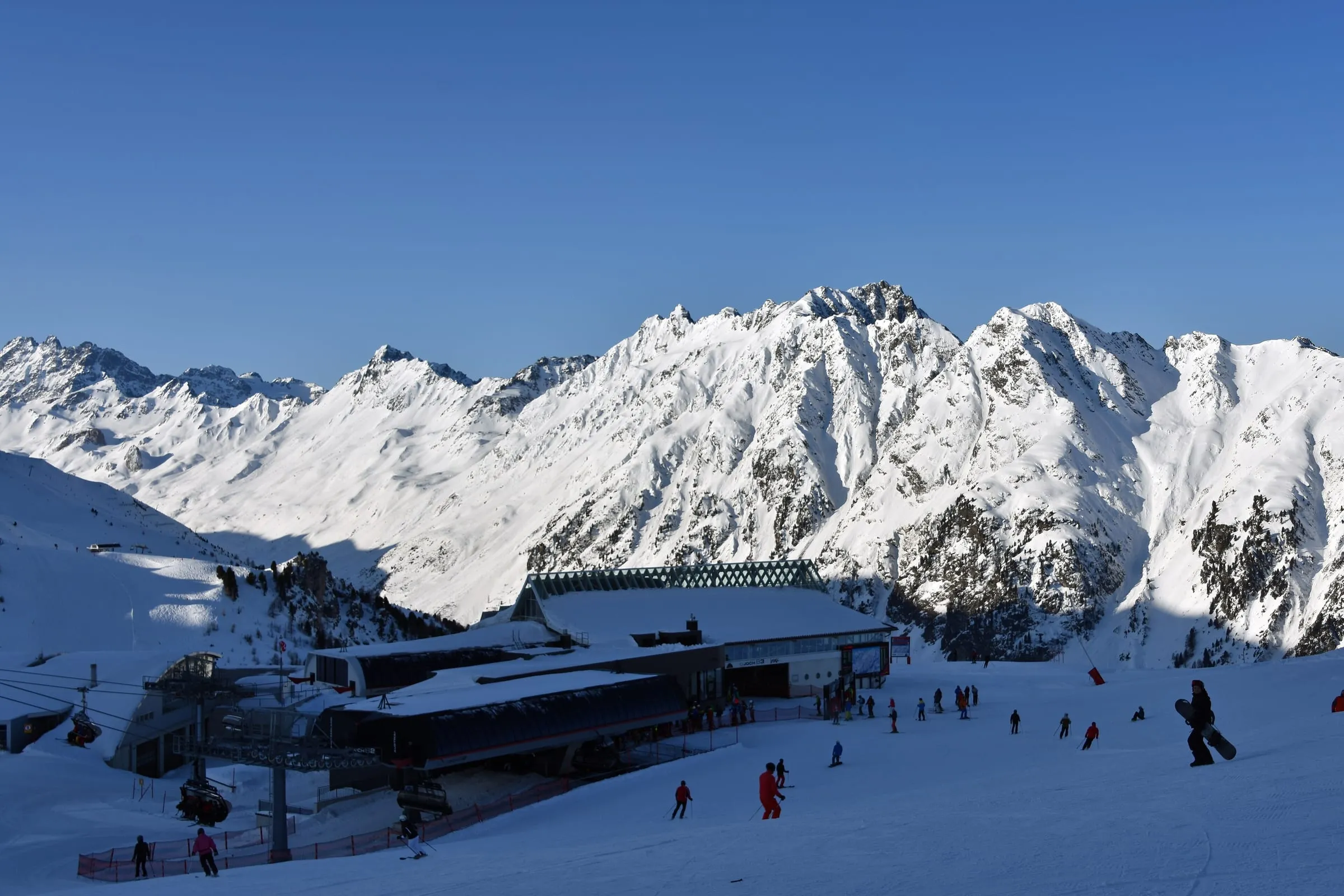
The lift company counts 47 km of blue, 140 km of red and 47 km of black runs. That 140 km of red is the heart of Ischgl: wide, well-groomed and fast.
Beginners
Ischgl can teach you to ski, but it isn’t where we would send a first-timer on a budget. The ski school’s courses start on the Idalp, where its Kinderland is, and the practice lifts (Velill and Viderböden, plus two conveyor belts) are up in the ski area too, so you ride the gondola up and down every day. The way home on skis is the red 1, which is not a beginner’s run. On the plus side, snow at 2,300 m is reliable, and the blue runs around the Idalp, Idjoch and the Nachtweide chair (piste 2b is marked as ideal for beginners) are a good next step. There is also a small practice lift down in Mathon.
Intermediates
This is who Ischgl is for. A good red skier can spend six days here without repeating much: the Höllboden and Palinkopf sector, the Velill and Flimjoch slopes, and the long cruise over to Alp Trida and down to Samnaun. The Smugglers’ Circuit (Schmugglerrunde) is a signed tour of the arena in three versions. The hardest, Gold, covers 35.7 km and 6,463 m of descent according to the tourist office; Bronze sticks mainly to blues.
Experts
There are black runs at most of the high points (the Greitspitz, Palinkopf, Höllspitz and Velilleck), plus mogul runs and a few pitches the lift company says exceed 70% gradient. Off-piste, the tourist office points to the slopes around the Piz Val Gronda lift and towards the Heidelberger Hütte in the Fimbatal. Take a guide: the Ischgl ski schools and several local guiding outfits run freeride days. If steep terrain is the main point of your trip, nearby St Anton has more of it.
A first day in Ischgl
A route for a confident intermediate, checked against the lift company’s lift and piste list:
- Silvrettabahn or Fimbabahn to the Idalp. Take whichever is nearer your hotel; both arrive at the same place.
- Warm up on the Idjochbahn and blue 11 (Idjoch to Idalp) once or twice.
- Ride the Flimjochbahn chair to the ridge at about 2,750 m and ski blue 62 down to Alp Trida in Switzerland.
- Spend the late morning on the open slopes around Alp Trida, using the six-seat Alp Trider Sattelbahn, and have lunch on the Swiss side.
- Take the Flimsattelbahn back to the ridge and red 10 down to the Idalp.
- After lunch, drop down blue 2 to Höllboden, try the new Höllkarbahn, then ride the Palinkopfbahn to 2,853 m and take blue 22 back to its base.
- Ski blue 23 to Höllboden, take the Höllbodenbahn up towards the Idalp, and finish on red 1 all the way to the village.
The Höllbodenbahn stops at 4.30 pm in the main season (5 pm from 28 March), so don’t leave Höllboden late. The village gondolas run until 5 pm.
Snow in Ischgl: how reliable is it?
Very, by Alpine standards. The skiing is almost all above 1,900 m, much of it well above 2,000 m, and the lift company says more than 1,100 snow guns back up the natural snow. The 2026/27 season runs from 26 November 2026 to 2 May 2027, more than five months.
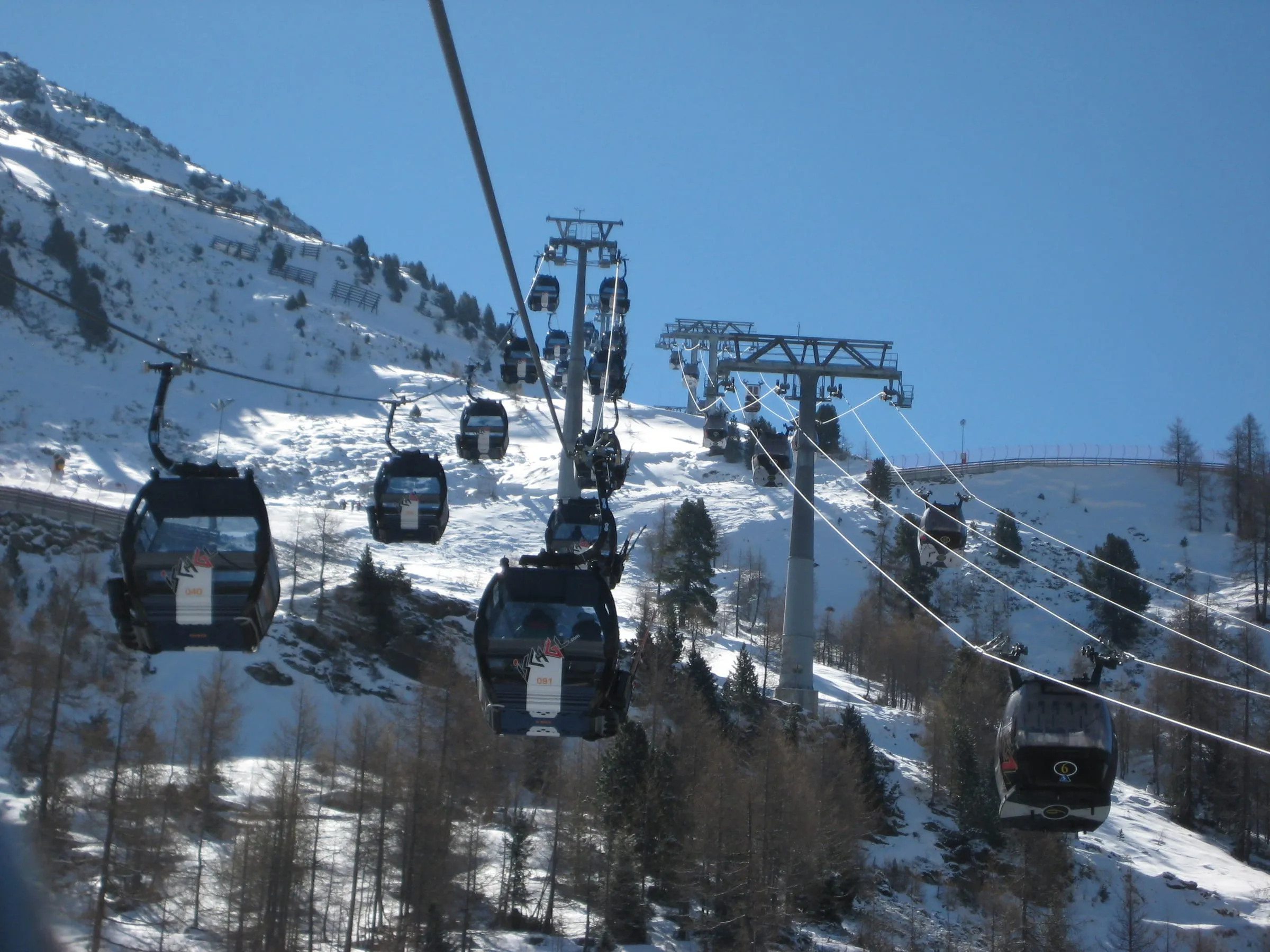
The weak points are the valley runs. In a thin early-season spell or a warm April, the red 1 back to Ischgl is the run most likely to be icy or slushy, and you may choose to ride the gondola down. If the weather turns, the Silvrettabahn and Fimbabahn are big gondolas and the Pardatschgratbahn is a 3S cable car that its operator describes as wind-safe, so you can usually get up even when the exposed chairs on the ridges stop.
Is Ischgl good for a last-minute ski trip?
Yes, more than most Austrian resorts, because the altitude means the snow is rarely the problem. Two things are.
First, price and space on the big weekends. The opening concert weekend (28 November 2026), Christmas to New Year, the February half-terms and Easter are the busiest times. Ischgl has a lot of beds, but the hotels nearest the lifts go first.
Second, timing. In the early season (to 18 December) and the spring “Firn” period (from 3 April) you get the VIP Special lift pass prices and much more choice of rooms.
If the forecast is poor where you were planning to go, Ischgl is one of the safer switches in Tyrol. If Ischgl itself looks marginal, Sölden has two glaciers and is the obvious alternative.
Ischgl lift passes
There are two main passes, and both are valid from 26 November 2026 to 2 May 2027:
| Pass | Covers | Adult price 2026/27 | Free for children |
|---|---|---|---|
| Day ticket Ischgl/Samnaun | 46 lifts, Ischgl and Samnaun | €83 | n/a (child €51) |
| VIP pass, 6 days | Ischgl and Samnaun, guest-card holders only | €385 (€325 in VIP Special periods) | Under 10, with a parent |
| Silvretta ski pass, 6 days | 75 lifts in Ischgl/Samnaun, Galtür, Kappl and See | €451 | Under 8, with a parent |
Prices are from the lift company’s 2026/27 tables, which it says may change, especially around events. Children’s prices apply up to 17, seniors from 65. There is an afternoon ticket from 12.30 pm (€72) and a taster ticket from 2 pm (€44).
The VIP pass is cheaper, but you can only buy it with an Ischgl or Mathon guest card, which your accommodation issues. If you are staying in Kappl, See or Galtür, or want a day at the quieter family areas there, buy the Silvretta pass. The arena is also on the Ikon Pass, the lift company says.
Après-ski and things to do in Ischgl
Ischgl’s après is the reason many people come, and it starts early. Trofana Alm on the main street opens daily at 3 pm and runs parties with international DJs until midnight; Nevada Alm by Florianplatz has an outdoor bar and opens from 1 pm until 1 am. The Schatzi Bar at the Elizabeth Arthotel sits right by the slopes. Expect crowds, volume and late nights, especially at weekends and during events.
The season is book-ended by the Top of the Mountain concerts: Westlife opens 2026/27 on 28 November, and the tourist office’s April event series, Spring Blanc, usually brings three more concerts on the Ischgl Stage in the ski area.
Off the slopes:
- Night tobogganing from the top of the Silvrettabahn on Mondays and Thursdays, with uplift from 7 pm to 8.30 pm; the tourist office gives a 950 m drop back to the village.
- Silvretta Therme, with pools and saunas, and the ice rink next to it.
- Duty-free shopping in Samnaun, on the Swiss side of the ski area, reachable on skis.
- Winter walking trails, guided snowshoe walks, and indoor tennis.
Who Ischgl suits, and who it doesn’t
Ischgl suits groups of friends and couples who ski hard and party late, and families with confident children who want snow they can count on. It is one of the best intermediate areas in Austria.
It suits less well quiet-village people (try Kitzbühel for an old town, or Zermatt for car-free calm), budget beginners, and experts who want steeps every day.
Torn between Ischgl and St Anton? St Anton is steeper, with more off-piste and a more international crowd; Ischgl is higher, more snow-sure and easier to ski as a mixed group. Against Mayrhofen, Ischgl has higher, bigger skiing for similar après. And if duty-free is part of the appeal, Livigno is the cheaper, more relaxed alternative.
How to get to Ischgl
By plane and transfer
Innsbruck is the closest airport. Approximate distances and road times quoted by transfer operators:
| Airport | Distance | Transfer time |
|---|---|---|
| Innsbruck | about 100 km | 1 hr 20 to 1 hr 30 |
| Friedrichshafen | about 170 km | about 2 hr 15 |
| Zurich | about 235 km | about 3 hr |
| Munich | about 235 km | about 3 hr 30 |
Memmingen (about 190 km) and Salzburg (about 250 km) are also options. Allow longer on Saturdays in peak weeks.
By train
Book to Landeck-Zams, which has direct trains from Vienna, Salzburg and Zurich. From the station, bus 260 runs up the Paznaun valley to Ischgl via See and Kappl. With winter sports kit and a ski pass or a valid guest card, local and ski buses between Landeck-Zams and Galtür are free, the tourist office says. From Innsbruck airport, bus F takes about 20 minutes to Innsbruck station for the train west.
By car
From Innsbruck take the A12 and S16 and leave at the Paznaun/Ischgl exit, then follow the B188 up the valley through See and Kappl. You need an Austrian vignette; from the 2027 vignette year only the digital version is sold. Coming from Switzerland or Vorarlberg through the Arlberg road tunnel, there is a separate section toll that the vignette does not cover.
Winter tyres are compulsory in winter conditions from 1 November to 15 April, and carry chains. The Silvretta High Alpine Road is closed in winter, so there is no short cut from Vorarlberg over the top.