France
 Austria
 Italy
 Switzerland
 English
 Deutsch
 Nederlands
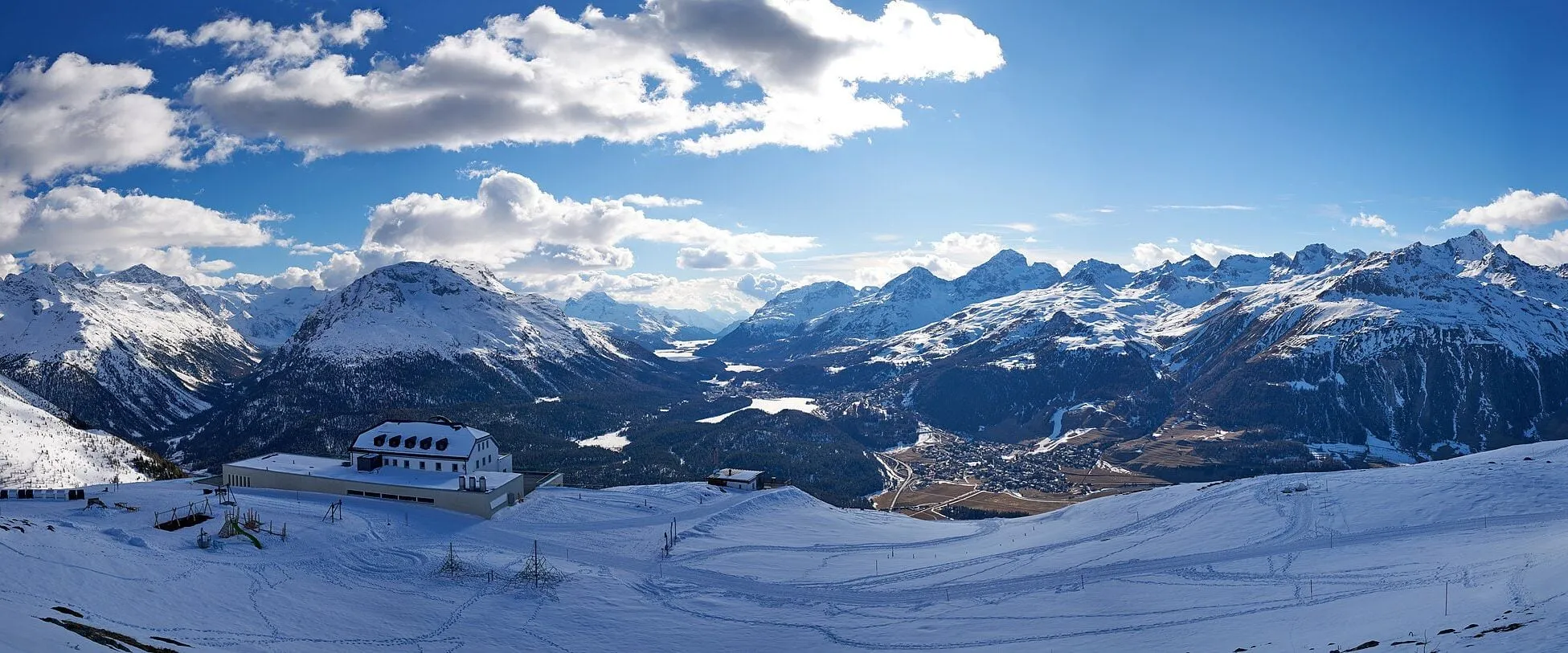
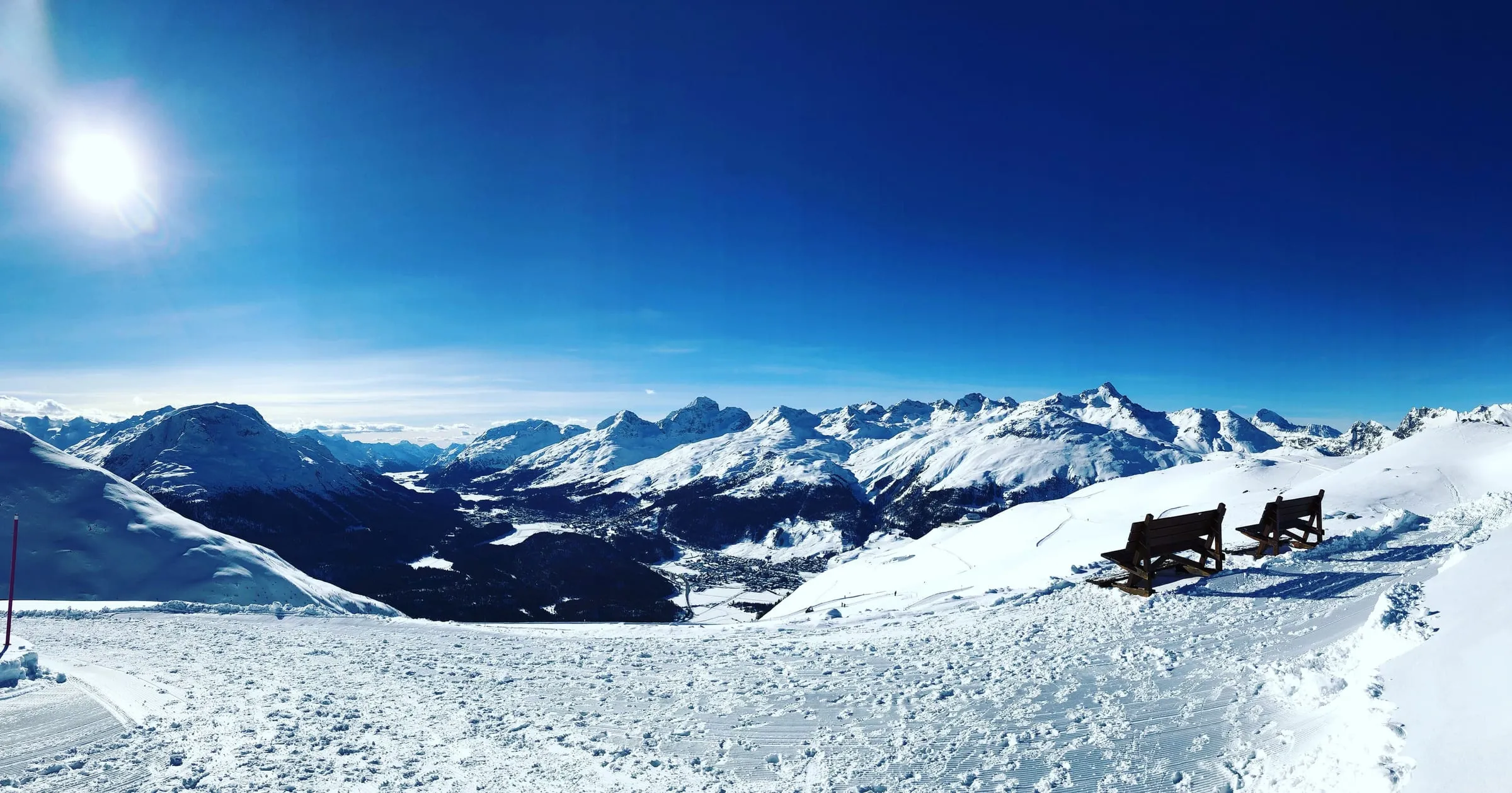
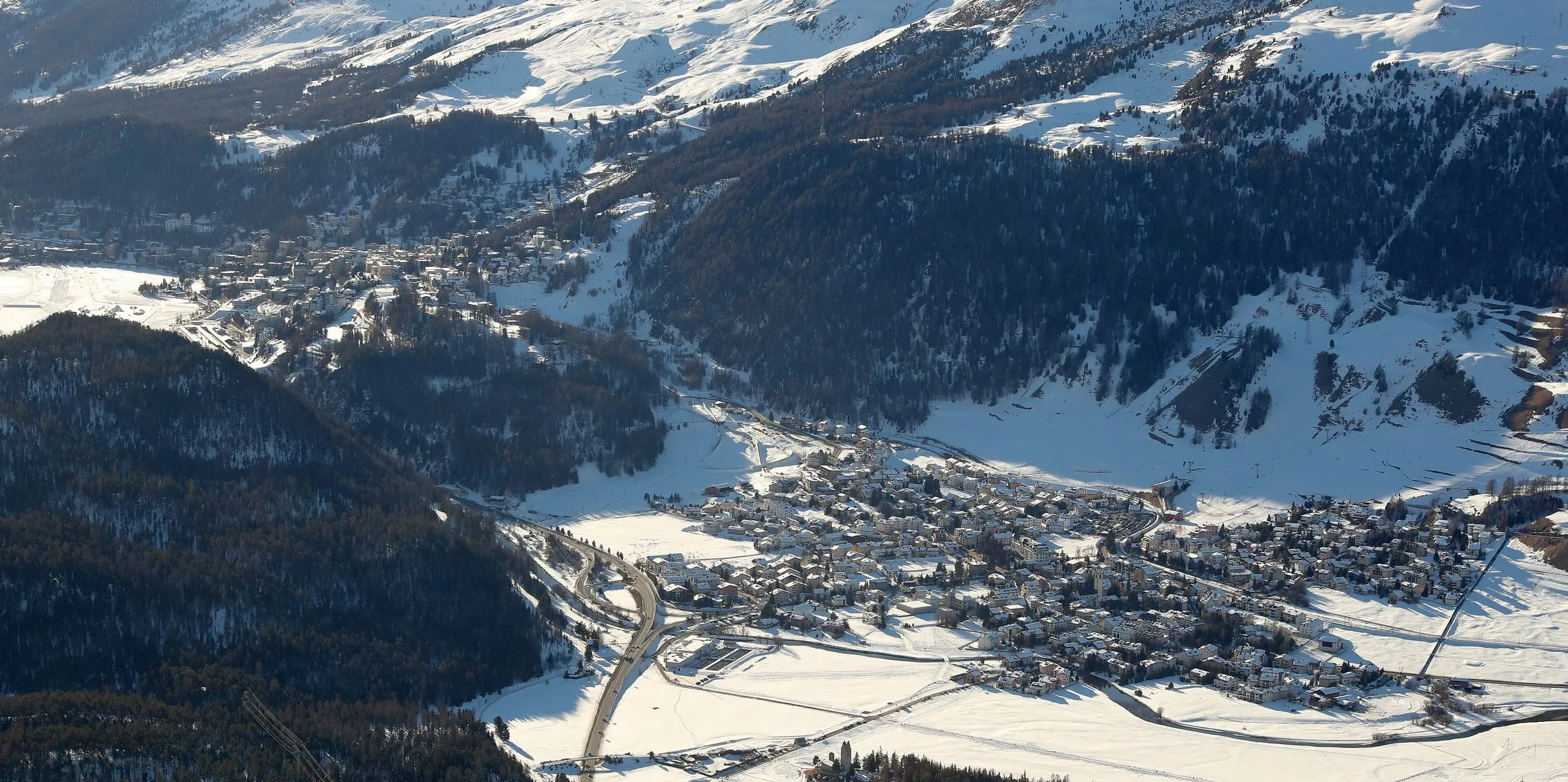
St. Moritz is a ski town in the Upper Engadine valley of Graubünden, south-east Switzerland, at 1,846 m by the lift company’s map. Its home mountain, Corviglia, has 155 km of pistes and 24 lifts rising to Piz Nair at 3,057 m, and the same Upper Engadin pass opens Corvatsch, Diavolezza and six more areas, over 350 km in all. It suits confident intermediates, couples and anyone who wants sun, altitude and a little theatre with their skiing, and it is defined as much by its frozen lake, grand hotels and two Winter Olympics (1928 and 1948) as by its slopes.
St. Moritz ski area: a valley of mountains on one pass
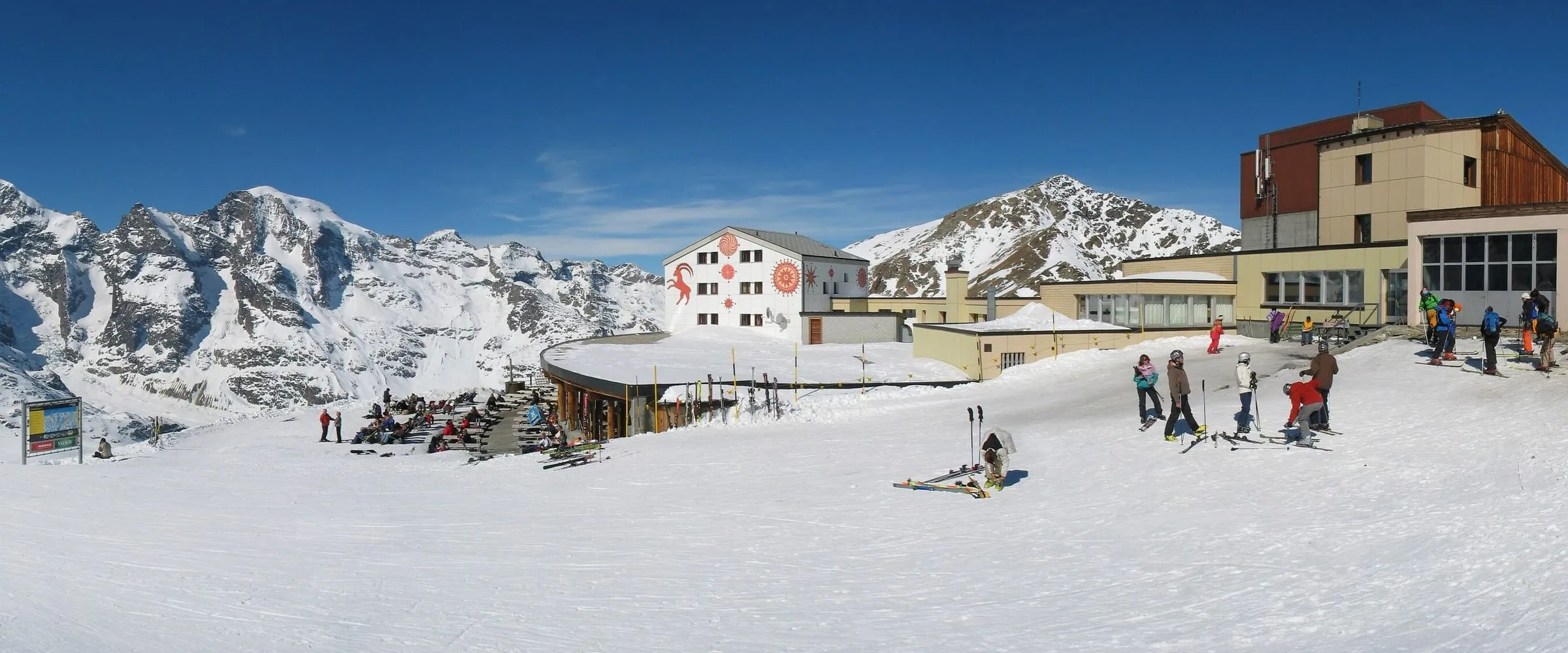
Think of St. Moritz as the centre of a valley rather than a single resort. Corviglia is the mountain above the town, reached by funicular from St. Moritz Dorf, by the Signal cable car from St. Moritz Bad, by chairlift from Suvretta, or by the gondola from Celerina next door. It’s the biggest and best-groomed of the areas, and it has hosted the Alpine World Championships five times, most recently in 2017.
Across the valley, Corvatsch climbs from Surlej to 3,303 m, which Corvatsch AG says is the highest top station in Graubünden, and links with Furtschellas above Sils. On the road to the Bernina Pass, Diavolezza and Lagalb face each other near the pass, with an 8 km glacier run from Diavolezza down to Morteratsch. Zuoz, Muottas Muragl and a handful of small hills fill the gaps.
None of these are linked to each other on skis. You move between them by bus or train, so pick your mountain for the day before you set off.
| Area | Top | Season 2026/27 | Best for |
|---|---|---|---|
| Corviglia | 3,057 m (Piz Nair) | 28 Nov to 4 Apr | Groomed reds, sun, mountain restaurants |
| Corvatsch–Furtschellas | 3,303 m | 21 Nov to 25 Apr | Higher, colder snow, the Hahnensee run, night skiing |
| Diavolezza–Lagalb | about 3,000 m | Diavolezza 17 Oct to 2 May | Glacier run, early and late season |
Skiing in St. Moritz for beginners, intermediates and experts
Beginners
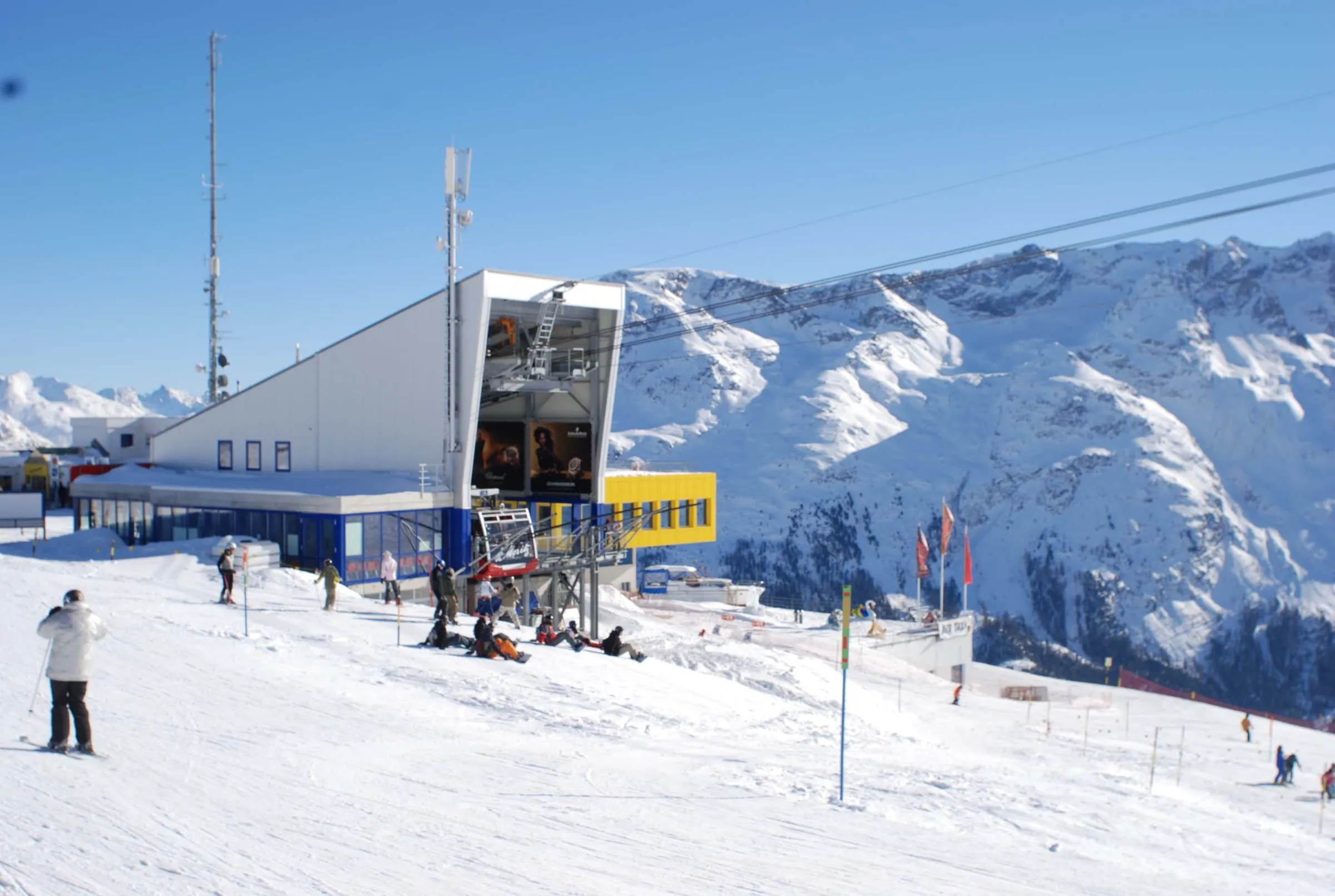
Corviglia has two good starting points. Right by the Corviglia top station, the 105 m Runzöl magic carpet serves a beginners’ slope next to the quattro BAR, and the Sass Runzöl drag lift is the next step up. On the Celerina side, Mountys Land at Marguns is a safe kids’ zone with its own conveyor. Your first proper run is blue No. 6, Standard, which has an extra-easy variant marked on the piste map. The Swiss Ski School’s centre is at Salastrains, just below Corviglia.
The catch is what comes next. Only 42 of Corviglia’s 155 km are blue, so improvers soon find themselves on reds. Lessons and passes are expensive, too. If the whole group is learning, Livigno over the Italian border is easier on the wallet.
Intermediates
This is who St. Moritz is built for. Half of Corviglia (79 km) is red, and those reds are wide, sunny and groomed early: on White Carpet mornings the lifts start at 7:45 so you can be first on fresh corduroy. The runs between Plateau Nair, Trais Fluors and Marguns give you long, flowing laps. Red No. 17, Schlattain, is a long descent from Fuorcla Grischa back towards Marguns once that lift opens on 19 December. The timed Ski Run giant-slalom course and the Speed Check radar on No. 15, Champion, add some fun.
On a second day, go to Corvatsch for a change of feel, and finish on the Hahnensee run down to St. Moritz Bad, which Corvatsch AG calls “the king of ski runs”.
Experts
There are 34 km of black on Corviglia: No. 3 Lanigiro, No. 9 Muntanella, No. 11 Thomas Run, No. 12 Olympia and No. 18 Fuorcla Grischa among them. The start of the 2017 World Championship downhill, the “Free Fall”, is the steepest start in the world by the lift company’s reckoning: 100 per cent gradient at 2,840 m. Corviglia also has a marked, ungroomed freeride area below Trais Fluors.
The more interesting terrain is across the valley, though. Corvatsch’s upper slopes face away from the sun and hold colder snow, and the Diavolezza glacier run is a long, scenic descent rather than a test. For proper off-piste, hire a guide.
A first day in St. Moritz
This route uses the lift company’s 2026/27 piste map, and every lift on it except the Piz Nair cable car runs from the 28 November opening.
- From St. Moritz Dorf, take the Dorf–Chantarella funicular, then the Chantarella–Corviglia funicular to the top station at 2,486 m.
- Warm up on blue No. 6, Standard, then ride the FIS six-seater chair to Plateau Nair (2,656 m) and come back down on blue No. 5, FIS.
- Take blue No. 14, Marmotta, across to Marguns (2,278 m) on the Celerina side.
- Ride the Trais Fluors six-seater to 2,752 m and cruise blue No. 21, Princess, back to Marguns. Do it twice: it’s the best view of the morning.
- Lunch at Marguns, then take the Plateau Nair chair back up and try red No. 15, Champion, with the Speed Check radar on it.
- From 19 December, add the Corviglia–Piz Nair cable car to 3,057 m for the view.
- Ski home on the blue valley run to St. Moritz Dorf (No. 27). If you’re staying in Celerina, take the red valley run (No. 25, Saluver) instead.
Snow in St. Moritz: how reliable is it?
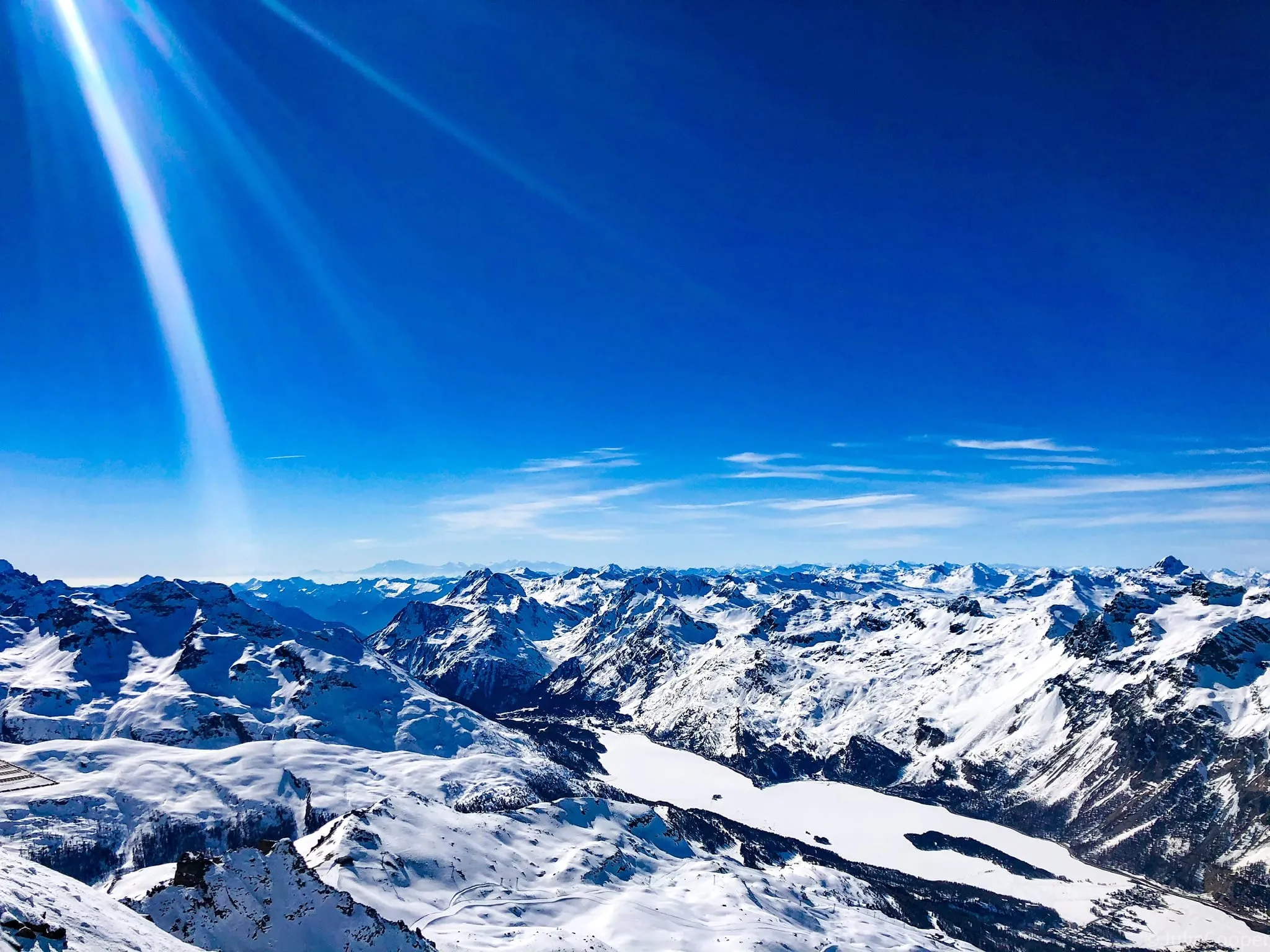
Very reliable by Alpine standards, and it’s mostly about altitude. Almost all of Corviglia’s lifts run between 2,000 m and 3,057 m. The village itself sits higher than many resorts’ mid-stations. Corvatsch tops out at 3,303 m on the colder, shadier side of the valley, and Corvatsch AG says it has powder until the end of April. Diavolezza opened on 17 October this season, with skiing on Wednesdays and weekends until mid-November.
Corviglia runs snowmaking with reused water from a reservoir on the mountain, and the lift company says the whole region is snow-sure. The trade-off is that the Engadine is a dry, sunny valley: when big storms hit the northern Alps, St. Moritz often sees less. You get sun and cold, well-kept pistes more often than deep powder days.
2026/27 dates: Corviglia runs from 28 November 2026 to 4 April 2027, but several lifts start later: Suvretta from 4 December, Alp Giop and Randolins from 5 December, and the Piz Nair cable car, Fuorcla Grischa and Lej da la Pêsch from 19 December. Corvatsch runs from 21 November to 25 April and the Diavolezza cable car until 2 May.
Is St. Moritz good for a last-minute ski trip?
Yes, with two conditions. Snow is rarely the problem: with this altitude and a glacier down the road, you can book late with some confidence. The two things that run out are rooms and value.
Christmas, New Year and February are the busiest. The lift company’s dynamic Snow-Deal prices show it: when we sampled the shop in October, a one-day adult pass cost CHF 74.50 in December and January but CHF 102.50 in February. January after the holidays and March are the sweet spots.
If Corviglia’s top lifts close in wind, the lower chairs around Salastrains and Marguns, and the woods above Celerina, are your shelter. If Corviglia is short of snow early or late in the season, go to Corvatsch or Diavolezza instead: the pass covers both. And if you’re past the 4 April Corviglia closing, stay on the Corvatsch side or near Pontresina.
St. Moritz lift passes
There’s one pass that matters: the Upper Engadin pass, which covers Corviglia, Corvatsch–Furtschellas, Diavolezza–Lagalb, Zuoz, Muottas Muragl and the small areas. Prices are dynamic and fall the earlier you book.
| Pass (2026/27) | What it gives you |
|---|---|
| Snow-Deal day and multi-day tickets | From CHF 55 a day, per the operator. Our October sample: 1-day adult CHF 74.50 in January, 6 days CHF 351.50 |
| Sleep + Ski | CHF 55 per day for guests of over 100 participating hotels, for the whole stay, 17 Oct 2026 to 7 May 2027 |
| Family card | On 3 to 15-day passes: second child 30% off, third and further children free (proof of household needed) |
| Ikon Pass | 7 days across the region (Ikon Base and Base Plus: 5 days) |
Ages on the shop are adults 18 and over, youths 13 to 17 and children 6 to 12. For anything longer than a weekend, check if your hotel is in Sleep + Ski before you buy online. At CHF 55 a day it often beats the shop in high season.
Après-ski and things to do in St. Moritz
Après here is a sunny terrace and a glass of something, not table dancing. On Corviglia, the White Marmot’s Lunch & Dance afternoons and the bars at Marguns are the liveliest. In town, the scene moves to hotel bars in the evening.
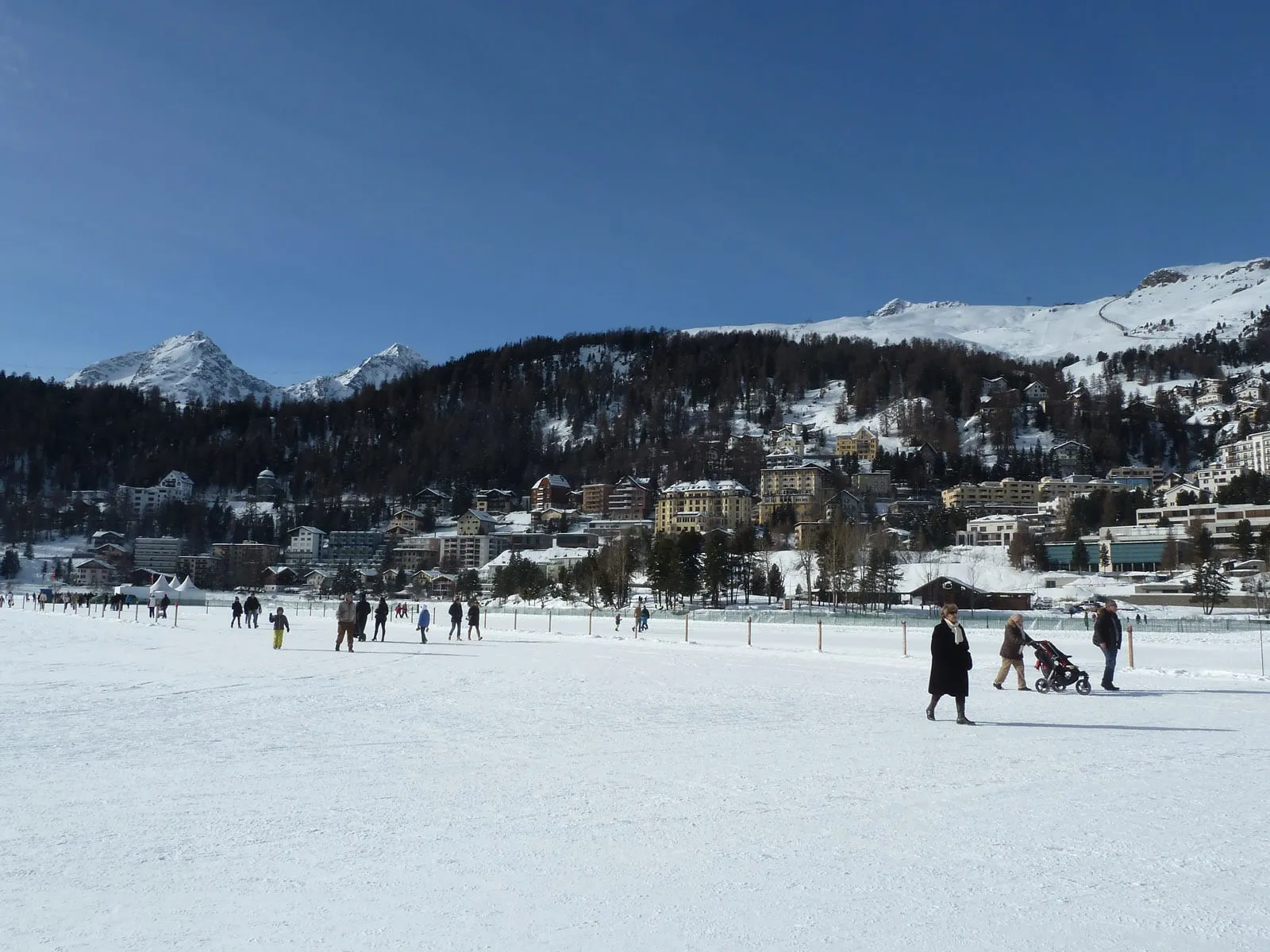
Off the slopes, St. Moritz has more to do than most resorts. Ride the funicular up Muottas Muragl for the view and the 4 km sledge run back down. Watch, or book, the Cresta Run and the Olympia Bob Run, walk on the frozen lake, or go cross-country skiing on the valley floor. On Friday nights, Snow Night on Corvatsch is night skiing on what Corvatsch AG calls the longest floodlit run in Switzerland.
Who St. Moritz suits, and who it doesn’t
St. Moritz suits intermediates who want reliable snow, sunshine and long cruising reds, and couples or mixed groups where not everyone skis all day. It’s a strong choice for late-season trips, and for anyone who wants their holiday to feel like an occasion.
It doesn’t suit budget skiers, mileage hunters who want a huge linked area, or groups wanting rowdy après. If you’re weighing it against Zermatt, Zermatt has the bigger linked area and the Matterhorn. Against Courchevel, Courchevel’s Three Valleys win on terrain, but St. Moritz feels like a real town. Choose Verbier if steep off-piste is the point of the trip.
How to get to St. Moritz
By plane and transfer
Zurich is the usual airport. From there the train is easiest. By road, the tourist office puts Zurich at 200 km and about three hours. Milan is about 170 km and three hours by road over the Maloja Pass, per the same source, so allow longer from Malpensa, which is north-west of the city. Innsbruck is the third option. Ming Bus runs shared airport transfers to the Upper Engadine. Engadin Airport at Samedan takes charter flights and air taxis.
By train
The train ride is part of the trip. Our timetable check for a Saturday in December showed trains from Zurich HB taking about 3 h 5 min with one change at Landquart, or 3 h 15 min via Chur, and about 3 h 25 min from Zurich Airport. From Chur, the Rhaetian Railway’s Albula line takes about two hours on a UNESCO World Heritage route of viaducts and spiral tunnels. From Tirano in Italy, the Bernina line takes about two and a half hours.
| From | By train | By road |
|---|---|---|
| Zurich HB | about 3 h 5 min (1 change) | 200 km, about 3 h |
| Zurich Airport | about 3 h 25 min (2 changes) | similar to Zurich |
| Chur | about 2 h direct | via the Julier Pass |
| Milan | via Tirano and the Bernina line | 170 km, about 3 h |
By car
You need a Swiss motorway vignette: CHF 40, valid from 1 December 2026 to 31 January 2028 for the 2027 edition, as a sticker or e-vignette. The Julier and Maloja passes stay open all year, while the Albula and Flüela passes close in winter. The alternative is the Vereina car train from Klosters Selfranga to Sagliains (18 minutes), then down the valley.
Switzerland has no legal requirement for winter tyres, but you’re liable if you drive on summer tyres in snow. Fit winter tyres and carry chains: the Julier is high and exposed.