France
 Austria
 Italy
 Switzerland
 English
 Deutsch
 Nederlands
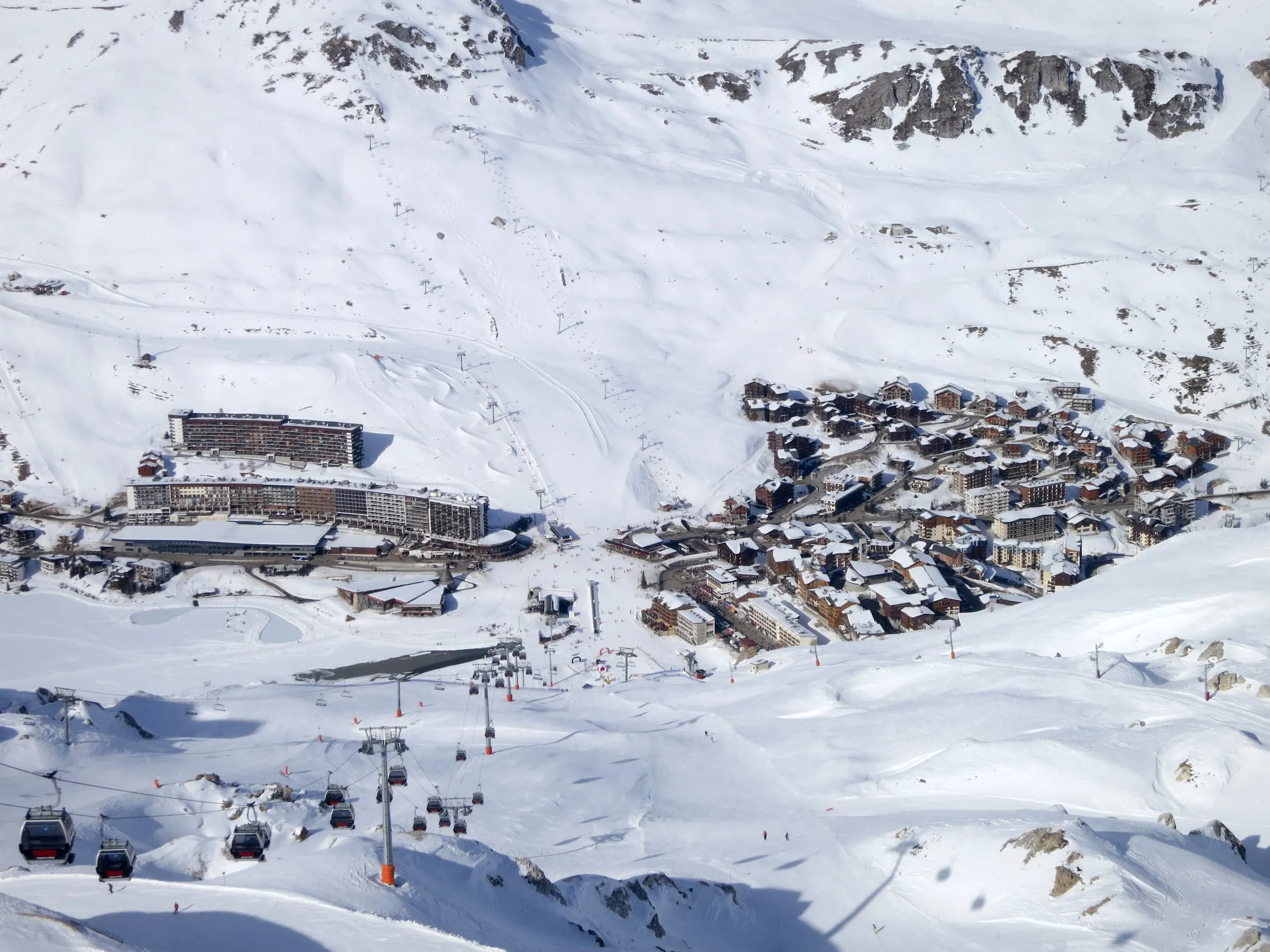
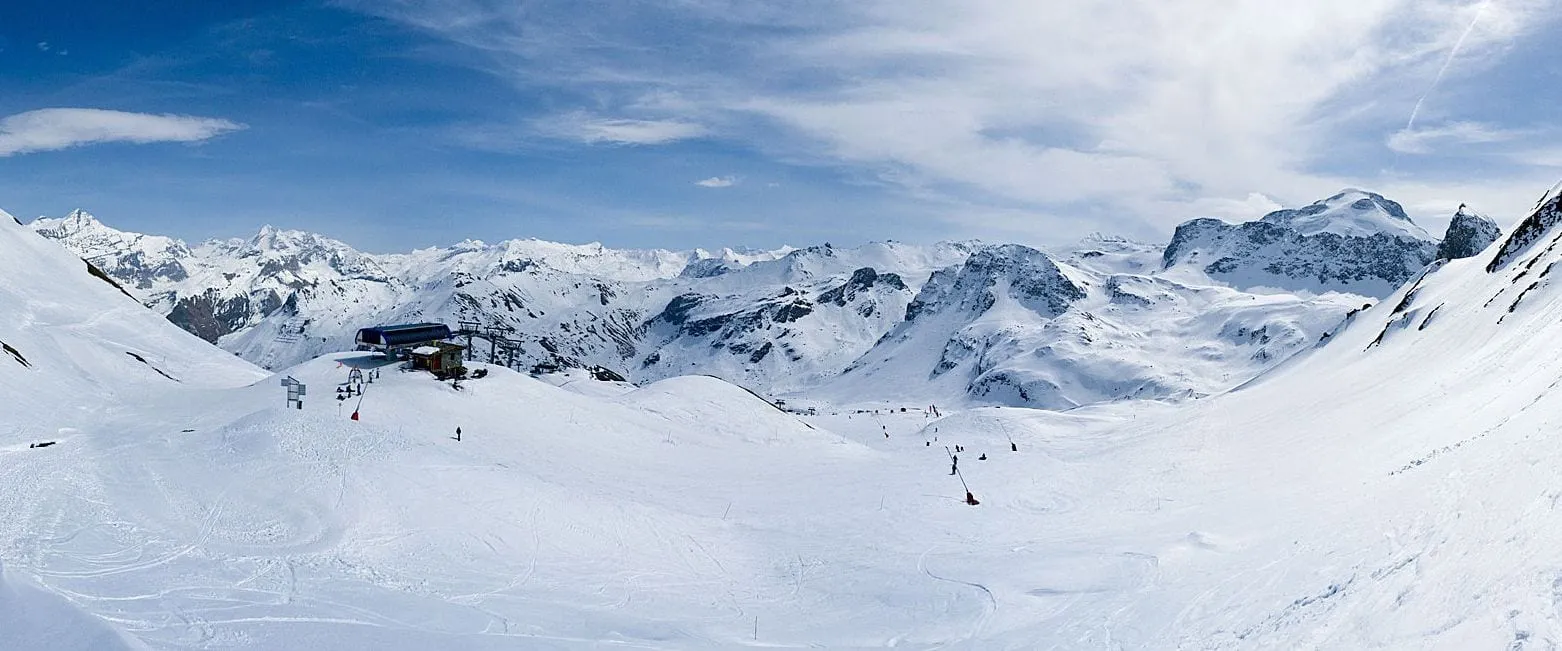
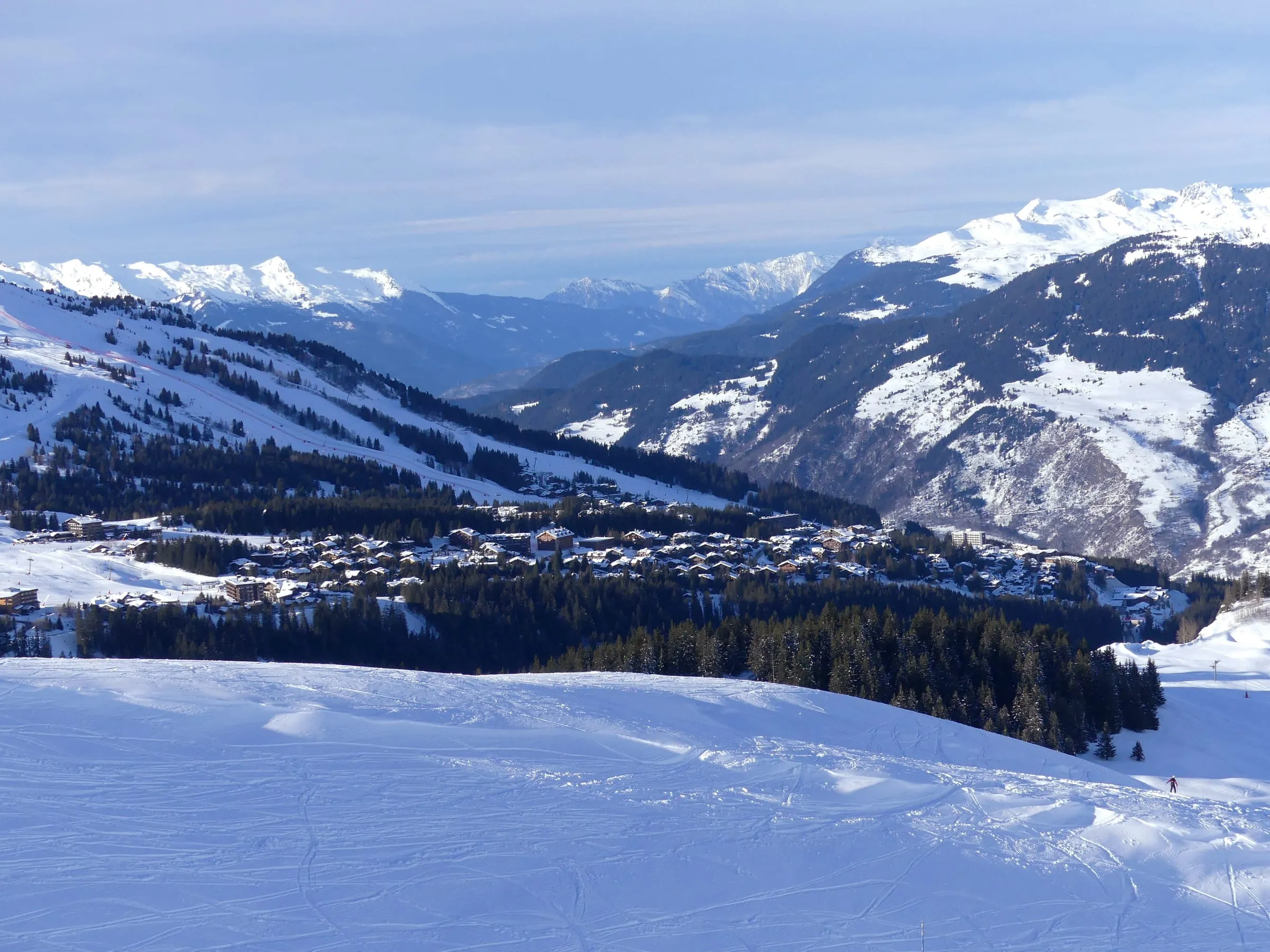
Tignes is a high-altitude ski resort in the Tarentaise valley of Savoie, in the French Alps, sharing a 300 km linked ski area with Val d’Isère. Its slopes run from 1,550 m at Les Brévières to 3,456 m on the Grande Motte glacier, and the main villages sit at about 2,100 m. It is one of the most snow-sure resorts in Europe, best for intermediates and experts who want a long season and plenty of mileage, and less suited to anyone after a postcard village.
Tignes ski area: a glacier, a lake and Val d’Isère next door
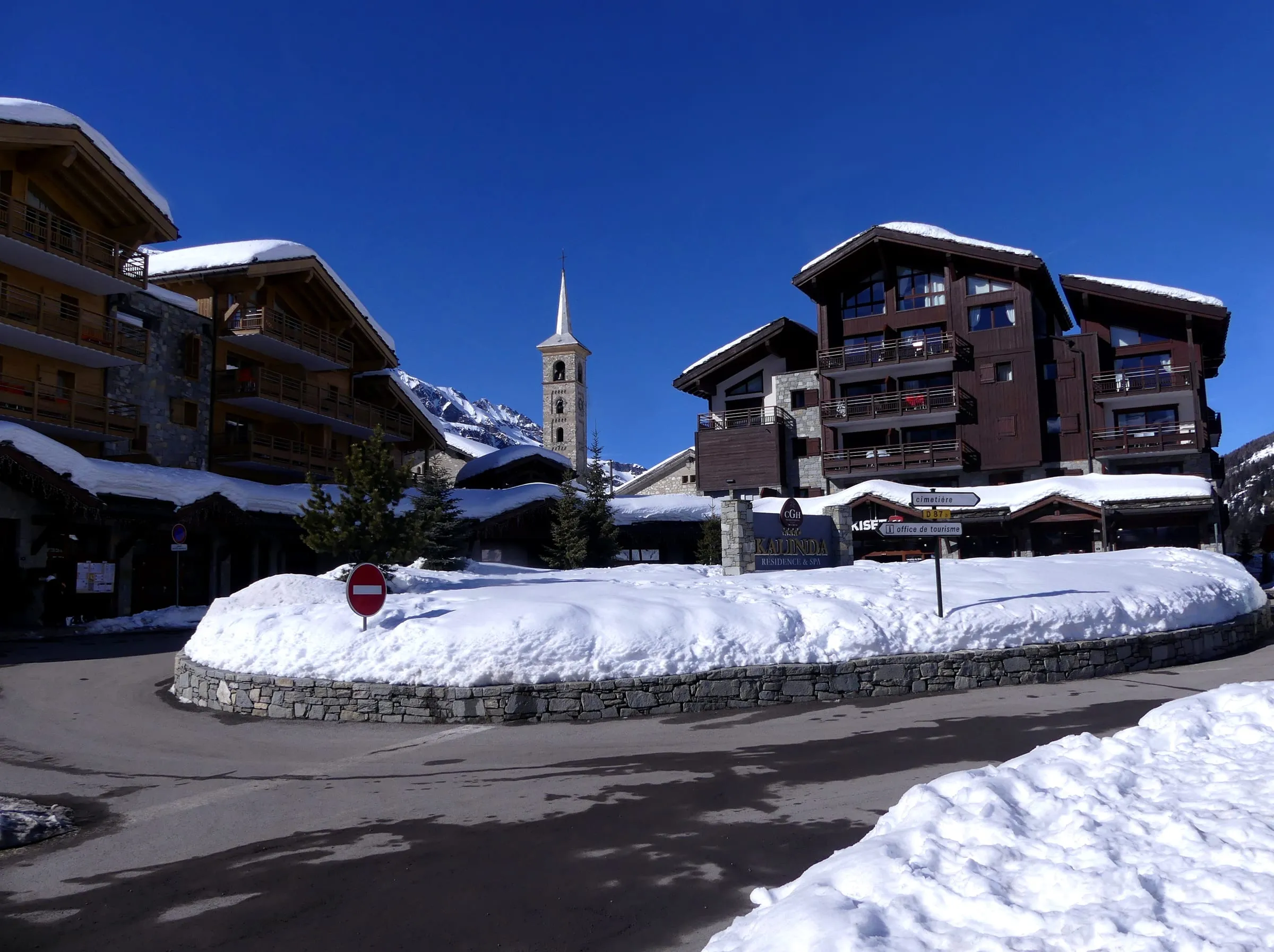
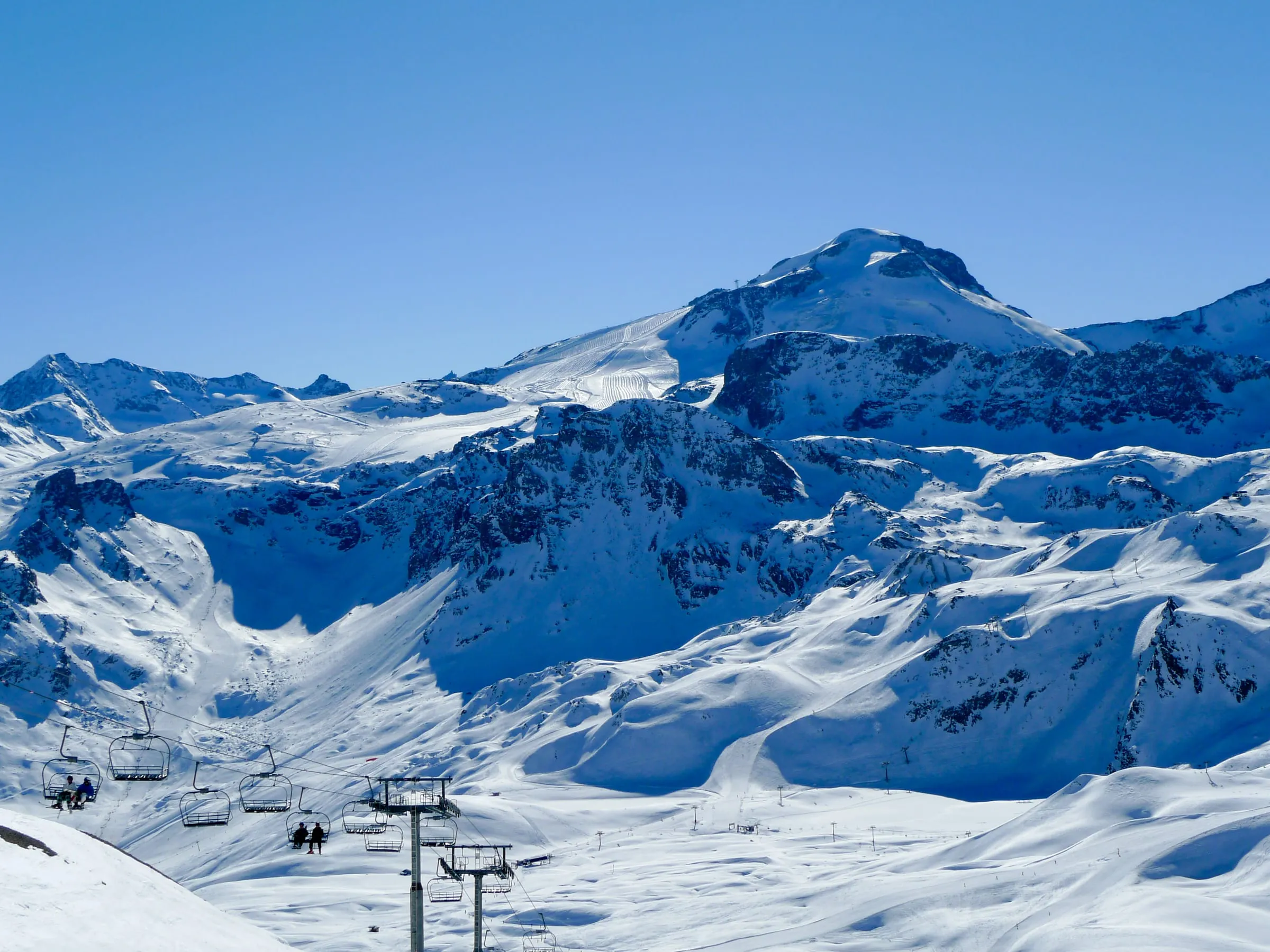
Tignes is really five places strung along one valley. At the bottom, Les Brévières (1,550 m) is the old village below the dam. Above it, Tignes 1800 is a small stone-and-wood village built in 2013 around a replica of the church drowned by the reservoir. Then comes Tignes 2100: Le Lavachet, Tignes le Lac on the frozen lake, and Val Claret at the head of the valley, where the Perce-Neige funicular climbs 921 m to the glacier.
The shared piste map lists 160 runs across Tignes and Val d’Isère (23 green, 67 blue, 41 red and 29 black) and 1,900 m of vertical. From Tignes you reach Val d’Isère over the Tovière ridge to La Daille, or high up by the Col de la Leisse. The two resorts feel quite different. If you’re weighing Tignes against Val d’Isère, the short version is: same skiing and lift pass, but Tignes’ main villages sit at 2,100 m beside the glacier, while Val d’Isère is the more traditional village.
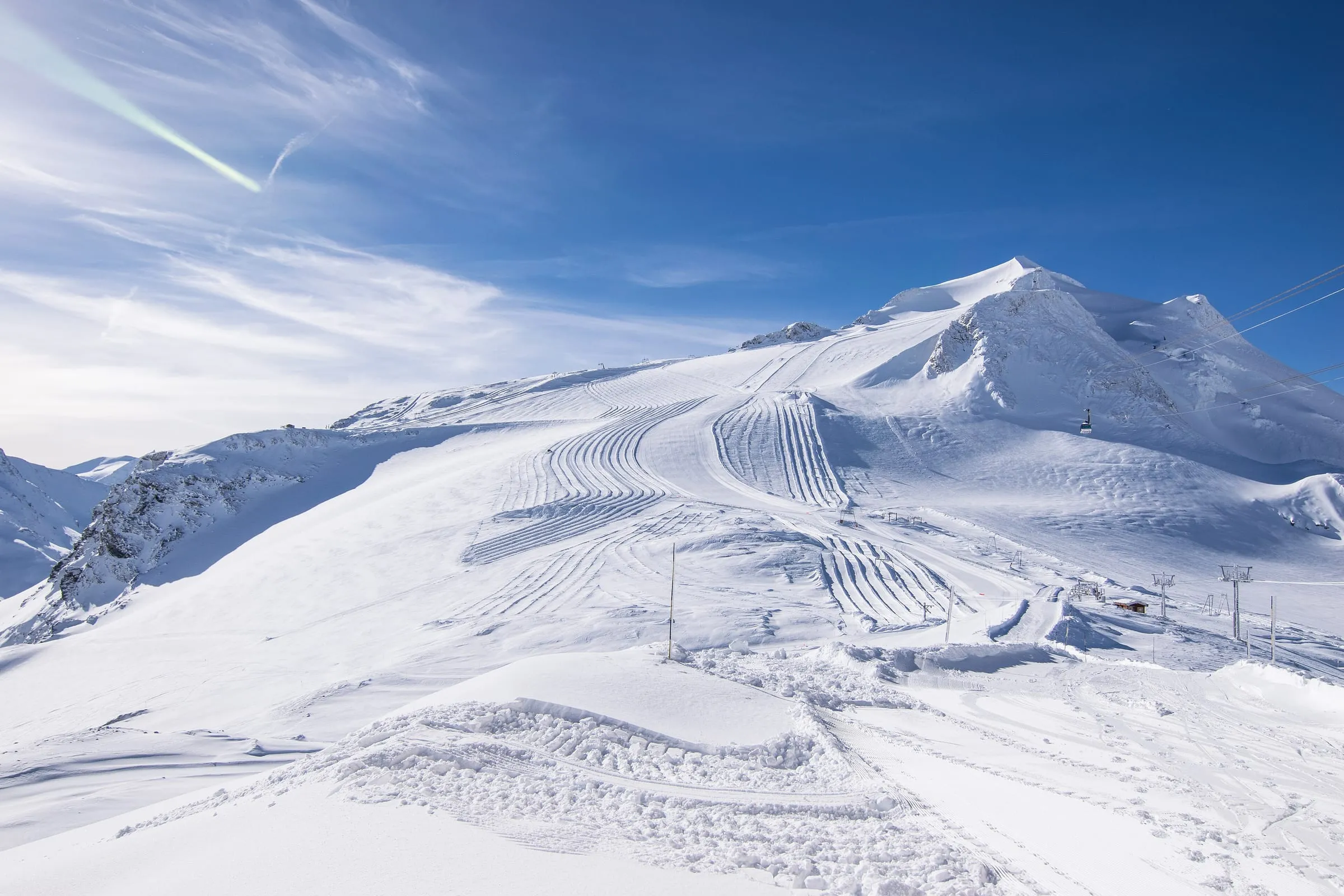
Skiing in Tignes for beginners, intermediates and experts
Beginners
Tignes has nine free lifts, so first-timers don’t need a pass at all: the Claret and Centre carpets, the Boisses 1 and 2 carpets at Tignes 1800, the Lavachet and Grande Pareï drags, and the Bollin, Almes and Rosset chairlifts. Rosset and Almes serve gentle greens right beside Tignes le Lac, and Bollin does the same at Val Claret. The catch comes in week two: the step up from those greens to the main blues is real, and most of the blues cross wide open slopes where wind and poor light make life harder.
Intermediates
This is where Tignes shines. The Palet and Aiguille Percée side, above Le Lac, is a playground of long cruising blues and reds such as Lys, Beau Plan, Ancolie and Cyclamen. The Grande Motte gives you reds from over 3,000 m, and the forested reds above Les Brévières (Mélèzes, Chardons and Pavot) are the best place to be on a grey day. Confident intermediates can cross to Val d’Isère on day two and still be back for tea.
Experts
Experts get the black runs off the Tovière ridge, including Johan Clarey down to Le Lac, the high reds on the Grande Motte, and a huge amount of off-piste, much of it next to the Vanoise national park and the Tignes-Champagny nature reserve. That terrain needs a guide: the ESF in Tignes runs small-group off-piste courses and tailor-made outings, as well as ski touring and heliskiing. The DC Park’s 1,200 m boardercross and the Grattalu snowpark on the Palet are the freestyle hubs.
A first day in Tignes
This route starts in Tignes le Lac and suits a confident intermediate. Check the live lift status on the Tignes app before you set off: the glacier lifts depend on the weather.
- Tovière gondola from Le Lac to the Tovière summit at 2,704 m, for views over both resorts. Warm up on the blue Henri down to Val Claret.
- Perce-Neige funicular from Val Claret to 3,032 m. If it’s clear, carry on up the Grande Motte cable car to 3,456 m and take the red Glacier run back down.
- Lap the reds Double M and Rabotch on the glacier’s lower slopes, using the Vanoise chairlift, while the snow is at its best.
- Ski back down to Val Claret on the blues Génépy, Cairn and Prariond, or the red Cirse beside the Les Lanches chairlift, then have lunch in Val Claret or Le Lac.
- After lunch, take the Palafour chairlift from Le Lac (or the Grand Huit from Val Claret), then the Aiguille Percée chairlift to the rock arch at 2,748 m. Ski the red Ancolie or Cyclamen, then the blues Lys and Anémone back to the lake.
On day two, take the Tovière gondola again and ski down to La Daille to explore Val d’Isère.
Snow in Tignes: how reliable is it?
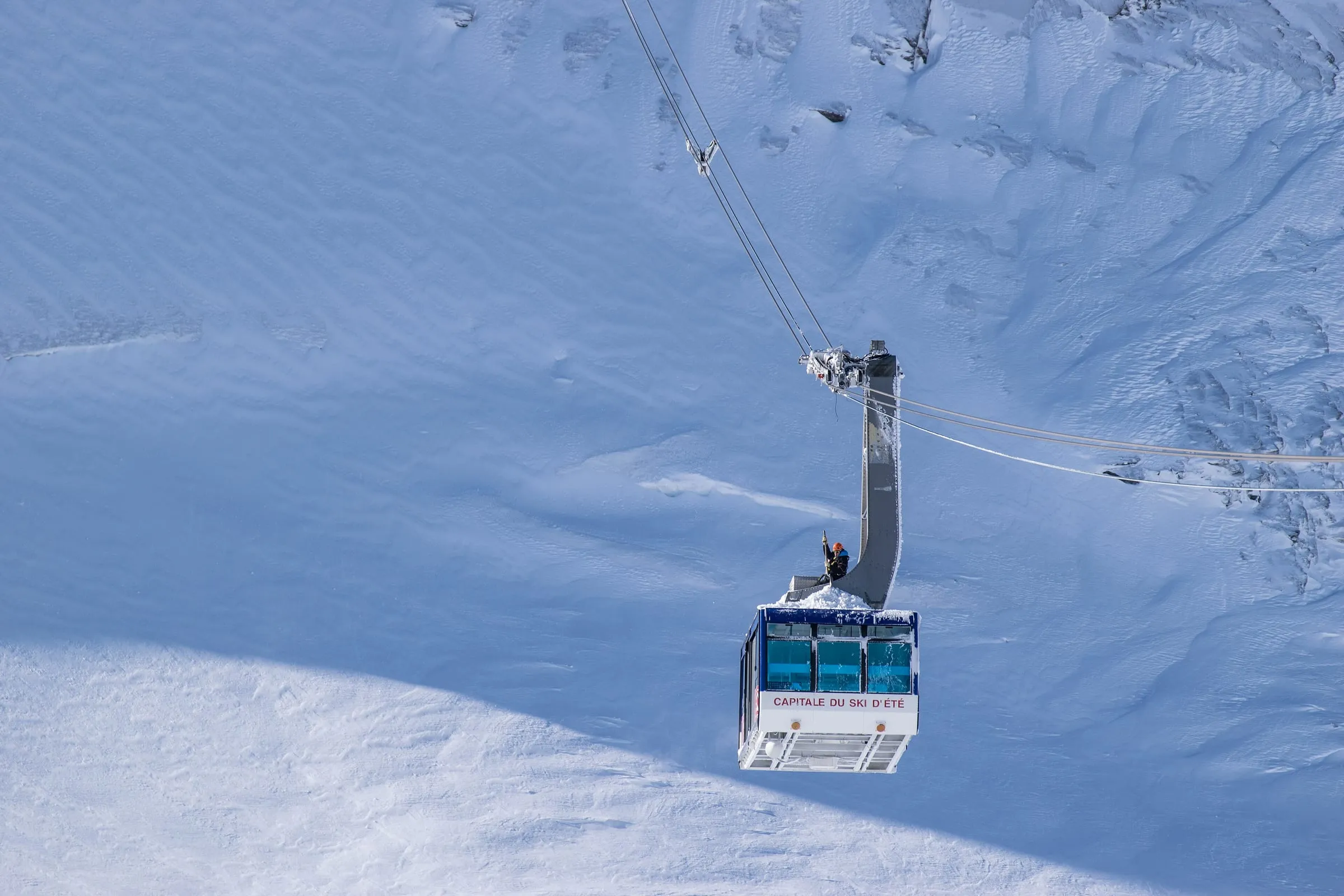
Very reliable. The tourist office says 93% of Tignes’ pistes are above 2,000 m, the heart of the resort is over 2,100 m, and about 400 snow guns lay a base early in the season. It quotes an average annual snowfall of around 669 cm. The Grande Motte glacier adds a high-altitude safety net, and pro teams train on it in October before the season starts.
For 2026/27, the resort is open from 21 November 2026 to 2 May 2027. The Tignes ski area opens progressively from 21 November and the Val d’Isère link from 28 November, both subject to snow. That makes Tignes one of the few Alpine resorts you can book with some confidence for late November or late April.
The weak spot is weather, not snow. Tignes 2100 sits above the treeline, so in wind or flat light the high lifts can close and the open slopes become hard work. The funicular runs inside the mountain, so it’s the least affected by wind, though the Grande Motte cable car above it is exposed. On those days, head down to the trees above Les Brévières and Tignes 1800.
Is Tignes good for a last-minute ski trip?
Yes, and especially at the edges of the season, when lower resorts may still be short of snow. The main thing to watch is the calendar. French school holidays fill Tignes fast: Christmas runs from 19 December 2026 to 4 January 2027, and the February holidays are staggered between 6 February and 8 March 2027. March brings the FIS Para Alpine World Championships, from 7 to 19 March 2027, with the finish at the Lognan stadium in Val Claret, so expect extra visitors that fortnight.
The best last-minute value is usually in January, in the weeks between the French February holidays, and in April. Early and late in the season, check that your hotel is open: several close before 2 May.
Tignes lift passes
Tignes sells two kinds of pass: Tignes–Val d’Isère, covering the whole 300 km area, and a cheaper Tignes ski area pass. Prices from the official Tignes price page for winter 2026/27:
| Pass (winter, 12 Dec 2026 – 23 Apr 2027) | Adult (19–64) | Child and senior (8–18, 65–74) |
|---|---|---|
| Tignes–Val d’Isère, 1 day | €78 | €63 |
| Tignes–Val d’Isère, 6 days = 7 days | €468 | €378 |
| Tignes–Val d’Isère, afternoon | €63 | €51 |
| Tignes ski area, 1 day | €70 | €57 |
| Tignes ski area, 4 hours | €63 | €51 |
Early season (28 November to 11 December 2026) and late season (24 April to 2 May 2027) are cheaper: €67 a day and €402 for six days for an adult. During the opening week (21 to 27 November) a one-day Tignes pass is €40 for all ages. Under 8s and over 75s ski free, and the nine beginner lifts are free for everyone. A Tignes-only pass is enough for most beginners and many intermediates; buy the full area if you plan to visit Val d’Isère.
Après-ski and things to do in Tignes
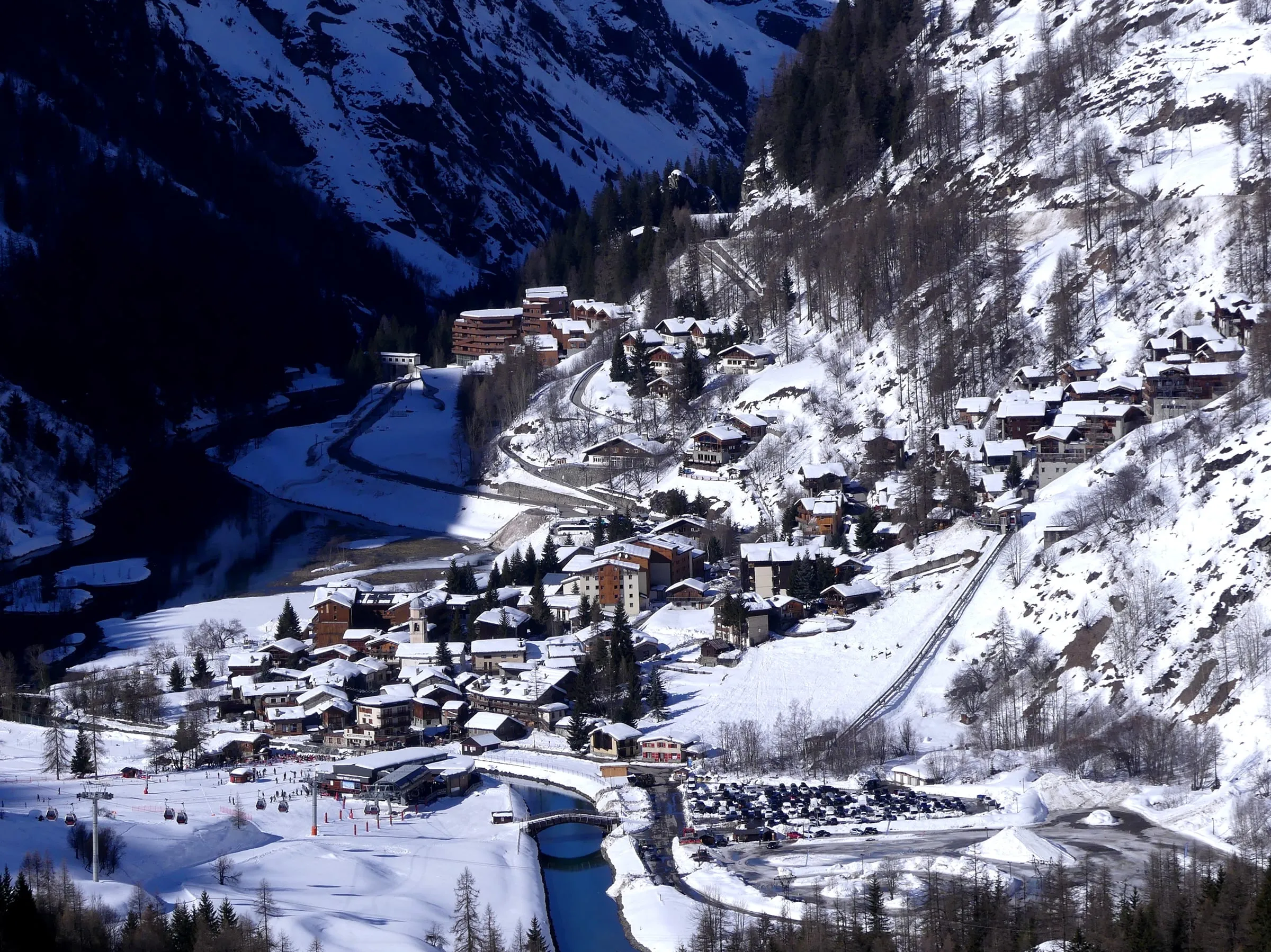
Val Claret is the lively end of Tignes, according to the tourist office, with most of the nightlife. Tignes le Lac is the centre, with the shops, a sunny terrace and the Le Lagon aquatic centre. Le Lavachet, Tignes 1800 and Les Brévières are quieter.
Off the slopes, Tignes uses its lake. You can go ice diving under it, and the La Banquise area near Le Lac has an igloo village and snow maze for children. The Expédition Cobra sledge run is 3 km long and starts from the Palafour chairlift. There’s also snowshoeing, dog sledding, the Tignespace sports centre and the La Cabine cinema. The Mountain Shaker festival runs from 17 to 22 January 2027.
Who Tignes suits, and who it doesn’t
It suits keen skiers who rank snow above scenery, groups of friends who want to ski hard and go out in Val Claret, and anyone booking late who wants the best possible chance of good snow. It’s also good for families on a budget who choose the right village: Tignes 1800 and Les Brévières are calmer and more attractive than the 2100 blocks, and under 8s ski free.
It doesn’t suit anyone after a pretty village with tree-lined runs from the door. Tignes le Lac and Val Claret are purpose-built blocks, and they look it. If that matters, look at Val d’Isère on the same pass, or the 3 Vallées resorts Méribel and Courchevel. If altitude is the priority, Val Thorens is the other obvious choice.
How to get to Tignes
| From | Transfer time (average Saturday) | Distance |
|---|---|---|
| Chambéry airport | About 2 h 50 | 135 km |
| Geneva airport | About 3 h 20 | 174 km |
| Grenoble airport | About 3 h 30 | 214 km |
| Lyon Saint-Exupéry | About 3 h 40 | 219 km |
| Bourg-Saint-Maurice station | Bus S83 or Altibus | About 30 km |
Transfer times are Ben’s Bus’s figures to Les Brévières, the first stop, for winter 2026/27. Le Lac and Val Claret are a little further up the road.
By plane and transfer
Chambéry is the closest airport. Altibus runs shared shuttles from Lyon and Geneva airports, and Ben’s Bus and Alpine Fleet serve Lyon, Geneva and Grenoble. Altibus advises allowing at least three hours between landing and any onward bus or train.
By train
Bourg-Saint-Maurice is the end of the line in the Tarentaise. From the station, the S83 bus (skis included in the ticket) and the Altibus shuttles go to Les Brévières, Tignes 1800, Le Lac and Val Claret. Eurostar’s ski trains run on Saturdays in winter: from Brussels and Amsterdam, outbound trains run from 19 December 2026 to 3 April 2027. From London you change at Lille.
By car
Take the motorway to Albertville, the N90 up the valley via Moûtiers to Bourg-Saint-Maurice, then the D902 to Tignes. Carry winter tyres or snow chains: the last stretch climbs steeply, and there are chain-fitting areas between Bourg-Saint-Maurice and Tignes. Parking is paid in winter and run by Indigo. Book online before you arrive, especially in the holidays. The Tufs car park in Val Claret has 120 electric charging points, and free shuttle buses link the car parks and villages.