France
 Austria
 Italy
 Switzerland
 English
 Deutsch
 Nederlands
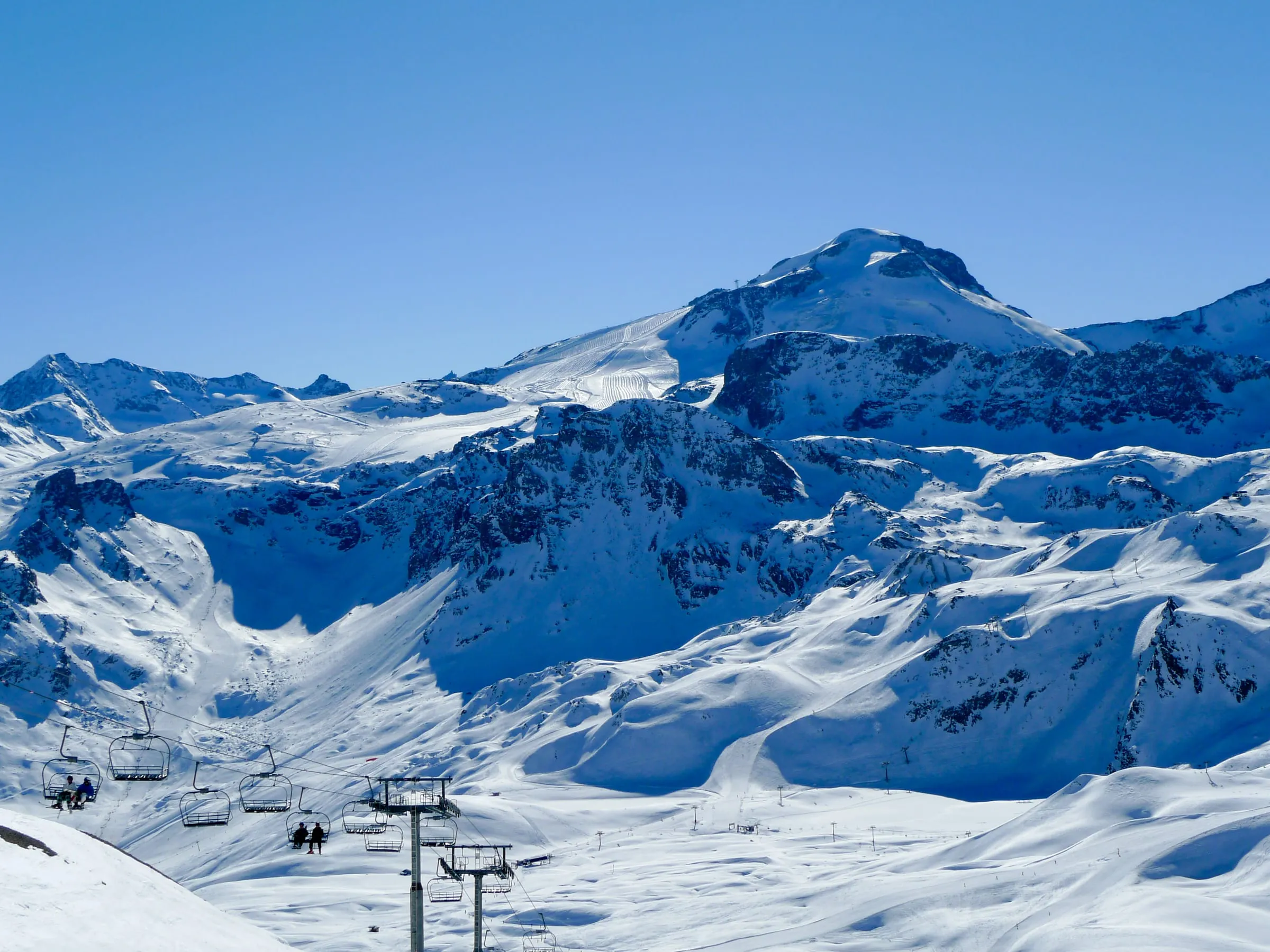
Choose Tignes if you rank snow, beginner terrain and a lower bill above charm. Choose Val d’Isère if you want a real Alpine village to come home to, the busier après and the steepest runs right above your hotel. The question is closer than almost any other in skiing because, for the skiing itself, there is no difference: the two resorts share one 300 km area, 71 lifts and a single lift pass at the same price. What you’re really choosing is your base, and that changes your altitude, your evenings, how far you walk to the lifts and who in your group is happy.
Tignes or Val d’Isère at a glance
| Tignes | Val d’Isère | |
|---|---|---|
| Ski area | Tignes – Val d’Isère, 300 km, 71 lifts, 160 runs (23 green, 67 blue, 41 red, 29 black) | The same area |
| Village altitude | Les Brévières 1,550 m, Tignes 1800, and Tignes 2100 (Le Lavachet, Le Lac, Val Claret) | About 1,850 m, with La Daille and Le Fornet |
| Highest lift | Grande Motte cable car, 3,456 m | Pissaillas glacier, just under 3,200 m |
| Pistes above 2,000 m | 93% (tourist office) | About 60% (lift company) |
| Snowmaking | About 400 snow guns | More than 65 km of pistes |
| 2026/27 season | 21 Nov 2026 (Tignes side) to 2 May 2027 | 28 Nov 2026 to 2 May 2027 |
| Free beginner lifts | Nine, in every village | Three, on the snow fronts |
| Expert terrain | Tovière blacks, Grande Motte, big off-piste | Face de Bellevarde, ungroomed Naturide blacks, Village Perdu |
| Village feel | Mostly purpose-built and above the trees; prettier at 1800 and Les Brévières | Stone-and-wood village with a church and a long main street |
| Après | Concentrated in Val Claret | La Folie Douce on the mountain, Cocorico at the foot of the slopes |
| Nearest airport | Chambéry, about 2 h 50 by shared transfer | Chambéry, about 2 h 40 by shared transfer |
| Train | Bourg-Saint-Maurice, about 30 km, S83 bus | Bourg-Saint-Maurice, 30 km, S82 bus, about 40 min |
| Lift pass 2026/27 | Tignes – Val d’Isère €78 a day, €468 for 6 days (adult, main winter); Tignes only €70 a day | Identical prices; Val d’Isère only €70 a day |
Transfer times are Ben’s Bus’s figures for an average winter Saturday; lift-pass prices are the operator’s 2026/27 prices for 12 December 2026 to 23 April 2027.
Which has better snow, Tignes or Val d’Isère?
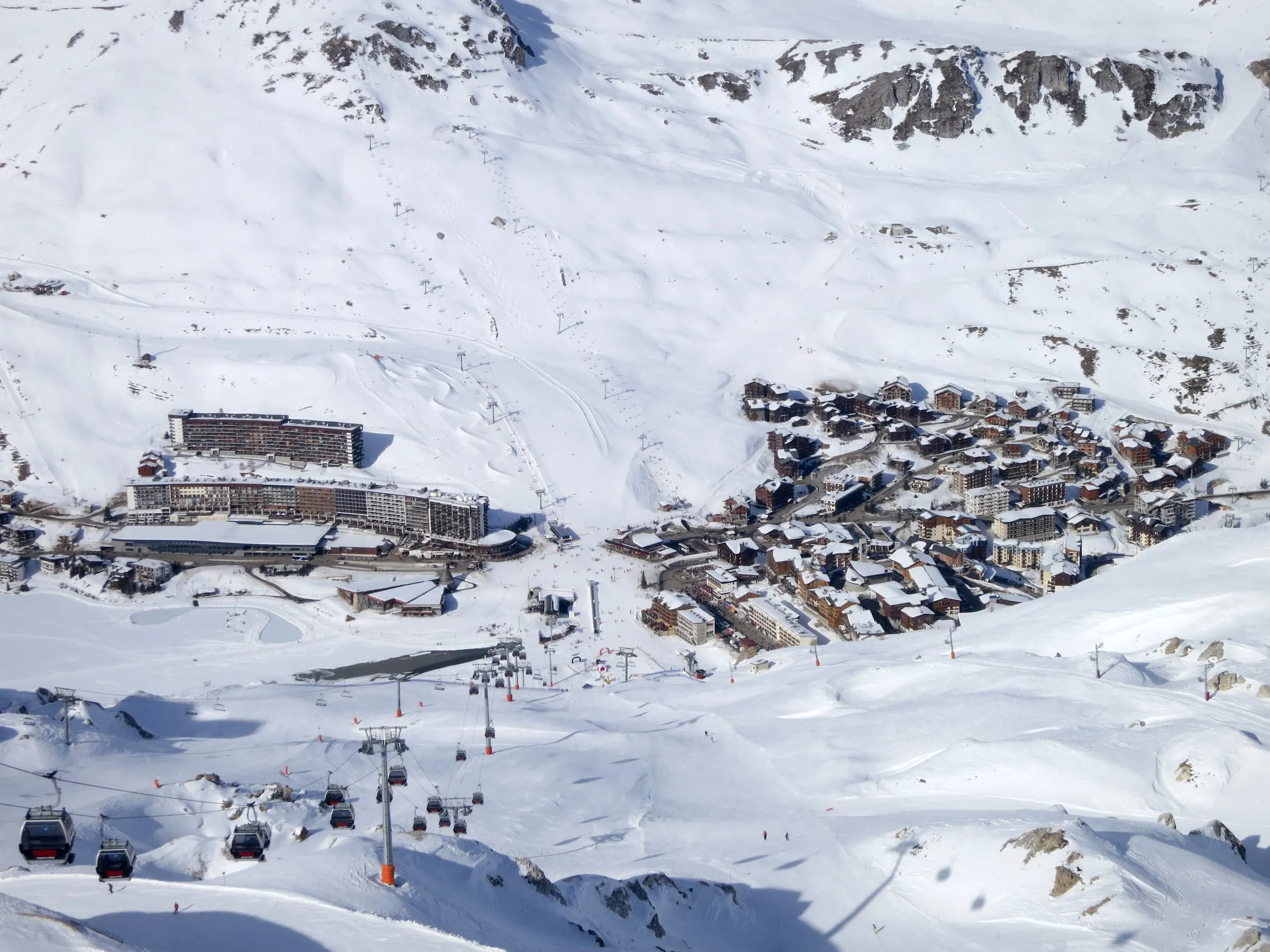
Tignes, narrowly, and mainly because of where it sleeps. Its three main villages sit at about 2,100 m, so you start and finish the day high, and the tourist office says 93% of its pistes are above 2,000 m. The Perce-Neige funicular runs inside the mountain from Val Claret to the Grande Motte glacier, and the cable car above it reaches 3,456 m, the highest point of the whole area. The glacier is reliable enough for summer skiing: it ran from 20 June to 19 July in 2026.
Val d’Isère’s numbers look weaker on paper: the village is at 1,850 m and the lift company puts about 60% of its slopes above 2,000 m. But the tourist office says the slopes are mostly north-facing, which keeps the snow cold, and more than 65 km of pistes have snowmaking. The Pissaillas glacier at the top of the Vallon gondola reaches just under 3,200 m and hosts its own summer skiing in June. In a normal winter you won’t notice a difference; in a thin one, the runs home to Val d’Isère are the ones that suffer first, and Tignes 2100 still has snow outside the door.
The flip side is weather. Tignes 2100 is above the treeline, so in wind and flat light it feels bleak and the high lifts close. Val d’Isère has more trees closer to the village, around La Daille and the Village Perdu area. Tignes has its own trees, but they are at the bottom, above Les Brévières.
Winner for snow: Tignes. Winner for bad-weather days: Val d’Isère, if you’re based there.
Is Tignes or Val d’Isère better for beginners?
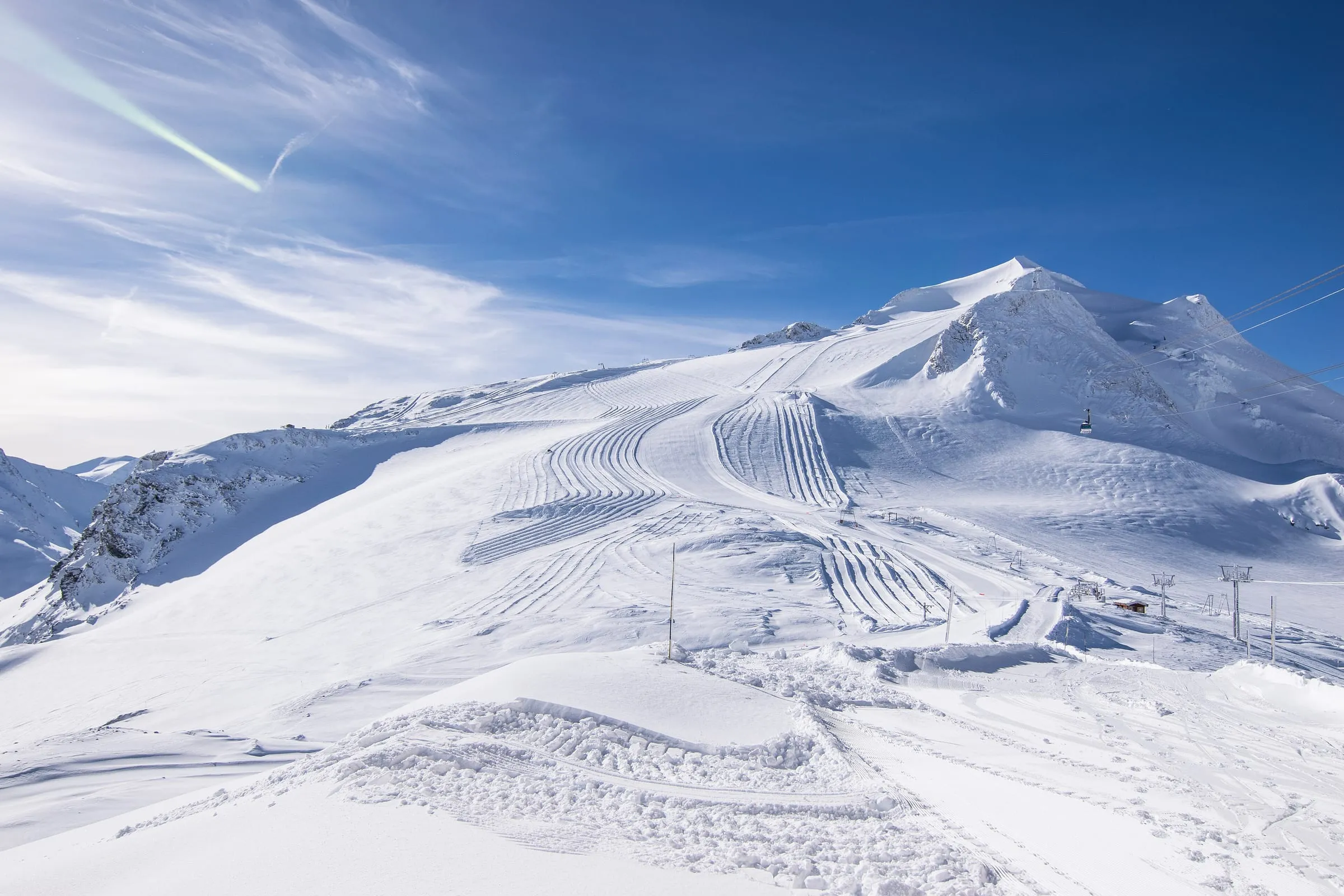
Tignes, clearly. It has nine free lifts, so a first-timer can spend several days without buying a pass: carpets at Val Claret, Le Lac (Centre) and Tignes 1800 (Boisses 1 and 2), the Lavachet and Grande Pareï drags, and the Bollin, Almes and Rosset chairlifts serving gentle greens beside Le Lac and Val Claret. Every village has somewhere to learn within walking distance.
Val d’Isère has three free lifts: the Savonnette drag and the Village chairlift on the snow front, and the Lanches drag at La Daille. After that, beginners move up the Solaise gondola to the Easy Skiing area at over 2,000 m, served by the Pim, Pam and Poum carpets. A Pim Pam Poum pass costs €25 and covers one gondola ride up and the carpets. It’s a good set-up, but it costs money and needs a lift ride.
The caveat for Tignes: the step from those greens to the main blues crosses wide, open slopes where wind and poor light make life harder. Val d’Isère’s green La Verte and the Easy Skiing routes on Bellevarde and Solaise are a gentler second week.
Winner for beginners: Tignes. For improvers in their second week, it’s close.
Is Tignes or Val d’Isère better for intermediates?
On paper, a tie: 67 blues and 41 reds across the area, all on one pass. In practice, your base decides which half you ski most. From Tignes le Lac and Val Claret, the long cruising runs on the Palet and Aiguille Percée side and the high reds on the Grande Motte are right there. From Val d’Isère, Bellevarde’s long blues and reds down to La Daille and the quieter Solaise and Le Fornet sectors are on your doorstep.
The difference is in getting home. Tignes 2100 is at the top of its slopes, so the last run is short and rarely icy. Val d’Isère’s runs home are lower and steeper: the Face de Bellevarde is a black, so most intermediates take the long way round or ride the Funival or a gondola down.
Winner for intermediates: a tie. Tignes is slightly easier for the end of the day.
Is Tignes or Val d’Isère better for experts?
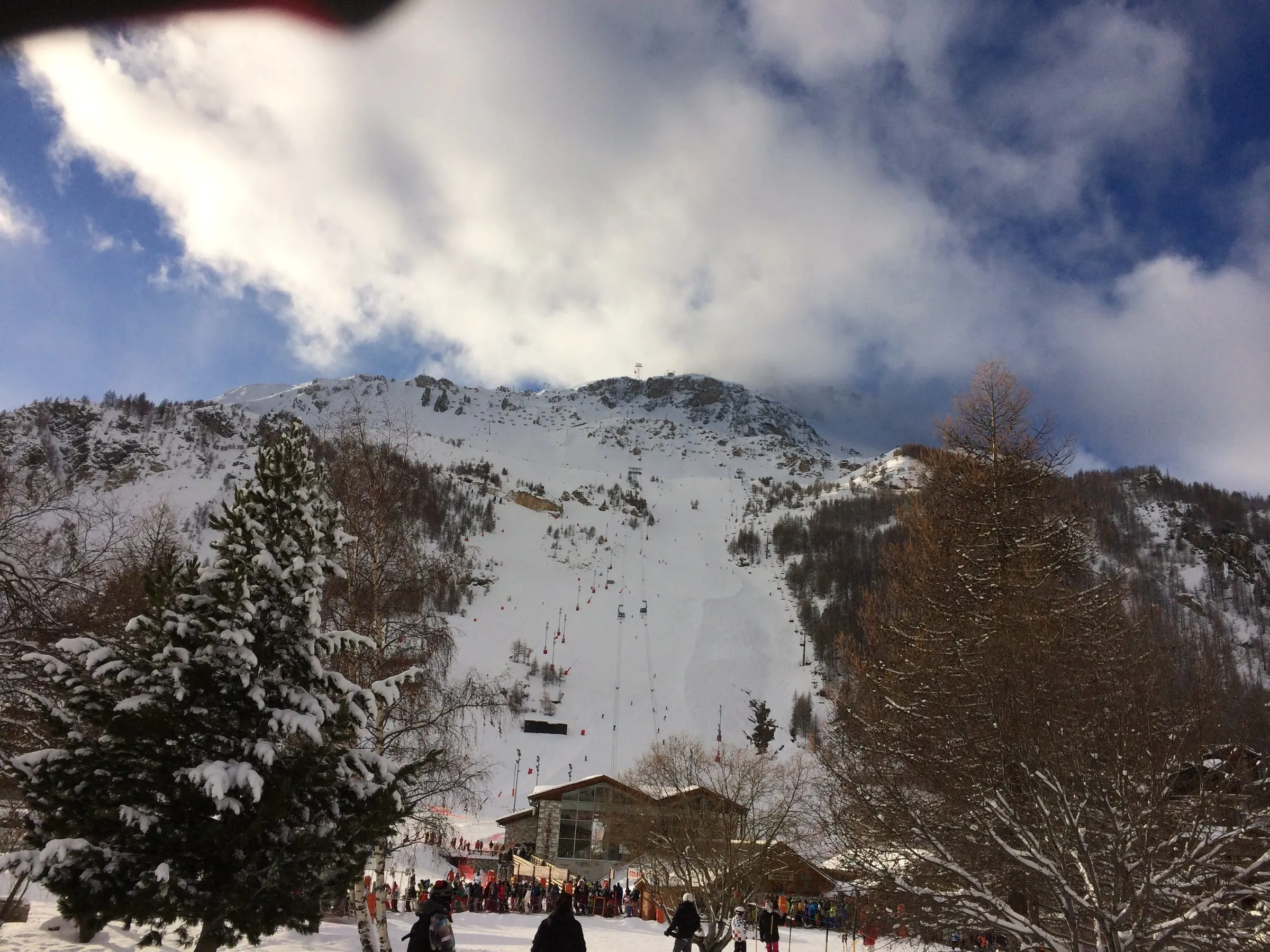
Val d’Isère, for the terrain you can reach from the village. The Face de Bellevarde, the Olympic downhill, comes straight down to the centre and hosts the men’s World Cup Critérium on 12 and 13 December 2026. The piste map marks “Naturide” blacks, which are patrolled and marked but never groomed, and the Village Perdu is an ungroomed forest area for experienced skiers only.
Tignes is no soft option. The black runs off the Tovière ridge drop to Le Lac, the Grande Motte gives high reds from over 3,000 m, and the off-piste around the Vanoise national park is enormous. The ESF in Tignes runs off-piste courses, ski touring and heliskiing. If you ski with a guide, the two are close to equal, because the best off-piste is shared.
Winner for experts: Val d’Isère, by a margin that narrows once you hire a guide.
Is Tignes or Val d’Isère better for families?
It depends on whether your children ski yet. The basics are identical: under 8s ski free on either side, 8 to 18-year-olds pay the reduced rate (€63 a day, €378 for six days in the main winter), and the same family offer takes €330 off four or more passes of the same length bought together for at least two adults and two children aged 8 to 18. Both resorts carry the Famille Plus label, and the ESF takes children from age 3 in each.
Tignes is better for a family of beginners: free lifts in every village, gentle greens beside the hotels and the free La Banquise igloo village and snow maze near Le Lac. Tignes 1800, opened in 2013 and built with families in mind, has its own beginner area and a gondola into the main area. The Tignes tourist office doesn’t list a public nursery on its families page; it points to a babysitter list and to accommodation with its own childcare, so families with toddlers should choose a hotel with a kids’ club.
Val d’Isère is better for a family whose children already ski. The Solaise sector has the ValKids play zone next to the Easy Skiing area, and the Chalet des Aiglons nursery takes children from about 12 months to 3 years. Parents also get the more interesting terrain for themselves, and the village is easier to walk around in the evening.
Winner for families: Tignes for beginners and younger children; Val d’Isère once the children can ski. More detail is in our Val d’Isère with kids guide.
Tignes or Val d’Isère for après-ski and the village
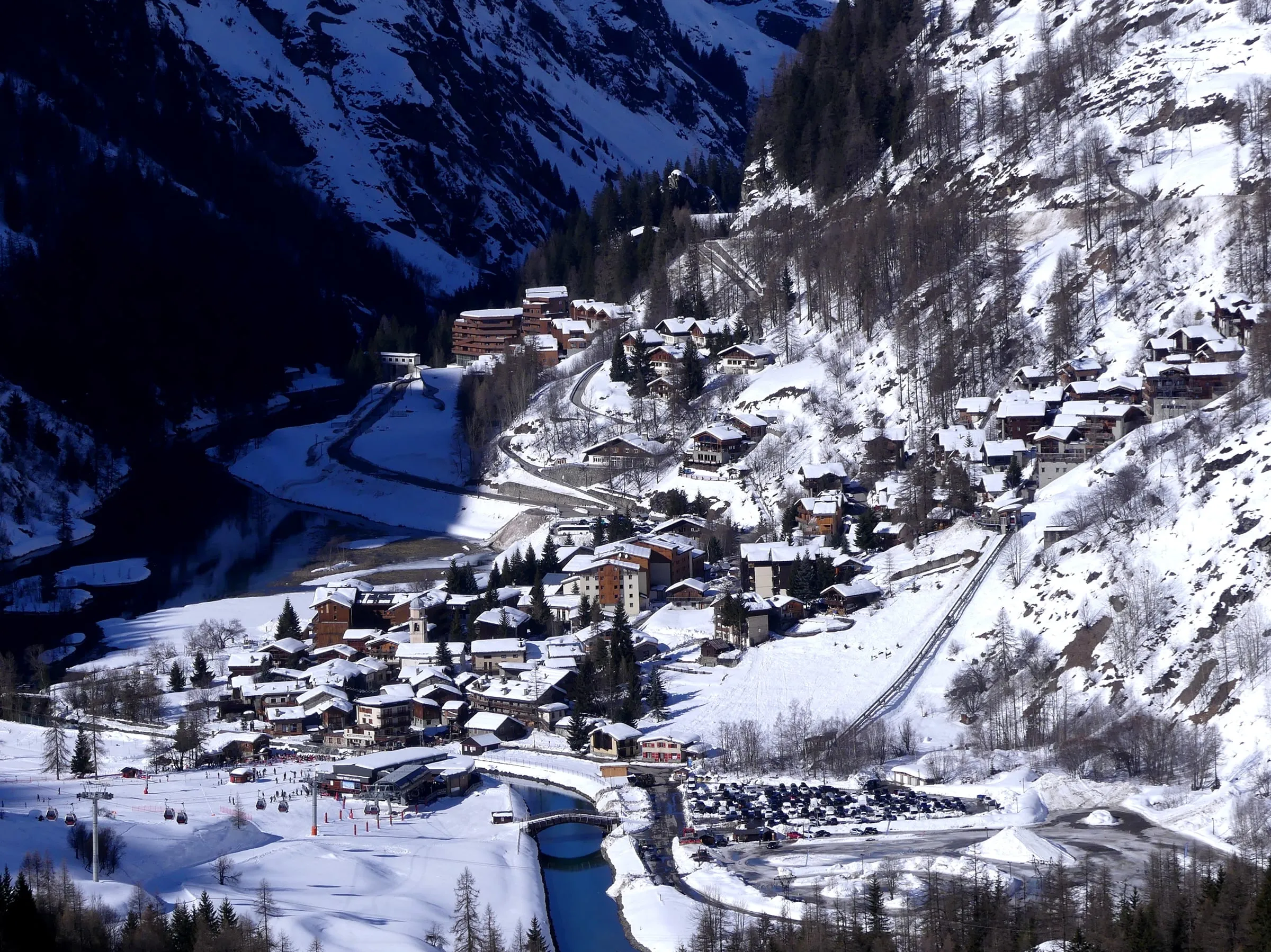
This is Val d’Isère’s strongest card. It is a real village, with a church, a long main street and a mix of stone-and-wood buildings, and it looks like the Alps people picture. The après starts at La Folie Douce, on the mountain at the top of the La Daille gondola, and carries on at Cocorico, an open-air bar at the foot of the slopes with DJs and live music from 15:00 to 21:00.
Tignes is five places rather than one. Le Lac and Val Claret are purpose-built and look it, though they put you on the snow. Val Claret is where the nightlife is, according to the tourist office. Le Lavachet is quiet, while Tignes 1800 and Les Brévières are small and far prettier, but sleepy at night and below the main lifts. Off the slopes, Tignes has the 3 km Expédition Cobra sledge run from the Palafour chairlift, snowtubing, dog sledding and the free La Banquise area by the lake.
Winner for the village and après: Val d’Isère.
Getting to Tignes or Val d’Isère
There’s very little in it. Both are up the same valley from Bourg-Saint-Maurice, the railhead about 30 km below. The Altibus S82 runs from the station to Val d’Isère in about 40 minutes, and the S83 to the Tignes villages. The Eurostar ski train runs to Bourg-Saint-Maurice on winter Saturdays, so either resort works without flying.
By air, Ben’s Bus quotes these shared-transfer times for an average winter Saturday: from Geneva about 3 hours 10 minutes to Val d’Isère and 3 hours 20 minutes to Tignes Les Brévières; from Lyon about 3 hours 30 and 3 hours 40. Chambéry is the closest airport for both but has fewer flights. The Val d’Isère tourist office gives shorter drive times (about 2 hours from Chambéry, 3 hours from Geneva or Lyon), which reflect a clear road rather than a holiday Saturday.
By car, the road is the same as far as the Tignes dam; Tignes turns off just before Val d’Isère, which sits at the end of the road because the Col de l’Iseran is closed in winter. Carry chains or have winter tyres either way, and book parking ahead in both resorts.
Winner for getting there: a draw. Pick whichever has the better room.
Tignes or Val d’Isère: which is better value?
The lift pass doesn’t decide it, because the price is identical. If you only want one side, Tignes-only and Val d’Isère-only passes are both €70 a day for an adult in the main winter, and early and late in the season the full pass falls to €67 a day and €402 for six days. Tignes adds an opening week (21 to 27 November) when a one-day Tignes pass is €40 for all ages.
The real difference is beginners and beds. A first-timer in Tignes needs no pass at all for the first days; in Val d’Isère the step up to the Easy Skiing area costs €25 a day. And while both resorts have expensive hotels, Tignes has more simple places close to the lifts, such as a 2-star in the centre of Val Claret about 60 m from the lifts, whereas central Val d’Isère is where the five-star hotels cluster.
Winner for value: Tignes, especially for beginners and groups on a budget.
Who should choose Tignes
- Groups of friends on a budget who want maximum skiing and a lively night in Val Claret.
- Families with young beginners, ideally in Tignes 1800 or a Le Lac hotel by the free lifts.
- Early and late-season skiers, who get the highest base and the Grande Motte glacier.
- Intermediates who want the glacier and the Palet side on their doorstep, and a short last run home.
- Anyone booking late in a poor snow year, when altitude matters more than looks.
Who should choose Val d’Isère
- Couples and groups who want a pretty village, good restaurants and après to walk to.
- Strong skiers who want the Face de Bellevarde, the Naturide runs and the Village Perdu from the door.
- Families whose children already ski, with the ValKids zone on Solaise and a nursery from about 12 months.
- Groups of mixed ability, where the better skiers will happily do the Tignes link and the others prefer the Easy Skiing routes.
- Anyone who hates bleak, open slopes in bad weather, since more of Val d’Isère’s skiing is near the trees.
Tignes or Val d’Isère for a last-minute trip
Both are among the safest places in the Alps to book late, which is why this choice so often comes up in the week before a trip. Tignes has the edge at both ends of the season: its own ski area opens from 21 November 2026, a week before the link and Val d’Isère (both from 28 November), and its villages and glacier are higher for late April. Both close on 2 May 2027, and both open progressively, so early on you’ll ski a smaller area than the map shows.
Availability is about the French calendar. The Christmas holidays run from 19 December 2026 to 4 January 2027 in every zone, and the February holidays are staggered from 6 February to 8 March 2027. Both resorts fill fast then, and Saturday traffic up the valley is heaviest. The spring holidays (3 April to 3 May, by zone) keep April busier than you’d expect. Tignes also hosts the Para Alpine World Championships from 7 to 19 March 2027, with the finish in Val Claret, so expect extra demand there that fortnight.
For a short-notice booking, Tignes usually has more choice simply because it is five villages rather than one. Val d’Isère’s tourist office suggests Sunday-to-Sunday stays to avoid the Saturday traffic, which can also open up rooms. Check your hotel’s dates early and late in the season, as several close before the lifts do.
Where to stay
In Tignes
In Val d’Isère
More options are in our guides to where to stay in Tignes and where to stay in Val d’Isère.
Our verdict
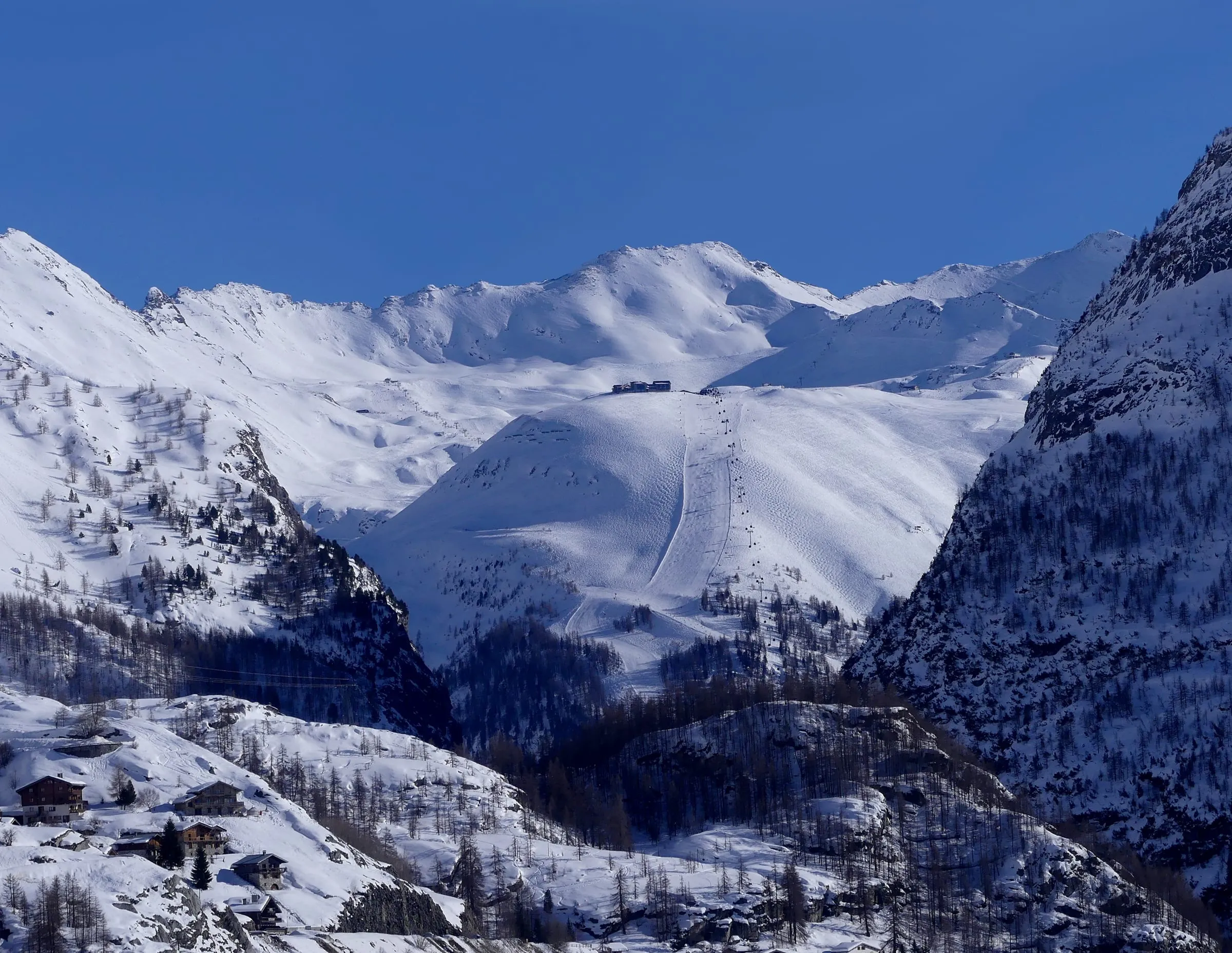
If you’re torn, ask what your group will grumble about. If it’s the cost, a beginner in the party, or the fear of booking a week with no snow, go to Tignes: it is higher, opens earlier, has nine free lifts and usually costs less to stay in. If it’s a bleak apartment block, a quiet evening or not enough steep skiing, go to Val d’Isère: it’s the better place to spend a week off the slopes and has the most dramatic skiing on your doorstep. Either way, you’ll ski the same 300 km, and nothing stops you crossing over for lunch. If you’re also weighing the 3 Vallées, see Courchevel, Méribel or Val Thorens.