France
 Austria
 Italy
 Switzerland
 English
 Deutsch
 Nederlands
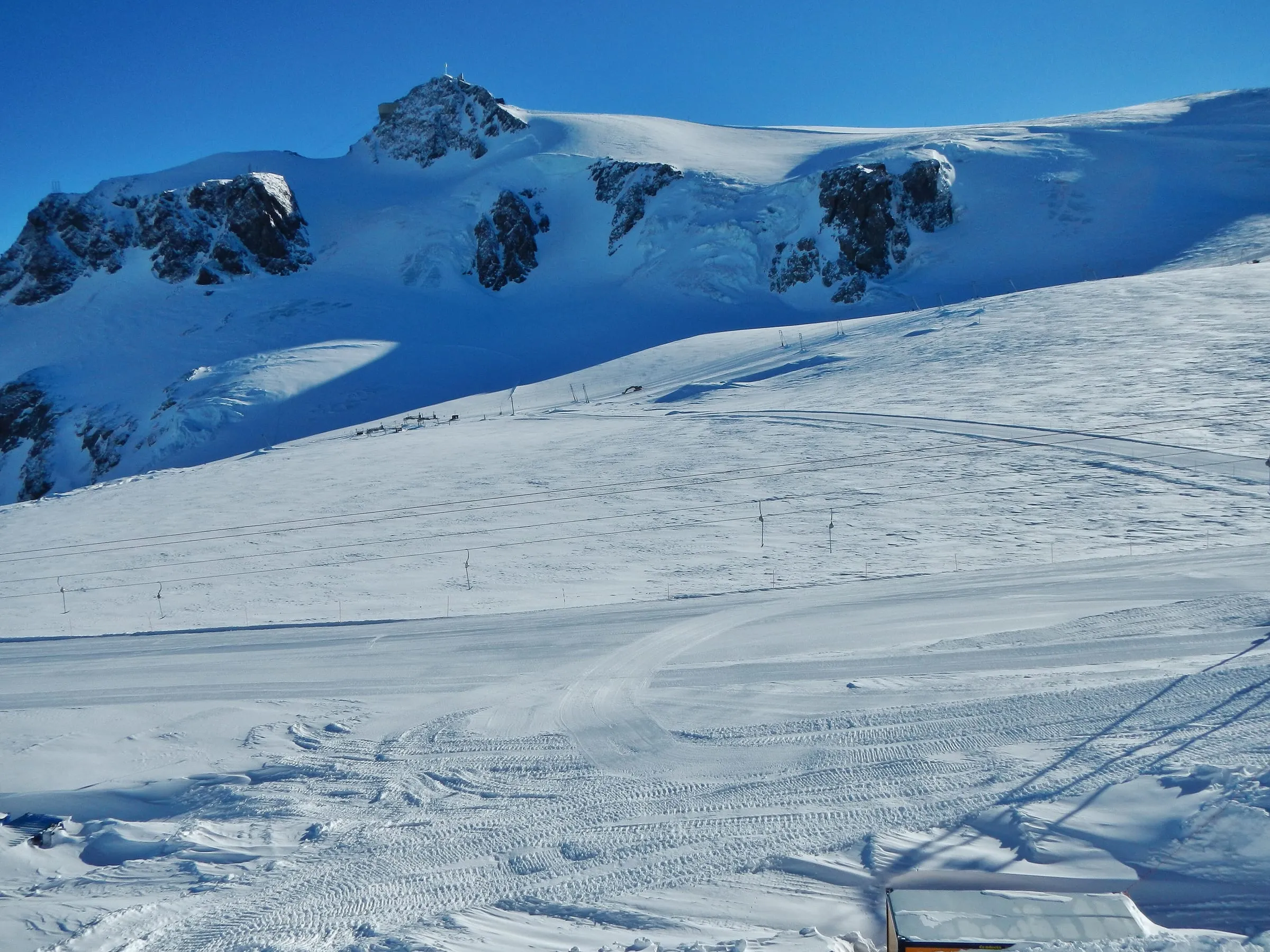
The short answer: stay in Zermatt if you want the better town, the steeper and more varied skiing and an easy train journey, and you can afford it. Stay in Breuil-Cervinia if you want long, gentle runs from your door, snow at village level from October to May and a lift pass that costs a good deal less. Both sides share the same ski area, so you’re not choosing the mountain, you’re choosing which end of it to wake up at.
That’s why the question is close. The Matterhorn Ski Paradise is one lift network of about 360 km, with the border running across the glacier at Testa Grigia. Ski from either side and you can have lunch in the other country. What changes is everything around the skiing: the village, how you get there, what it costs and which runs are on your doorstep each morning.
Zermatt or Cervinia at a glance
| Zermatt | Breuil-Cervinia | |
|---|---|---|
| Ski area | Matterhorn Ski Paradise, 360 km in all | The same area |
| Own side | About 200 km, 32 lifts including the Gornergrat railway | About 160 km with Valtournenche, 18 lifts |
| Village altitude | 1,608 m | 2,050 m |
| Top lift | 3,883 m, Matterhorn Glacier Paradise | 3,480 m at Plateau Rosà, then the shared glacier to 3,883 m |
| Glacier | Theodul Glacier, skiable in summer too | Reached from Plateau Rosà |
| Terrain | Big variety: three separate sectors, steeper reds and blacks, heli-skiing | Mostly long, wide reds and blues; only 12 km of black on the Italian side |
| Beginners | Wolli’s park at Sunnegga, above the village | Cretaz nursery slopes in the village, then Plan Maison |
| Village | Car-free, a real town of wooden chalets and hotels | Practical, built for skiing, cars to the door |
| Getting there | Train to the village, or drive to Täsch and take the shuttle train | Drive up from Châtillon on the A5, or train to Châtillon plus bus |
| Nearest airports | Zurich about 3.5 hours by train, Geneva about 4 | Turin is closest, then Milan Malpensa |
| Lift pass, 2026/27 | From CHF 89 a day, CHF 384 for six days, dynamic | 64 euros a day, 338 euros for six days, one price all season |
| Free children | Under 9; under 16 free on Saturdays | Born after 31 October 2018, with a paying adult |
| 2026/27 season | Glacier from 1 November to 2 May; Rothorn and Gornergrat 28 November to 18 April | 24 October 2026 to 2 May 2027 |
Kilometre and lift figures are Zermatt Bergbahnen’s own. Its counts for the Italian side (160 km) are a touch higher than the Aosta Valley tourist board’s 157 km.
How the Matterhorn link works
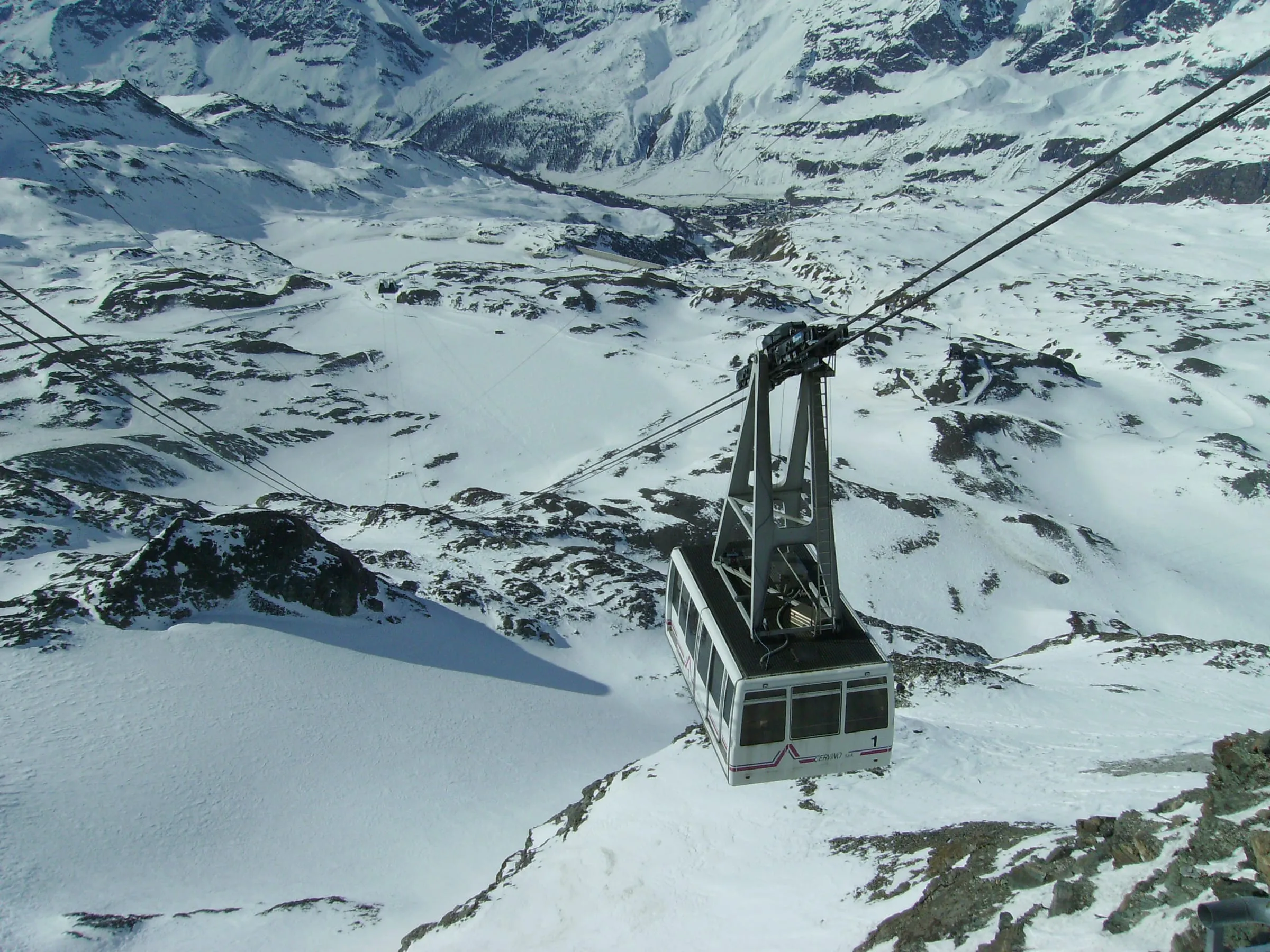
The two resorts meet on the glacier between the Klein Matterhorn and Plateau Rosà. From Zermatt you ride the Matterhorn Express up to Trockener Steg and on towards the glacier, then ski down into Italy. From Breuil-Cervinia you go up to Plan Maison, Cime Bianche Laghi and Plateau Rosà, and ski across into Switzerland. There’s no road over the border here, so on skis is the only quick way between them.
Three things catch people out:
- The last lift times. In 2026/27 the last lift up from Zermatt for Cervinia is at 14:50 until 29 January and 15:20 after that. From Breuil-Cervinia, the last ascent towards Zermatt leaves at 14:45. Miss it and you’re on the wrong side of the border, with a long trip round by road.
- The pass. A Zermatt pass covers only the Swiss side and a Cervinia pass only the Italian side. You need the international pass, or a daily supplement: CHF 52 for a Cervinia-Valtournenche day on a Zermatt pass, or 52 euros for a Zermatt day on a multi-day Cervinia pass.
- Your ID. You’re crossing a national border, so carry a passport or ID card valid for travel abroad.
The link runs over the highest, most exposed part of the area, so a windy day can shut it. Plan your crossing day for settled weather and keep a day spare. Non-skiers can make the same trip on the Matterhorn Alpine Crossing, the year-round cable car link from Zermatt to Breuil-Cervinia that opened in 2023. In 2026/27 the Testa Grigia to Matterhorn Glacier Paradise cable car is closed for maintenance from 7 January to 26 February 2027, so check how the crossing runs during those weeks.
Which has better snow, Zermatt or Cervinia?
At the top, it’s a draw: you’re skiing the same glacier, and Zermatt Bergbahnen says 80% of the area’s slopes are on the glacier or have snowmaking.
Lower down, Cervinia has the edge. Its village is at 2,050 m and almost everything you ski from it is above that height, so even in a lean winter you can usually ski home. Zermatt’s village is at 1,608 m. Its home runs, from Furi down to the village, are the lowest slopes in the whole area and the first to suffer in a warm spell.
Zermatt hits back on bad-weather days. It has three separate sectors (Sunnegga-Rothorn, Gornergrat and Matterhorn Glacier Paradise), with runs lower down that give some shelter and contrast when cloud comes in. Cervinia’s terrain is open and treeless, so in a storm or flat light there’s little to fall back on except Valtournenche, lower down the valley.
Winner for snow: Cervinia for snow at the door, especially early and late in the season. Zermatt if you want more ways to keep skiing when the weather turns.
Is Zermatt or Cervinia better for beginners?
Cervinia. The nursery slopes at Cretaz are in the village, with a magic carpet, the Campetto chairlift and the Baby La Vieille drag, and there’s a second magic carpet at Plan Maison. Cervino S.p.A. sells a cheap beginners’ ticket for those lifts, and the long blues around Plan Maison are an easy next step. The catch is height: learning above 2,500 m can be cold and windy.
Zermatt’s beginners start at Wolli’s park on Sunnegga, a funicular ride above the village, with five magic carpets in a sunny, sheltered spot. The beginners’ pass covers the Sunnegga funicular, the Blauherd lift, the Leisee shuttle and the Eisfluh and Findeln chairlifts, so there’s a small area of blues to progress on. It’s a good set-up, but every lesson starts with a train ride, and the next step up in Zermatt is steeper than in Cervinia.
Winner for beginners: Cervinia.
Which is better for intermediates?
Cervinia was built for confident intermediates. Most of the Italian side is long, wide red and blue piste, and many of its reds would be blues elsewhere. The Ventina, run 7, runs 11 km from Plateau Rosà to the village. If your idea of a good day is mile after mile of smooth cruising with the Matterhorn in view, Cervinia does it better than almost anywhere.
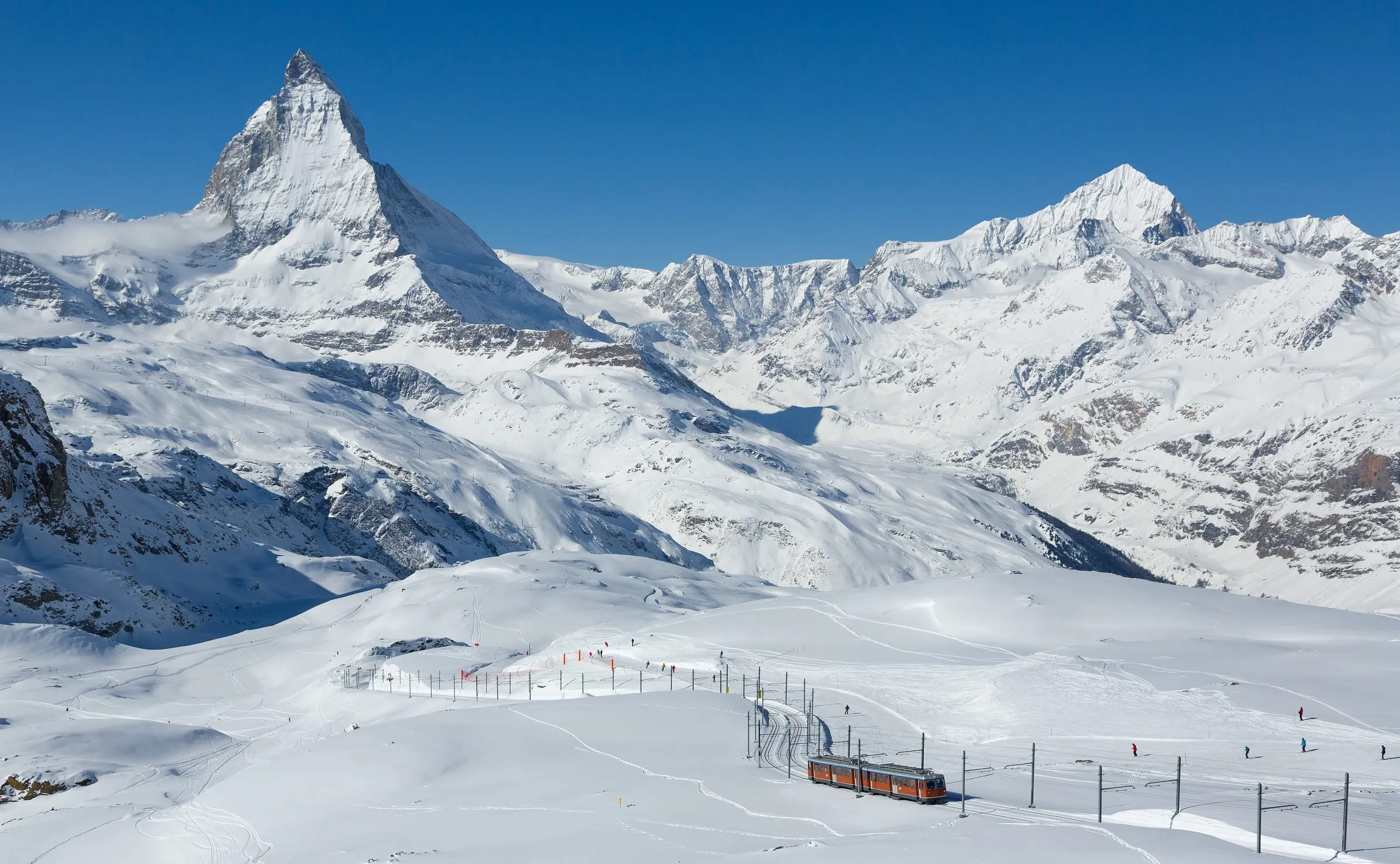
Zermatt offers more variety. Its three sectors feel like separate resorts, the reds are steeper and more interesting. The longest run in the area, 14.6 km from Matterhorn Glacier Paradise down to Zermatt, ends in a real town, and the Gornergrat railway is on the ski pass while the pistes are open.
Winner for intermediates: a draw. Cervinia for easy mileage; Zermatt for variety and a bigger challenge.
Is Zermatt or Cervinia better for experts?
Zermatt, comfortably. The Italian side has only 12 km of black piste, and it’s the reason good skiers based in Cervinia spend days in Switzerland. Zermatt has steeper reds and blacks across all three sectors, plenty of off-piste with a guide, and, when the snow allows, the Hohtälli to Rote Nase lift up to its highest, most rugged corner. Mountain guides offer heli-skiing with landings around 4,000 m.
Cervinia has good off-piste with a guide, and heli-skiing is listed in Breuil and Valtournenche, but the pistes won’t test a strong skier for a week.
Winner for experts: Zermatt. For other steep options, see St Anton or Ischgl.
Is Zermatt or Cervinia better for families?
It depends on the age of your children and your budget.
Cervinia is the easier and cheaper week with small children. The nursery slopes are in the village, hotels such as the Valtur Cristallo run kids’ clubs, and you can drive to the hotel door with all the kit. Children born after 31 October 2018 ski free with a paying adult on Cervino S.p.A.’s pass. Remember that helmets are compulsory for everyone on Italian slopes, and every skier needs third-party liability insurance, which you can add to the pass.
Zermatt suits families with older, keener children. Ski schools take children from three, there are teen groups up to 17, and the town is safe and car-free to walk around. Children under 9 ski free, and on Saturdays children under 16 ski free on the Zermatt pass. Getting to the slopes takes longer, though: from most hotels you walk or take the e-bus to a lift, then ride up to the beginner areas.
Winner for families: Cervinia for small children and beginners; Zermatt for teenagers who ski well.
The villages and après-ski
This is where the two sides are least alike.
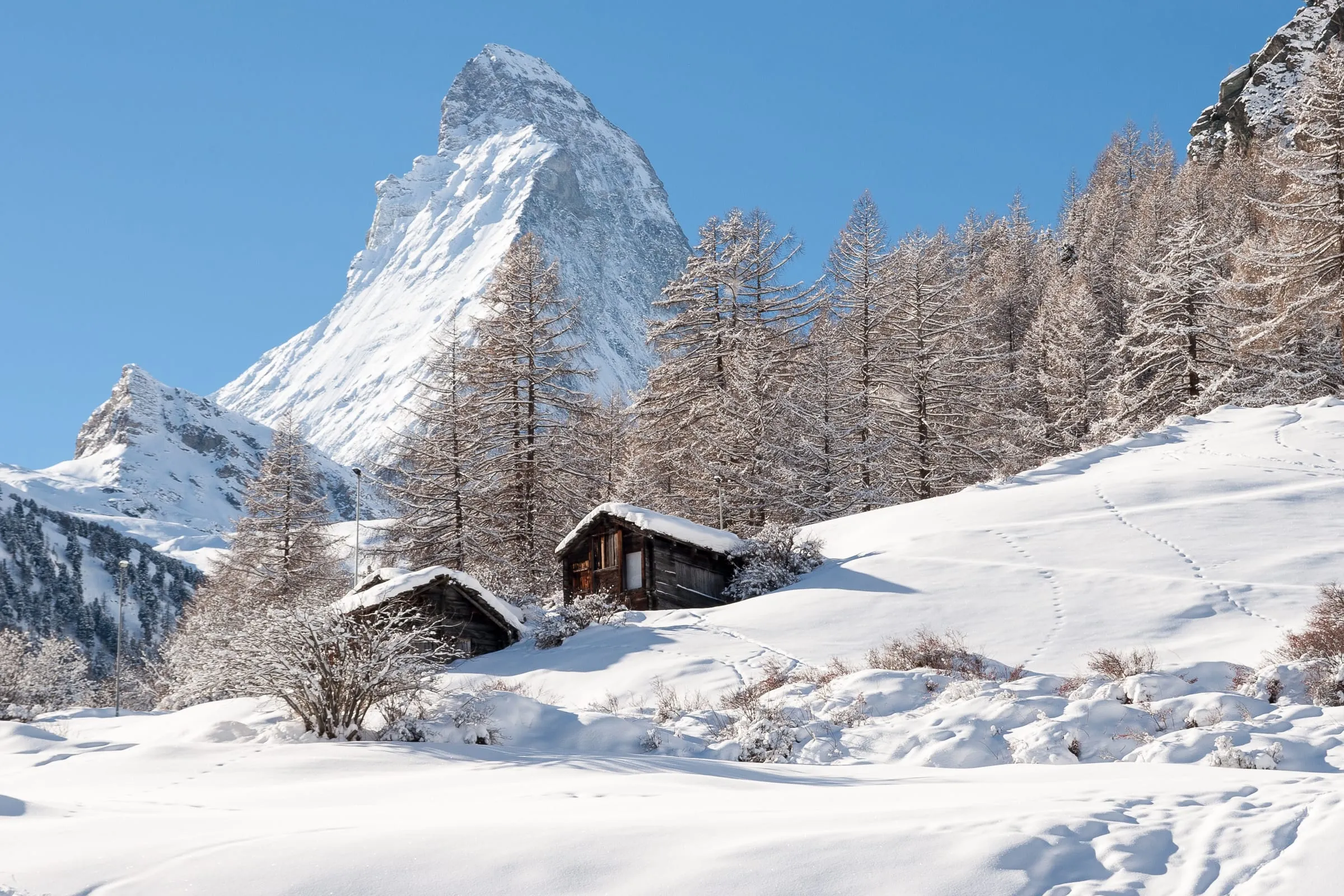
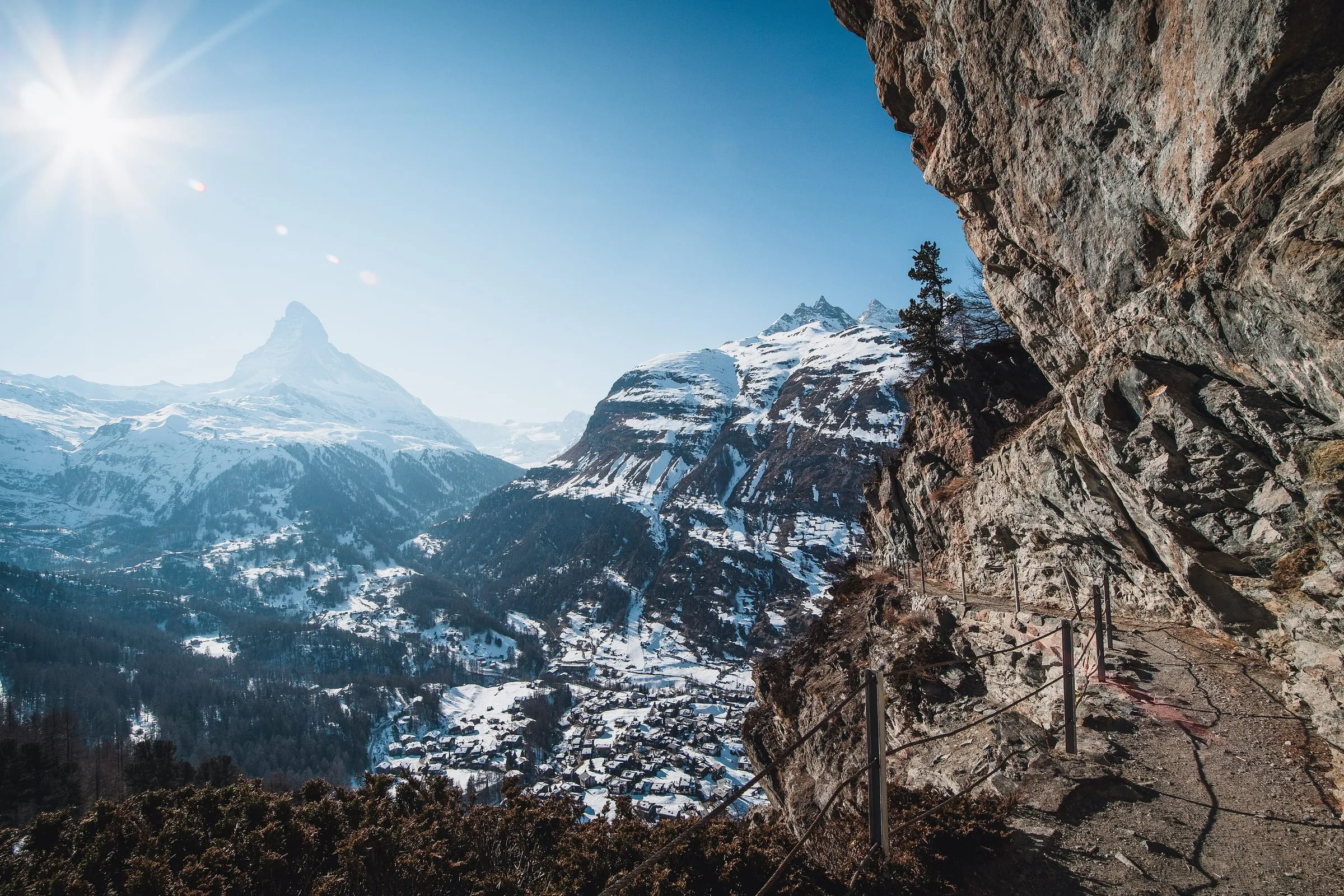
Zermatt is a proper town at the foot of the Matterhorn, with old wooden chalets among the hotels, a busy main street and no private cars. You arrive by train and get around on foot, by e-taxi or on the free e-bus. Après begins on the mountain: Hennu Stall, on the lower half of the run from Furi to the village, has DJs and live bands from 14:00 in winter. Then there’s a long list of restaurants and bars in town. It’s busy, international and expensive.
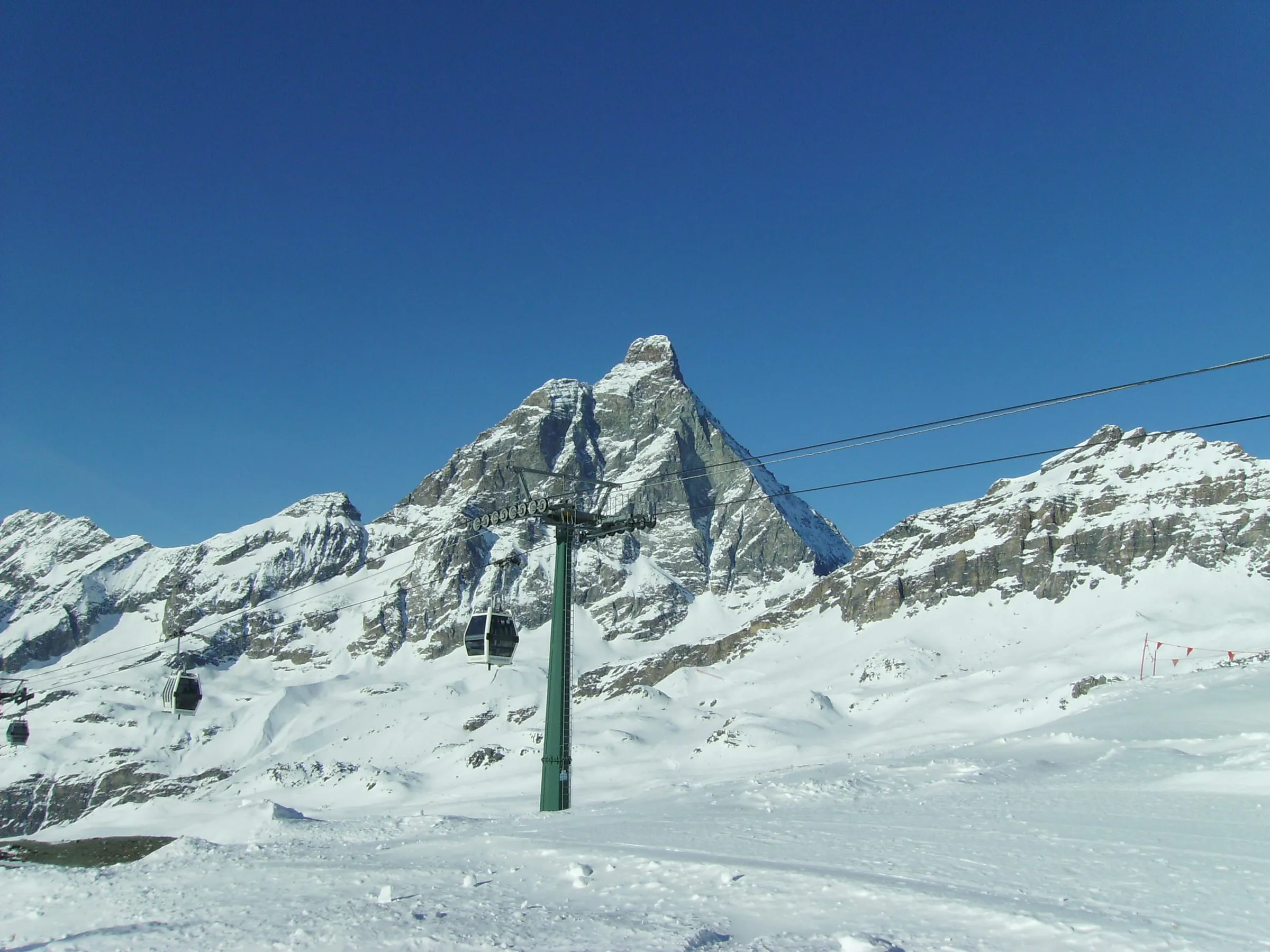
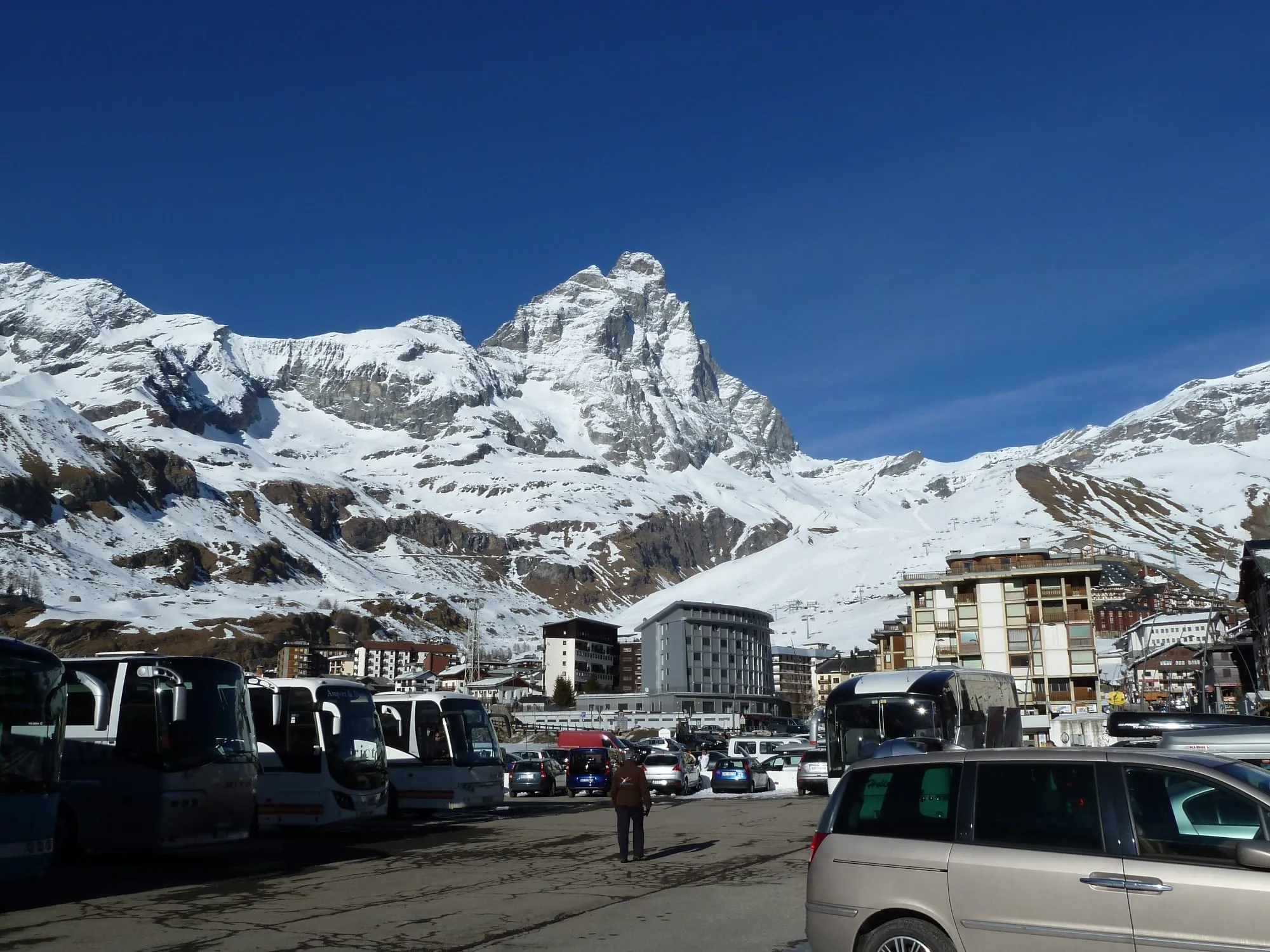
Breuil-Cervinia is a purpose-built ski village. It’s practical rather than pretty, with long lunches on the Plan Maison terraces and an aperitivo culture in the village. It’s at its liveliest at weekends and in Italian holidays, when skiers drive up from Turin and Milan. For a big night out at dinner, La Chandelle at the Hermitage is in the Michelin Guide. You come to Cervinia for the snow and the view of the Matterhorn’s Italian face, not for the streets.
Winner for village and après: Zermatt, clearly.
Getting to Zermatt and Cervinia
Zermatt is the easier trip without a car. Zermatt Tourism puts the train journey at about three and a half hours from Zurich airport and about four hours from Geneva. You change at Visp onto the Matterhorn Gotthard Bahn. Drivers park at the Matterhorn Terminal in Täsch, which has 2,100 covered spaces, and take the shuttle train, which runs every 20 minutes and takes 12 minutes. You can’t drive into Zermatt itself.
Cervinia is the easier trip with a car. Leave the A5 Turin to Aosta motorway at Châtillon-Saint-Vincent and drive up the Valtournenche valley to the end of the road. Winter tyres or chains on board are compulsory there from 15 October 2026 to 15 April 2027. The car park by the lifts costs 10 euros a day. Turin is the closest airport, then Milan Malpensa. By public transport, take the train to Châtillon-Saint-Vincent, then Arriva’s bus, which takes about an hour to Breuil-Cervinia. From Malpensa, Arriva’s booked coach reaches Châtillon in about 1 hour 35 minutes, but only on set days, so check the timetable.
Winner for getting there: Zermatt by train; Cervinia by car.
Is Cervinia cheaper than Zermatt?
Yes, and by enough to matter for a family or a group.
| Adult pass, 2026/27 | 1 day | 6 days |
|---|---|---|
| Cervinia, Italian side | 64 euros | 338 euros |
| Cervinia, international | 88 euros | 464.50 euros |
| Zermatt, Swiss side | from CHF 89 to CHF 100 | from CHF 384 to CHF 488 |
| Zermatt, international | from CHF 104 to CHF 116 | from CHF 432 to CHF 550 |
The Cervinia prices come from Cervino S.p.A.’s price list and stay the same all season. The Zermatt figures are Zermatt Bergbahnen’s starting prices: the low figure is for the pre-season and basic weeks, the high one for peak weeks, and the real price rises with demand, so book early. Children aged 9 to 15 get 50% off in Zermatt.
Cervinia has another saving. Its First and Last Tracks offer takes 30% off a 4 to 7-day pass if you stay at least four nights at a participating property until 4 December 2026 or from 5 April 2027, as long as you book direct with the accommodation.
Hotel rates and meals also tend to be lower on the Italian side, though compare for your own dates. A good plan for a budget group is to stay in Cervinia on the Italian pass and buy one or two Zermatt days.
Winner for value: Cervinia.
Who should choose Zermatt
- Strong skiers who want steep reds, blacks, off-piste and heli-skiing.
- Couples and friends who want a beautiful town, good restaurants and a proper evening scene.
- Train travellers who’d rather not hire a car.
- Families with teenagers who ski well and want to explore three sectors.
- Anyone for whom the trip is a treat, where the town and the setting matter as much as the snow.
If you’re also weighing other Swiss resorts, see Zermatt, Verbier or St Moritz.
Who should choose Cervinia
- Intermediates who measure a holiday in kilometres of easy cruising.
- Beginners and families with small children, with nursery slopes in the village and free passes for children born after 31 October 2018.
- Groups on a budget who still want to ski Zermatt for a day or two.
- Drivers from northern Italy, or anyone flying into Turin or Milan.
- Early and late-season skiers, who want the snow at the door.
Zermatt or Cervinia for a last-minute trip
Both are among the safest bets in the Alps when you book late, because the glacier keeps the top of the area open from autumn to spring.
Early season. Cervinia’s lifts open from 24 October 2026, and Zermatt’s pass is valid on the glacier from 1 November, but Zermatt’s Rothorn and Gornergrat sectors don’t open until 28 November. In November you’ll ski mostly at the top either way, and Cervinia gives you more snow lower down.
Late season. Both run to 2 May 2027 on the glacier. In Zermatt, Rothorn and Gornergrat close on 18 April and the Sunnegga funicular closes from 12 April for maintenance. Cervinia’s village slopes, at 2,050 m and above, hold up better in April than Zermatt’s home runs.
Which fills up first. Zermatt Bergbahnen’s peak weeks (19 December to 3 January, 25 January to 7 March and 27 March to 18 April 2027) are the ones to book early on both sides. In Zermatt, peak weeks also mean higher dynamic pass prices. Cervinia adds weekend crowds from Turin and Milan.
Booking at short notice. Zermatt is easier to reach in a hurry, by train from Zurich or Geneva with no car to arrange. Cervinia’s pass price is fixed, so a late booking won’t cost more on the lifts, whereas Zermatt’s dynamic prices tend to rise as the date gets closer.
Where to stay
In Zermatt
In Breuil-Cervinia
For more options, see where to stay in Zermatt and where to stay in Breuil-Cervinia.
Our verdict: Zermatt or Cervinia?
If money isn’t the main worry, stay in Zermatt. It has the better town, the more interesting skiing, the Gornergrat railway on your pass and a train to the door, and Italy is still there for lunch. If you’re a family with young children, a group of intermediates, or simply watching the budget, stay in Cervinia. The snow at village level is surer, the runs are gentler and longer, and the lift pass costs noticeably less. Buy a Zermatt day or two, ski over for a fondue and a view of the Matterhorn’s famous face, and you get most of what Zermatt offers for a fraction of the cost.
Read our full guides to Zermatt and Breuil-Cervinia, and for skiing with children, Zermatt with kids and Breuil-Cervinia with kids.