France
 Austria
 Italy
 Switzerland
 English
 Deutsch
 Nederlands
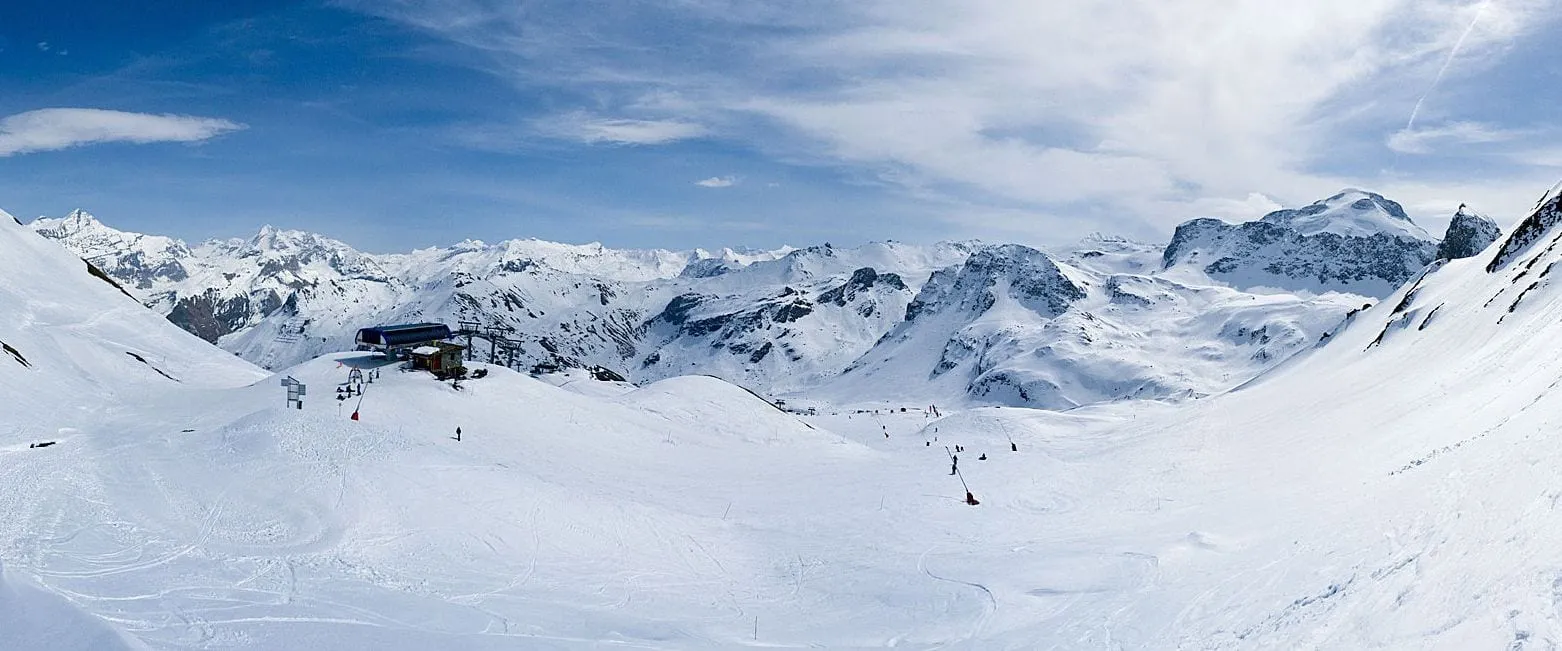
Val d’Isère is a high ski village in the Tarentaise valley of Savoie, in the French Alps. With Tignes it forms the Tignes – Val d’Isère ski area, about 300 km of pistes and 71 lifts in winter, running from 1,550 m at Les Brévières to 3,456 m on the Grande Motte, with Val d’Isère’s own slopes reaching just under 3,200 m on the Pissaillas glacier. It is a resort for confident skiers who want altitude, steep terrain and a proper village to come back to.
Val d’Isère ski area: three mountains, a glacier and a link to Tignes
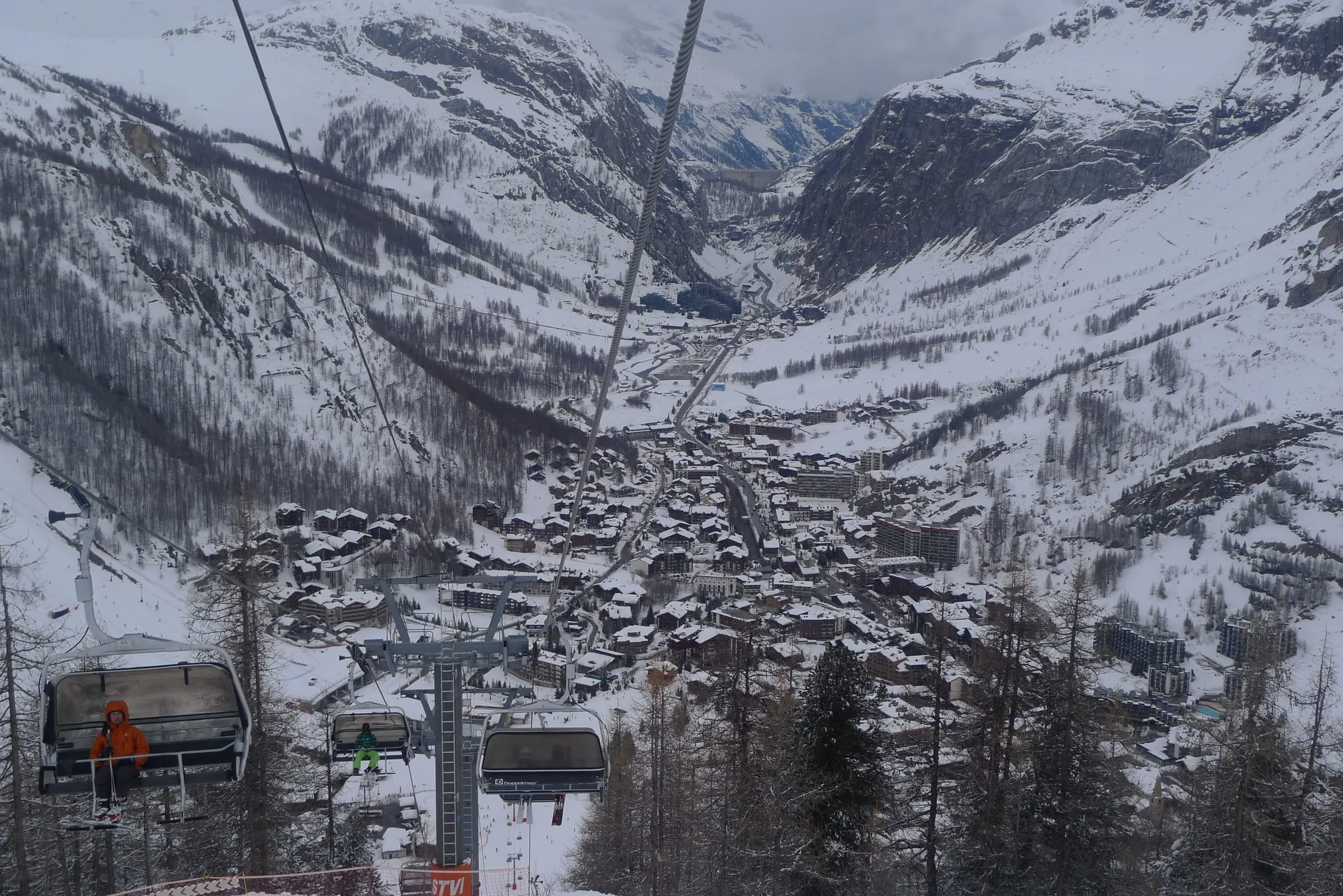
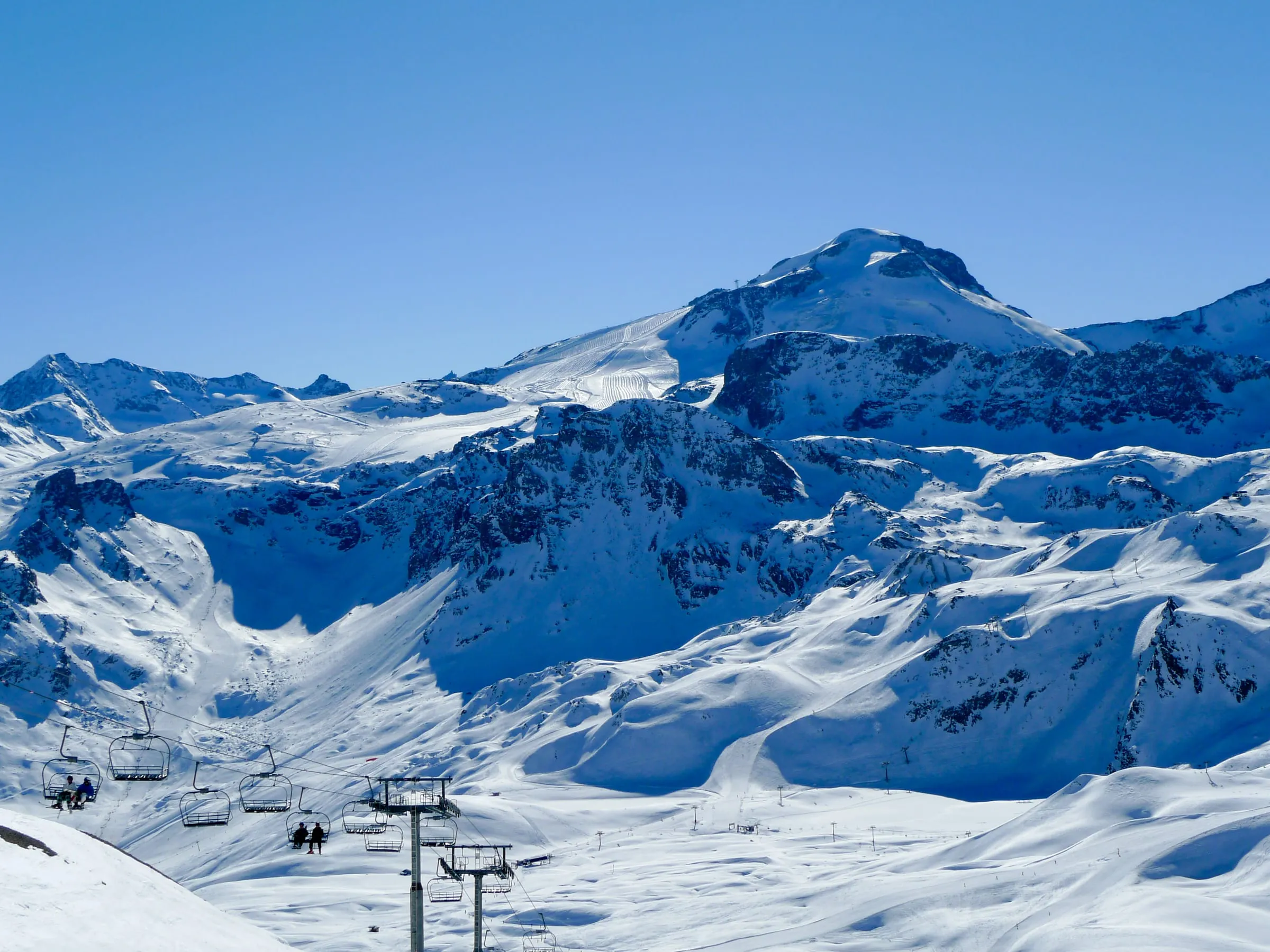
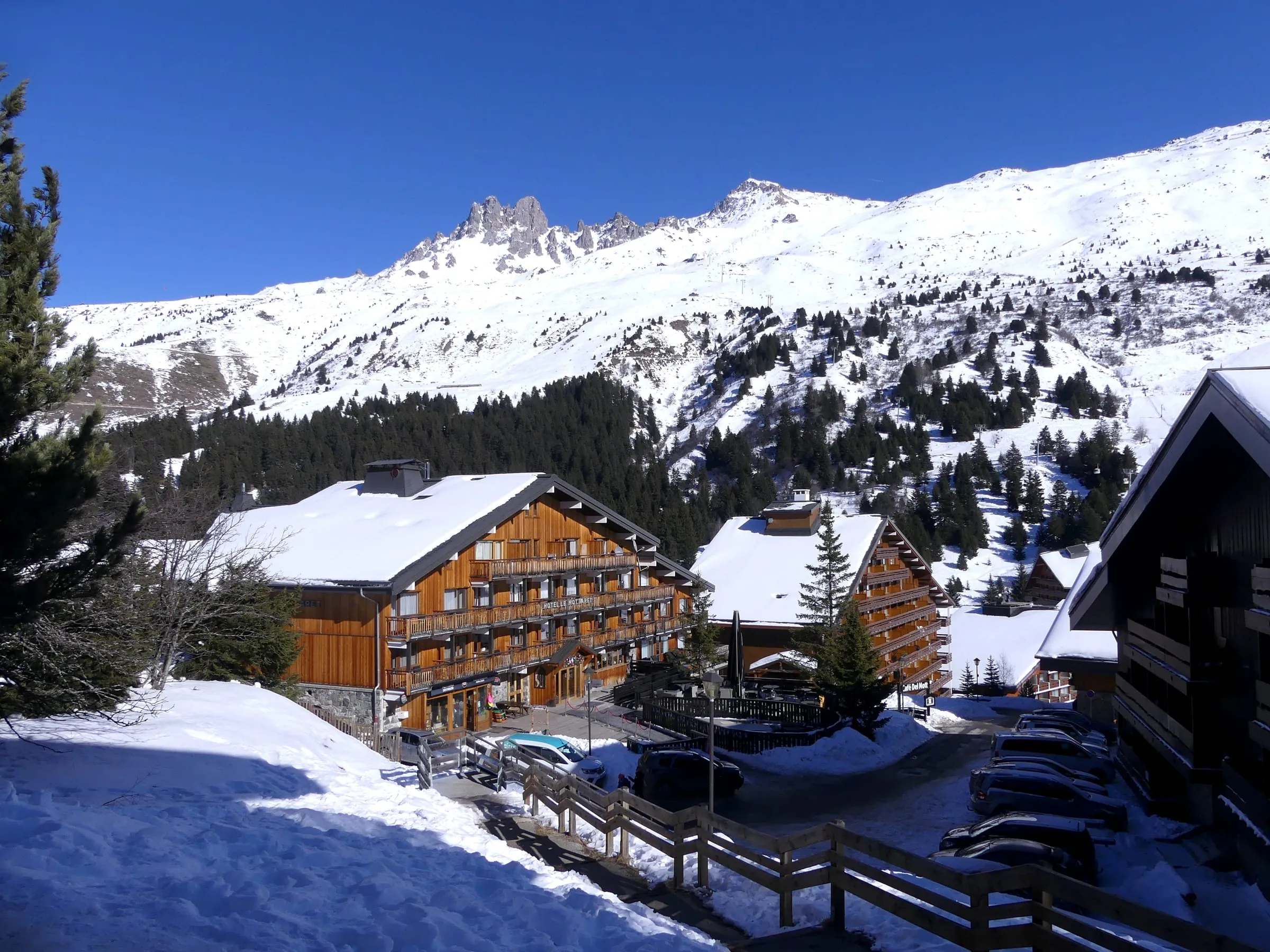
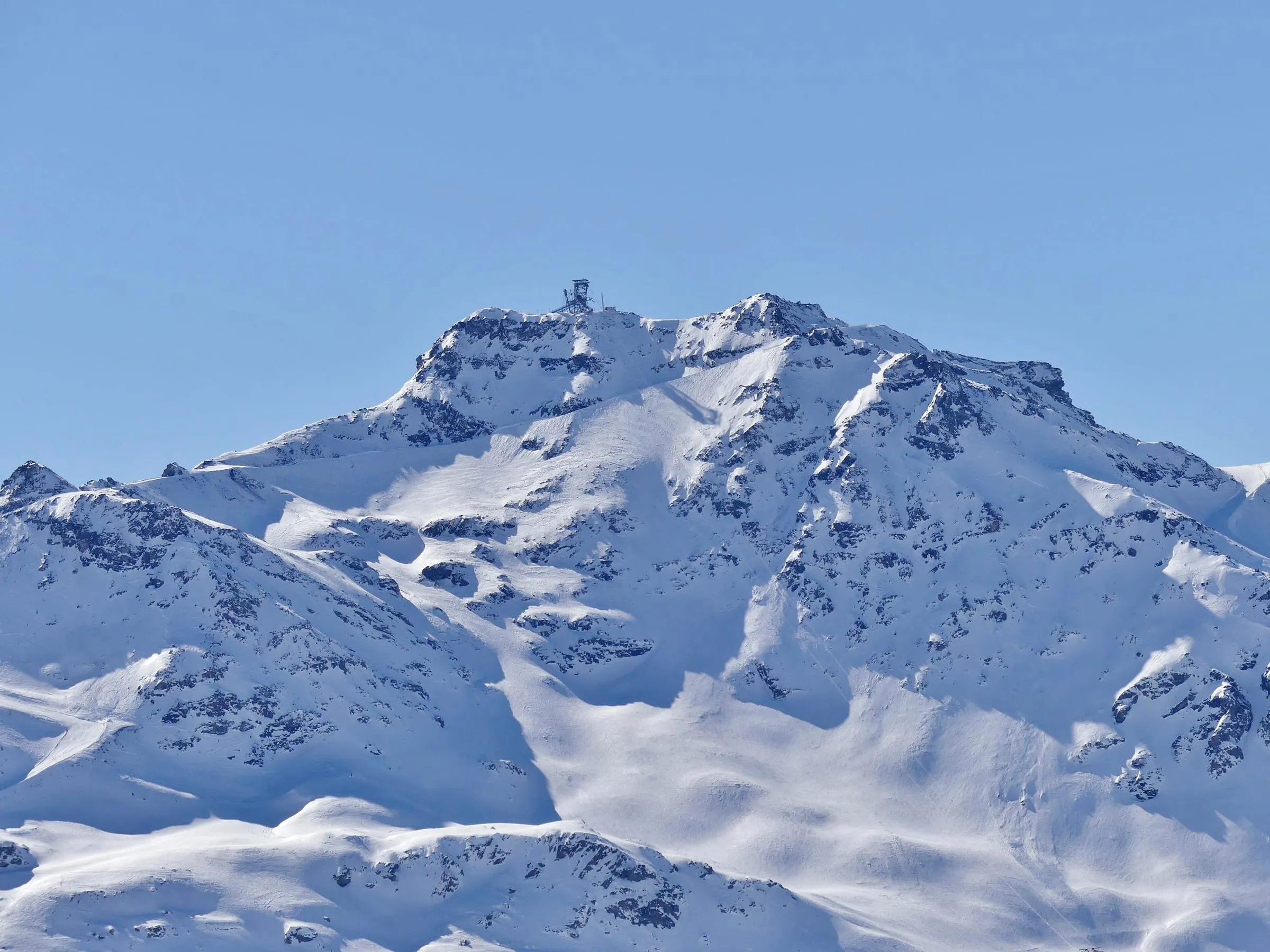
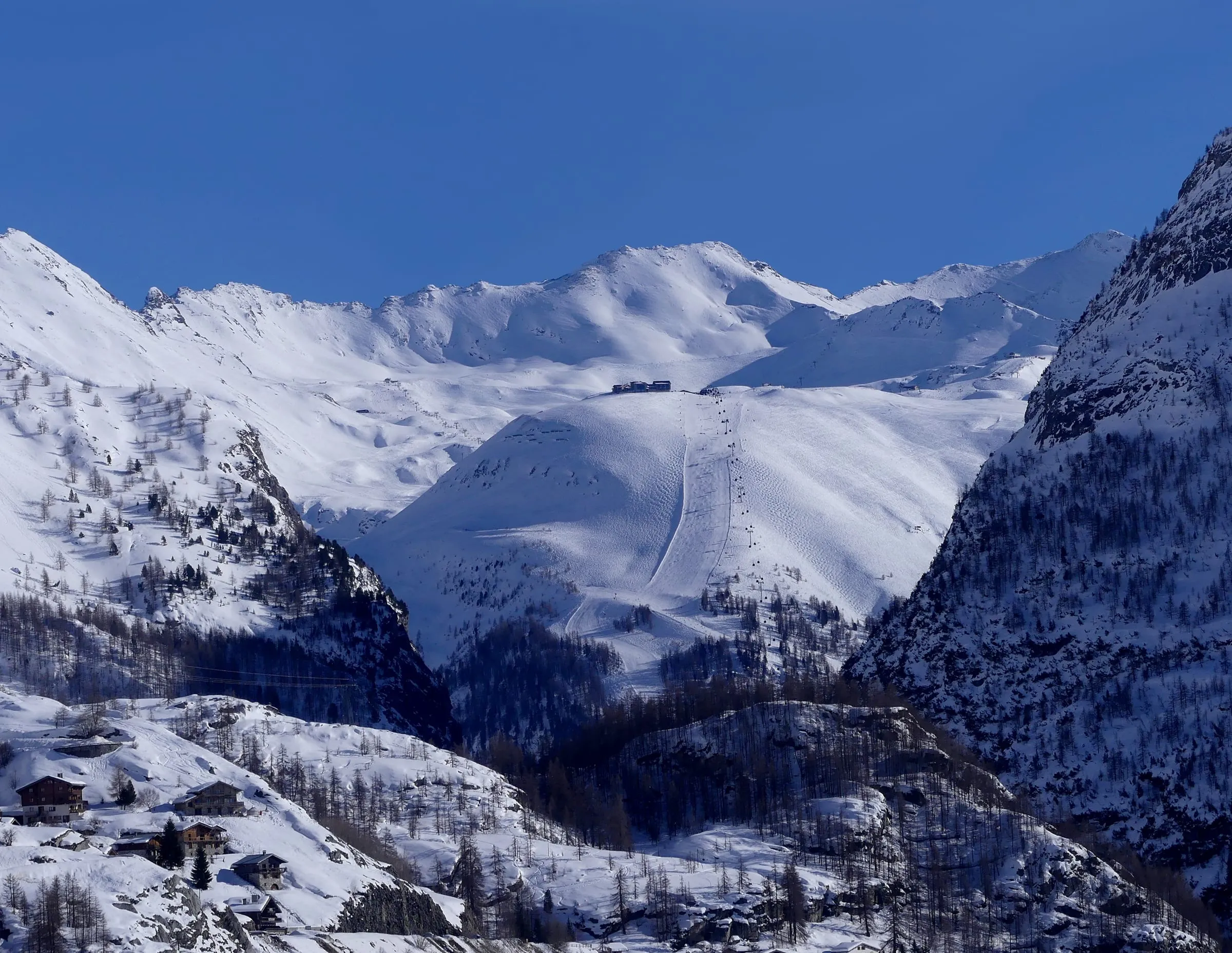
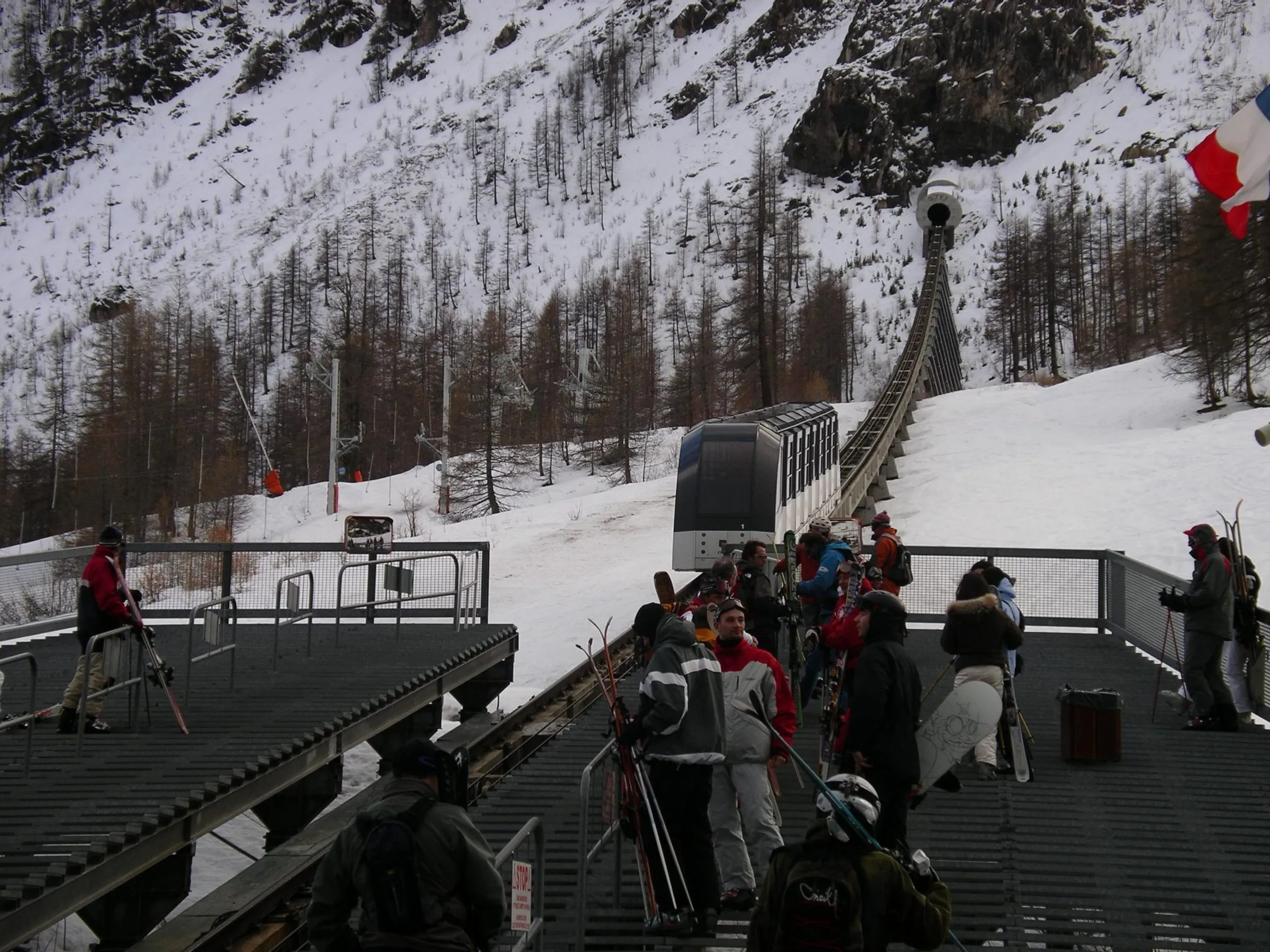
Val d’Isère’s side of the area is laid out along one long valley, which makes it easy to understand. Bellevarde rises straight above the centre and La Daille, carrying the Olympique lift from the village and the Funival funicular from La Daille. Solaise sits on the other side of the village, reached by the ten-seat Solaise gondola from the snow front. Further up the valley, the hamlet of Le Fornet has its own cable car, and above it the Vallon gondola climbs to 2,790 m at the foot of the Pissaillas glacier. The tourist office says the area’s highest point there is 3,197 m.
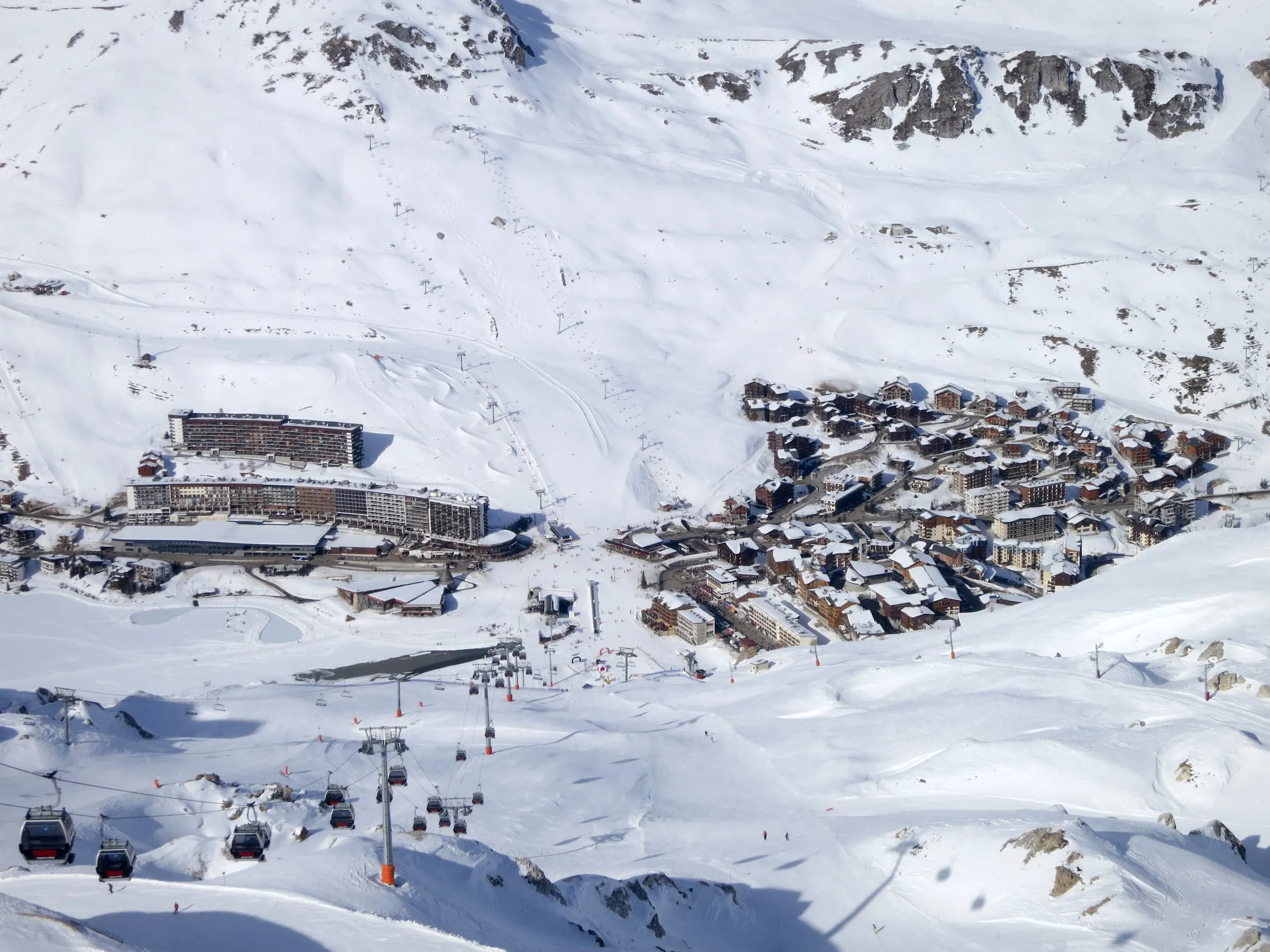
The Tignes link runs over the back of Bellevarde: the Tommeuses chairlift goes over the Col de Tovière towards Tignes le Lac, and the Borsat chairlift crosses the Col de Fresse to Val Claret. To get home, the Tovière gondola and the Tufs, Bollin and Fresse chairlifts bring you back towards La Daille. The lift company says around 60% of Val d’Isère’s slopes are above 2,000 m.
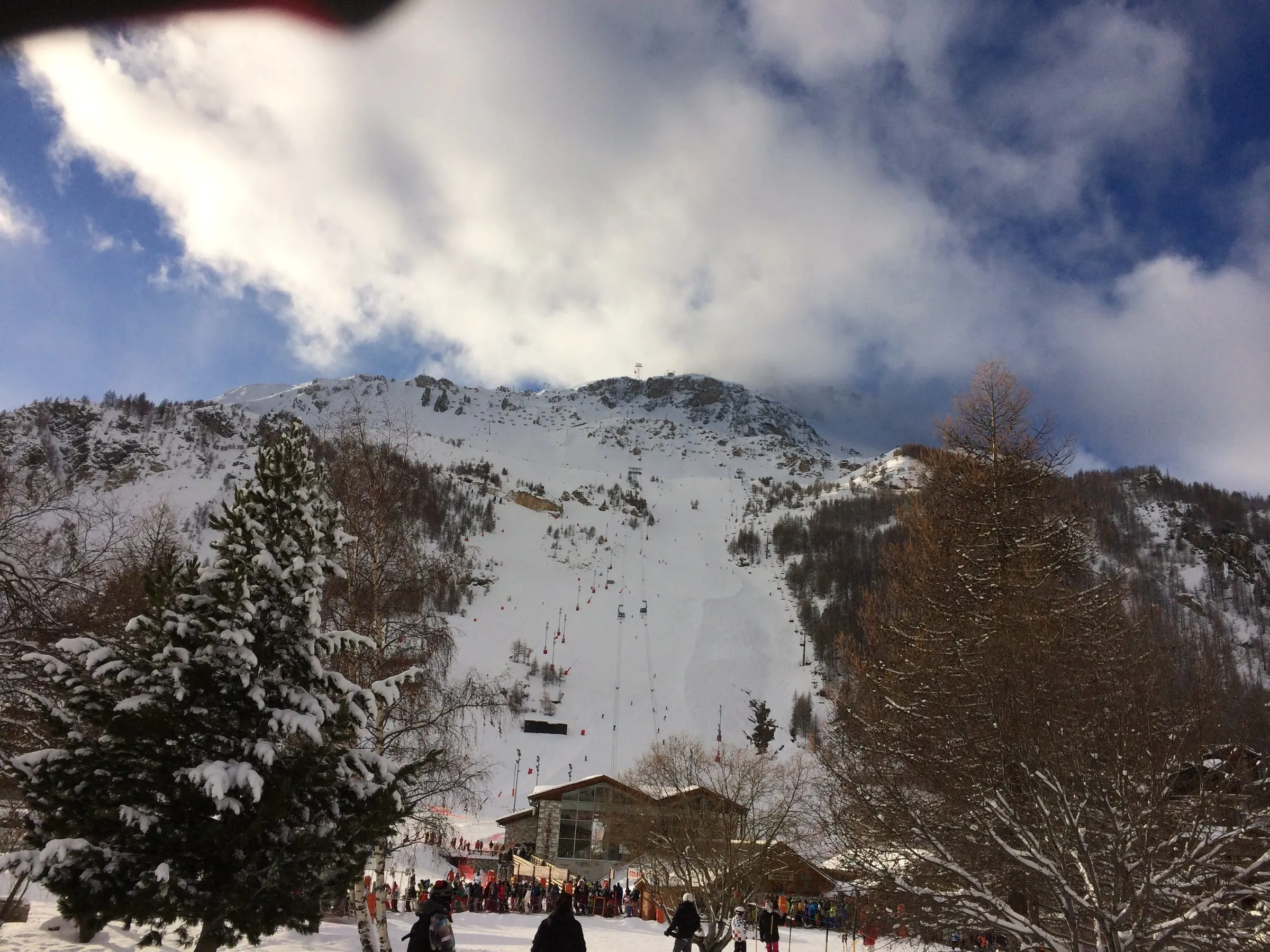
Skiing in Val d’Isère for beginners, intermediates and experts
The whole Tignes – Val d’Isère area has 160 marked runs, according to the tourist office: 23 green, 67 blue, 41 red and 29 black. That spread tells you who it’s built for.
Beginners
Three lifts are free, so you don’t need a pass for your first days: the Savonnette drag and the Village chairlift on the snow front, and the Lanches drag at La Daille. Once you can turn and stop, take the Solaise gondola up to the signposted Easy Skiing area, served by the Pim, Pam and Poum magic carpets, then ride the gondola back down at the end of the day. Bellevarde has a similar Easy Skiing zone. It works well, but if your group is mostly first-timers, a cheaper, gentler resort will give you more for your money. Our Val d’Isère with kids guide covers the learning areas in detail.
Intermediates
This is where Val d’Isère pays off. Sixty-seven blue runs across the two resorts means a confident intermediate can spend a week without repeating much, and the Tignes link doubles the terrain. From Bellevarde, the green La Verte, the blue Diebold and the red OK all run down to the La Daille gondola top station at 2,400 m. On Solaise, the lift company now marks easier routes with Easy Skiing signs, which is handy for groups of mixed ability.
Experts
Val d’Isère’s reputation rests on its steep terrain. The Face de Bellevarde, the Olympic downhill run, comes straight down to the village and hosts the men’s World Cup Critérium (12 to 13 December 2026). The piste map marks “Naturide” runs: black pistes that are patrolled and marked but not groomed. The Village Perdu play area in the forest at about 2,000 m is reached from the Diebold, Critérium and Orange runs, and the tourist office says it is ungroomed and for experienced skiers only. Off-piste is the other big draw; hire a guide and check the avalanche bulletin before leaving the markers.
A first day in Val d’Isère
This route suits a confident intermediate and covers both sides of the valley over two days. Check the Val d’Isère Ski app in the morning: in the opening weeks not every lift will be turning.
Day one, Bellevarde:
- From the centre, take the Olympique up to Bellevarde and warm up on the Easy Skiing runs at the top.
- Ski La Verte (green), Diebold (blue) or OK (red) down to La Folie Douce at the top of the La Daille gondola (2,400 m), for lunch.
- Continue down to La Daille and ride the Funival funicular back up to Bellevarde.
- If your legs are fresh, take on the Face de Bellevarde to the village. If not, follow the Gypaète family trail, which starts off La Verte, and finish on the gentler runs.
Day two, Solaise and the glacier:
- Take the Solaise gondola from the snow front.
- Take the Leissières chairlift towards the Iseran side, then the Vallon gondola up to 2,790 m at the foot of the Pissaillas glacier. It takes under seven minutes.
- Ski the glacier runs while the snow is firm, then work back towards Solaise and the village in the afternoon.
Snow in Val d’Isère: how reliable is it?
Very, by Alpine standards. Four things work in its favour: the village is at 1,850 m, around 60% of the slopes are above 2,000 m, the tourist office says the slopes are mostly north-facing, which keeps the snow cold, and more than 65 km of runs have snowmaking. The Pissaillas glacier adds terrain close to 3,200 m, and Tignes’ Grande Motte reaches 3,456 m. The lift company goes as far as saying snow cover is guaranteed from December to early May. We’d read that as a confident forecast, not a promise.
The 2026/27 season runs from 28 November 2026 to 2 May 2027. A provisional opening plan covers the first weeks (28 November to 19 December), so in early season you’ll ski a smaller area. The high lifts and the glacier are the most exposed in bad weather; on stormy days the lower runs above La Daille and the trees around the Village Perdu are where visibility tends to hold.
Is Val d’Isère good for a last-minute ski trip?
Yes, for snow, and yes with caveats for availability. If the forecast elsewhere looks thin, Val d’Isère is one of the safer places to book late, because its altitude and aspect mean it rarely lacks snow. The best value windows are the avant-première weeks (28 November to 11 December) and the closing weeks (24 April to 2 May), when the six-day pass drops from €468 to €402.
Christmas, New Year and the February school holidays are the hardest weeks to find a room, and traffic on the road up is heaviest on Saturdays. The tourist office suggests Sunday-to-Sunday stays to avoid it. Also check hotel dates: several close in mid-April, before the lifts stop. Our where to stay in Val d’Isère guide covers which areas still have rooms late on.
If you’re also weighing Tignes, you share the same pass and the same lifts; Val d’Isère is the more traditional village with the busier après, while Tignes has the Grande Motte glacier at 3,456 m on its side of the area.
Val d’Isère lift passes
Passes are sold by the lift company, with two price periods for 2026/27: the main winter (12 December 2026 to 23 April 2027) and the early and late weeks. Adults are 19 to 64. The reduced rate covers children aged 8 to 18 and seniors aged 65 to 74. Under-8s and over-75s ski free with proof of age.
| Pass (2026/27) | Adult, winter | Reduced, winter | Adult, early/late |
|---|---|---|---|
| Tignes – Val d’Isère, 1 day | €78 | €63 | €67 |
| Tignes – Val d’Isère, 6 days (7th day free) | €468 | €378 | €402 |
| Val d’Isère only, 1 day | €70 | €57 | €60 |
| Afternoon from 12:45, whole area | €63 | €51 | €54 |
| Tignes – Val d’Isère season | €1,130 | €915 |
A family offer takes €330 off four or more passes of six days or more, bought together, for at least two adults and two children aged 8 to 18. Multi-day passes come with free entries to the pool at the Centre Aquasportif. The Val d’Isère-only pass covers the local area, which the lift company puts at about 150 km. If you’re staying a week, the full pass is worth it for the trip to Tignes alone.
Après-ski and things to do in Val d’Isère
The après starts on the mountain. La Folie Douce sits at the top of the La Daille gondola at 2,400 m, with live music on the terrace and restaurants inside; it opens 9:00 to 17:00. Down in the village, Cocorico is an open-air bar at the bottom of the slopes, with DJs and live music from 15:00 to 21:00, where dancing in ski boots is the point.
For a day off, the Centre Aquasportif at the foot of the Face de Bellevarde has a 25 m pool, a leisure pool, a climbing hall and a wellness area for over-16s. Non-skiers can buy pedestrian passes, including a new six-day Tignes – Val d’Isère pedestrian pass (€90 adult). At the top of the Vallon gondola there’s a new panoramic terrace for 2026/27, with picnic tables and the Mont Iseran Legend exhibition space.
Who Val d’Isère suits, and who it doesn’t
It suits strong intermediates and experts, groups of friends who want the skiing and the nightlife, and anyone booking early or late in the season who needs the snow to be there. It also suits families with children who can already ski, since kids under 8 ski free.
It doesn’t suit a group of beginners on a budget, or anyone who wants a short drive from the airport. If you want the same scale with doorstep skiing everywhere, look at Val Thorens. If you want the glamour but easier skiing, Courchevel is gentler. And if you’re torn between this and St Anton, both reward good skiers and both party hard; Val d’Isère is higher and more snow-sure late in the season.
How to get to Val d’Isère
By plane and transfer
The tourist office gives these drive times; allow more on Saturdays in the holidays.
| Airport | Distance by road | Drive time (tourist office) |
|---|---|---|
| Chambéry (CMF) | 135 km | about 2 hours |
| Grenoble (GNB) | 165 km | about 2 hours 30 |
| Geneva (GVA) | 220 km | about 3 hours |
| Lyon (LYS) | 240 km | about 3 hours |
Altibus runs direct coaches from Geneva and Lyon airports in winter, and Alpine Fleet and Ben’s Bus also run services in the season. Altibus advises leaving at least three hours between your scheduled arrival and your flight home. Coaches and buses all arrive at the La Daille bus station, where the free Train Rouge shuttle takes you to the centre in under ten minutes.
By train
The nearest station is Bourg-Saint-Maurice, 30 km and about 40 minutes away, served by TGV INOUI trains and the Eurostar ski train. Altibus line S82 runs from the station to Val d’Isère all year, with one bag and one pair of skis included. For winter 2026/27, the Eurostar ski train leaves London St Pancras on Saturdays in the main winter weeks, changing at Lille Europe and arriving in Bourg-Saint-Maurice at 17:45.
By car
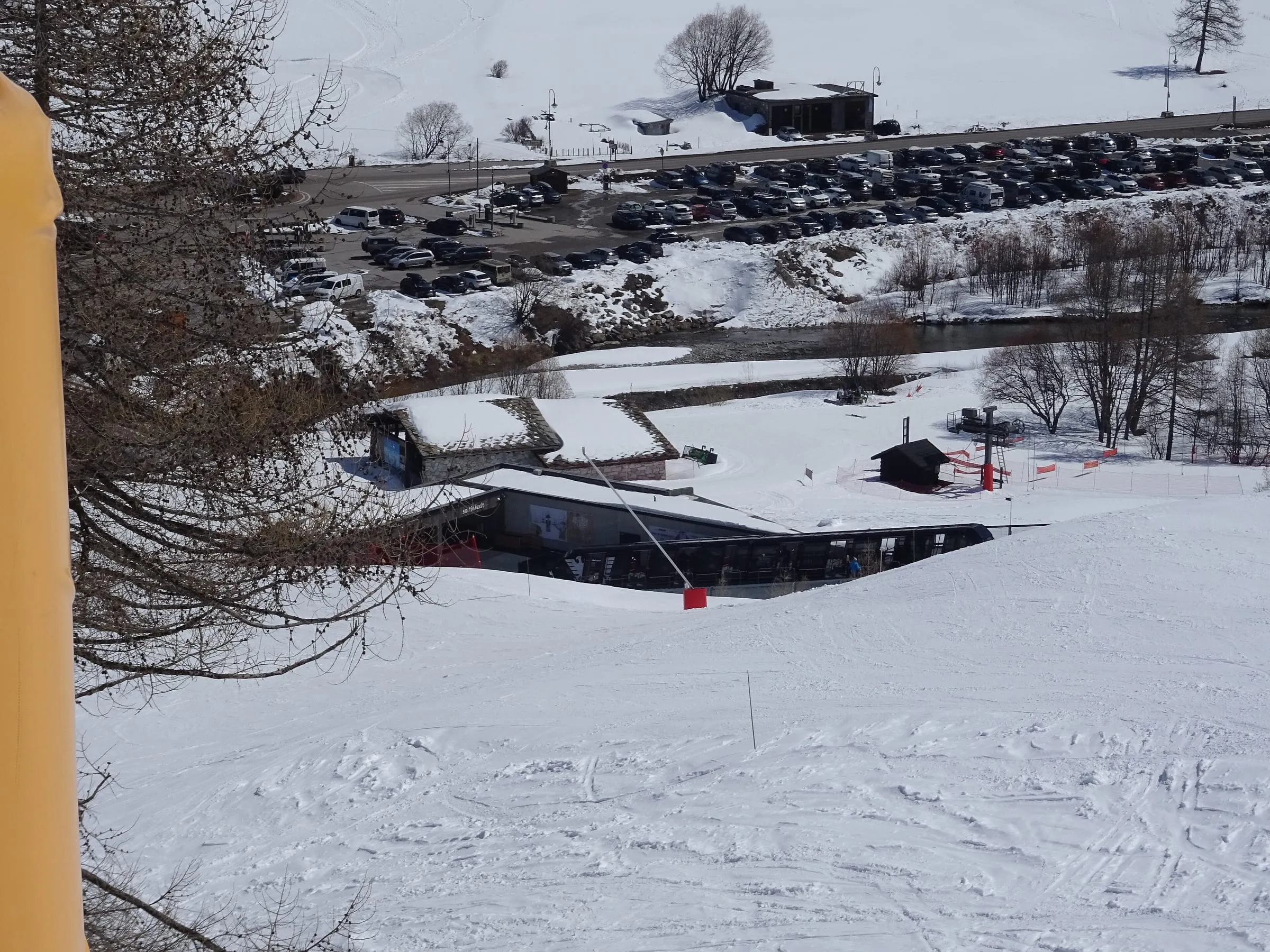
Drive to Albertville (86 km from the resort), then up the valley past Bourg-Saint-Maurice. The Col de l’Iseran over the top of the valley is closed in winter, so there’s only one way in. You must carry snow chains or snow socks, or have snow tyres; the tourist office notes that socks don’t replace chains in extreme conditions. Book winter parking in advance on the official car parks website; the Q-Park office at the Centre car park is open 9:00 to 19:00 through the season. Check savoie-route.fr before you set off.